
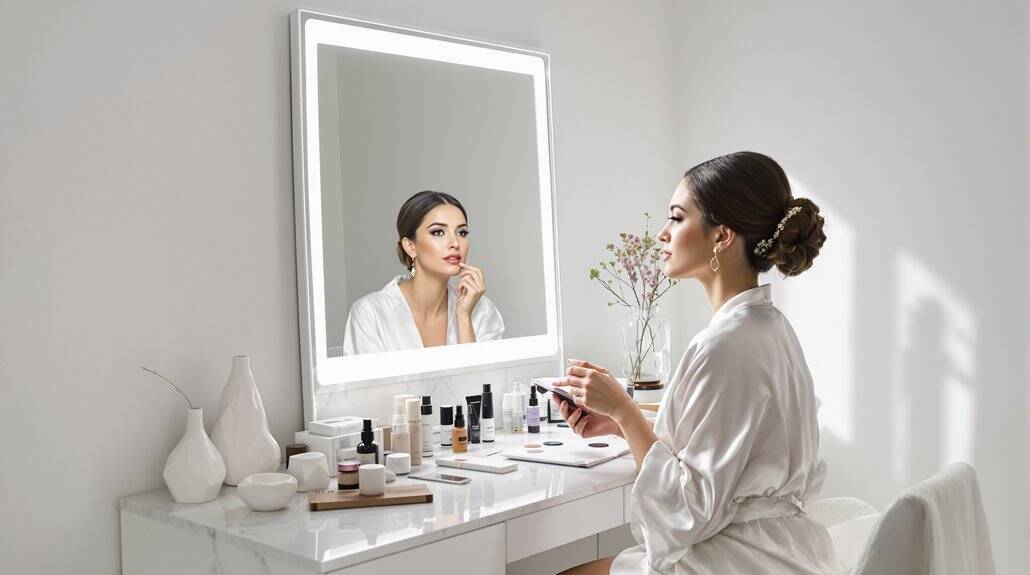
For a beauty trial that actually helps, bring 3-4 reference photos matching your features, document everything with before/during/after photos from multiple angles, and test durability over 6+ hours—not just the initial look. Communicate specific concerns directly (“I’d like fuller coverage here” rather than “I hate this”), and simulate your actual wedding day timeline. Schedule far enough ahead to try someone else if needed. The difference between “pretty” and “perfect-for-you” lies in these details.
Why Beauty Trials Matter
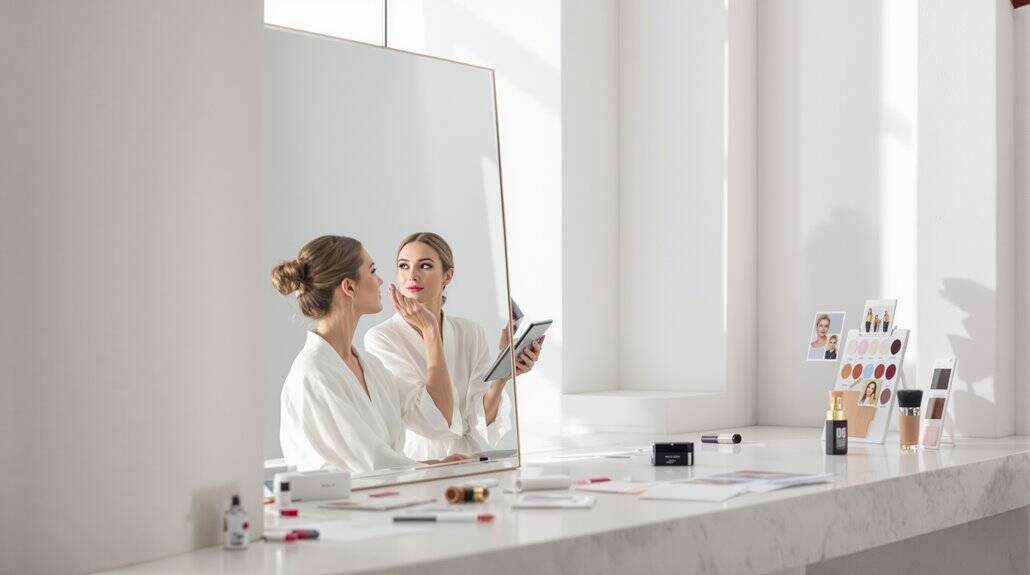
Why do we still hesitate before committing to beauty services for our most important occasions? Because we’ve all heard the horror stories—or lived them. Effective beauty trial planning isn’t just precautionary; it’s vital.
When you participate in a properly executed trial, you’re not just testing a product—you’re building consumer trust through verifiable experience. Up to 80% of consumers who engage in meaningful trials convert to customers, and for good reason. You’ve witnessed the product’s performance in real-world conditions, under your bathroom lighting, against your skin’s unique chemistry.
Beauty trials matter because they transform marketing claims into personal truth. That “clinically proven to reduce wrinkles” statement? It becomes your reality, not just copy on a box. Trials offer tangible proof that cuts through advertising noise—and yet, most people rush through them without documenting results or testing durability, missing vital data that could inform their investment. Professional beauty trials assess product benefits such as moisturizing effectiveness, wrinkle reduction, or improvements in skin texture before you commit to a purchase. For special occasions like weddings, consider incorporating luxury French beauty products into your trial to ensure your most important day looks flawless.
How to Communicate Effectively with Artists
When you sit across from your makeup artist or hairstylist, what begins as a simple service transaction transforms into an intimate creative partnership. Your effective beauty trial hinges on this relationship—one that requires both vulnerability and precision.
Bring 3-4 reference photos with models who share your features, then let the artist talk less while you talk more. Yes, it’s their expertise, but it’s your face. Open-ended questions reveal more than yes/no interrogations, so when discussing your trial wedding makeup, ask “How would you approach my hooded eyes?” rather than “Can you do a smoky eye?”
Speak up immediately when something feels wrong. Artists worth keeping will explicitly invite criticism—they’d rather adjust during the makeup trial planning stage than face day-of panic. Schedule your consultation at least weeks before your event to allow time for any necessary adjustments. Consider starting your skincare preparation months ahead to ensure your complexion provides the ideal canvas for your wedding day look. Document everything: photograph results in different lighting, test durability over hours, and note precisely which products made you look luminous versus merely shiny.
Photo Documentation Requirements
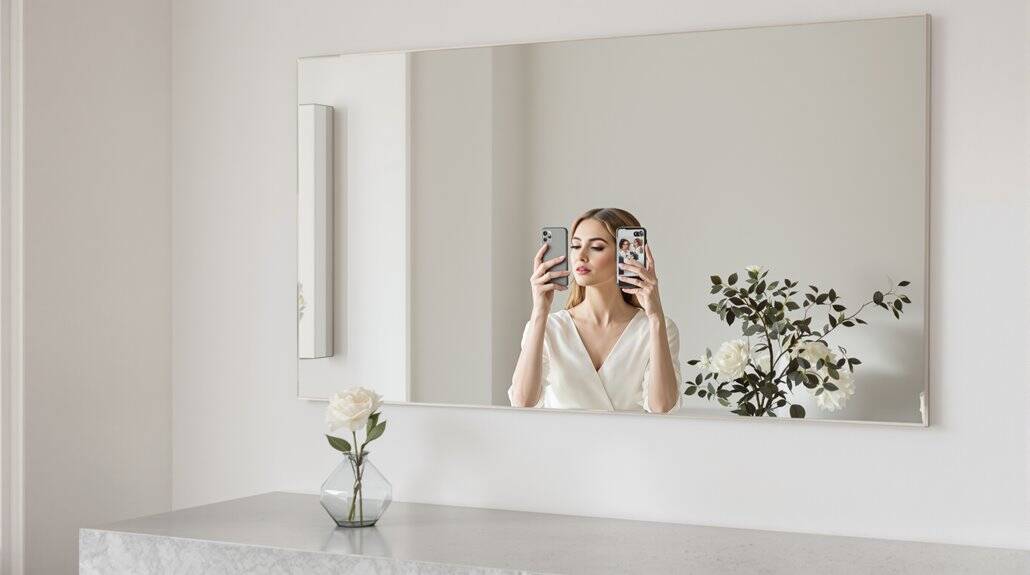
Though your beauty trial might feel fleeting, the photographs you capture will become your ironclad insurance policy against day-of disappointments. Proper photo documentation requirements transform an ordinary beauty test run into an effective beauty trial that yields practical insights.
| View Type | Minimum Photos | Lighting Needs | Special Considerations |
|---|---|---|---|
| Face | 3-5 angles | Even, natural | Remove all jewelry/makeup |
| Chest | 3-5 shots | Diffused, consistent | Wear black undergarments |
| Full body | Multiple poses | Avoid harsh shadows | Standardize positioning |
| Close-ups | Detail-focused | Spotlight specific areas | Clean camera lens first |
Don’t overlook legal compliance—obtain written consent before clicking that shutter. These aren’t just vanity shots but protected medical documentation. Use the same photographer, camera, and settings throughout your beauty journey—consistency is non-negotiable. And yet, the most critical element remains immediate review; photos that fail to capture reality with clinical precision are worse than useless—they’re misleading mirages that guarantee wedding-day panic. Consider how your makeup and hair will complement your glamorous wedding dress from designers like Badgley Mischka when reviewing trial photos.
Testing Durability Not Just Initial Look
A breathtaking makeup application means absolutely nothing if it disintegrates before you reach the reception. During your beauty test wedding, document how the look performs over time, not just how it photographs in the first hour.
Approach your effective beauty trial like a stability test—monitor your makeup at specific intervals (immediately after application, three hours later, and six hours after). Note changes in color intensity, foundation separation, and whether eye makeup creases. Subject yourself to real conditions: dance vigorously, dab your eyes, sip champagne, and note what survives.
For your hair trial preparation, request that your stylist demonstrate how your style responds to humidity and movement. Will those curls fall flat? Does that updo require 47 pins to withstand a night of dancing?
The value of your trial isn’t in how you look walking out of the salon—it’s in understanding how you’ll look walking down the aisle and hours into celebration. Consider how your beauty choices will complement intricate beaded detailing or other elaborate dress features that demand a polished appearance throughout your entire wedding day.
Timeline Simulation: Getting Ready Schedule
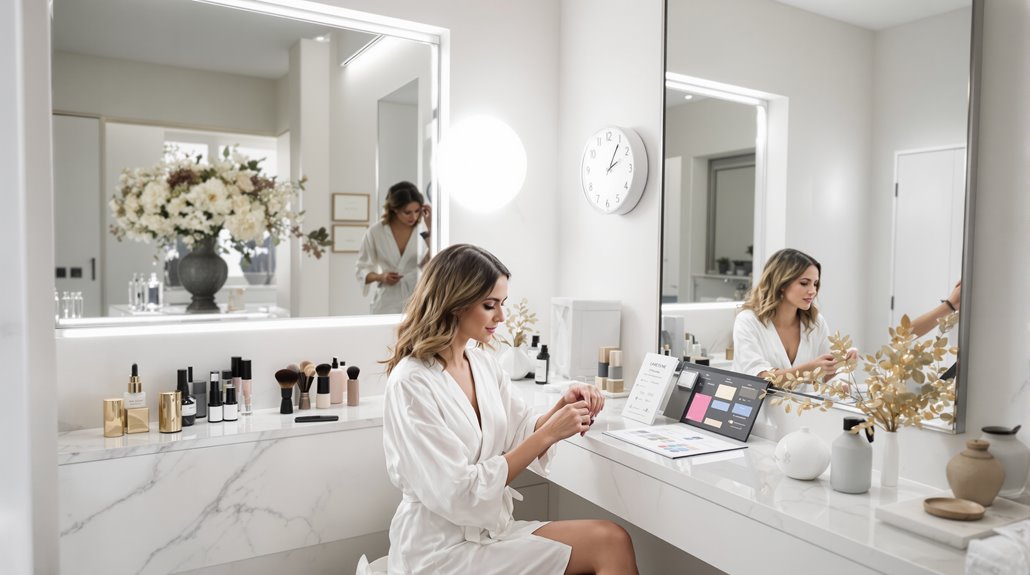
Creating the perfect wedding day beauty timeline matters just as much as selecting the right look itself. At your wedding beauty trial, don’t just assess the final appearance—orchestrate a minute-by-minute simulation of your actual wedding morning. Ask your artist to track timing: 45 minutes for makeup application, 60 for complex updos, 15 for touch-ups. Factor in bridesmaids, mothers, and photographers, too.
The most effective beauty trial includes a choreography test run. Start at the exact hour you’ll begin preparations on your wedding day (even if that’s 5:00 AM), and document when you hit each milestone—foundation complete at 6:15, eyes finished by 6:45. This reveals potential bottlenecks before they become day-of disasters.
Pro tip: Add 30 minutes of buffer time to whatever schedule emerges. Wedding mornings notoriously expand to fill available time—and yet, the most serene brides are those who build in breathing room for the inevitable champagne spill or last-minute veil crisis. Consider whether your getting-ready photos will benefit from golden hour lighting, which typically occurs 2-3 hours before sunset and can inform whether you need earlier or later prep times.
Identifying What Works for Your Features
Now that you’ve mapped your wedding day minute by minute, let’s identify what truly works for your unique features. Gone are the days of vague “I like it” assessments—modern beauty trials demand precision.
Bring your smartphone to capture every angle (yes, even your profile with that tricky jawline highlight). Digital measurement apps like Neutrogena’s Skin360 can establish your baseline skin metrics—hydration levels, pigmentation patterns, even TEWL rates—creating objective standards for success. The difference between mediocre and magnificent trials? Quantifiable data.
Different features need different attention spans: that smoky eye might photograph beautifully but fade within three hours, while your foundation oxidizes after five. Track everything. Note which products settle into fine lines and which resist humidity’s assault on your particular skin chemistry. And yet, numbers aren’t everything—your comfort matters equally. The most statistically perfect lipstick becomes worthless if you’re constantly aware of its presence. Just as you’ll want your beauty trial to match your wedding dress style, consider how your makeup complements whether you’ve chosen vintage-inspired lace or modern corsetry details.
When to Try Someone Else
While investing time with one makeup artist builds rapport, recognizing when the partnership isn’t working saves both heartache and photographs. Trust your instincts—that nagging doubt isn’t arbitrary. It’s your subconscious processing a thousand micro-signals that something’s off.
| Red Flag | Action | Timeline |
|---|---|---|
| Communication breakdown | Request clarification, then reassess | Immediate |
| Vision repeatedly ignored | Share reference photos, evaluate response | After first correction attempt |
| Poor technique/products | Address specific concerns directly | By end of trial session |
Your wedding day isn’t the time for martyrdom or makeup martyrdom. A professional understands trial feedback isn’t personal—it’s precision-seeking. And yet, articulate concerns specifically: “The foundation feels heavy” rather than “I hate everything.” Give talented artists room to adjust, but recognize when adjustment becomes accommodation. Beauty trials should leave you confident, not compromising. Just as with other wedding vendors, the approach determines whether you receive exceptional service or feel dismissed throughout the process. Sometimes the bravest choice isn’t persistence—it’s knowing when to gracefully pivot.
Trial Checklist
Five essential preparation phases separate beauty trial disasters from triumphs that translate perfectly to your wedding day. Begin with skincare prep—arrive completely makeup-free, maintain your regular cleansing routine, and avoid new products a week prior. Your skin needs to behave naturally, not react unexpectedly.
Beauty trials require strategic preparation—skip new products, arrive barefaced, and maintain consistent skincare to prevent unexpected reactions.
Next, compile inspiration carefully—gather multiple reference photos showing desired looks from assorted angles and lighting conditions. Don’t be vague; be specific about finishes, intensities, and palettes.
Dress tactically in white or ivory, bringing actual wedding dress photos for precise color coordination. Your attire frames everything.
During the trial, communicate exhaustively—skin concerns, allergies, longevity needs, and tearproof requirements deserve direct discussion. Ask for touch-up demonstrations; you’ll need them.
Finally, document everything—photograph results in different lighting, list exact products used, and schedule follow-up consultations for necessary tweaks. If you’re considering unique venues like the Whitney Museum’s wedding spaces, coordinate your trial timing with site visits to test your look in your actual ceremony lighting. The devil lurks in details, and yet so does perfection.
Conclusion
Armed with your checklist and preparations complete, you’re standing at the threshold of beauty trial success—but what happens next determines everything. The difference between a wasted afternoon and a revolutionary experience hinges on your follow-through.
Don’t leave with vague impressions or nebulous feelings. A proper conclusion requires ruthless specificity: photograph results from multiple angles (minimum three), note precise wear time (4 hours, 6 hours, 8+ hours), identify specific problematic areas (hairline, t-zone, smile lines), and—crucially—articulate exactly what did or didn’t work for you. The trial’s value exists in its documentation.
Most clients walk away with fuzzy memories and half-formed opinions. And yet, your approach must be clinical, almost scientific. Create a beauty trial dossier: reference photos, product names, application techniques used, environmental conditions (humid day? air conditioning?), and durability notes. Your future self, standing in the cosmetics aisle or sitting in the stylist’s chair, will thank you.
Just as wedding couples curate 1-3 vendor options per category to avoid overwhelm, limit your beauty professional shortlist to a manageable number—the goal is focused comparison, not exhaustive exploration.