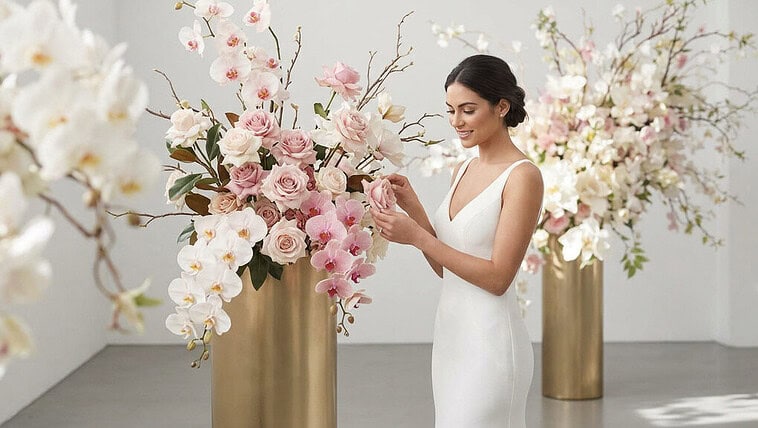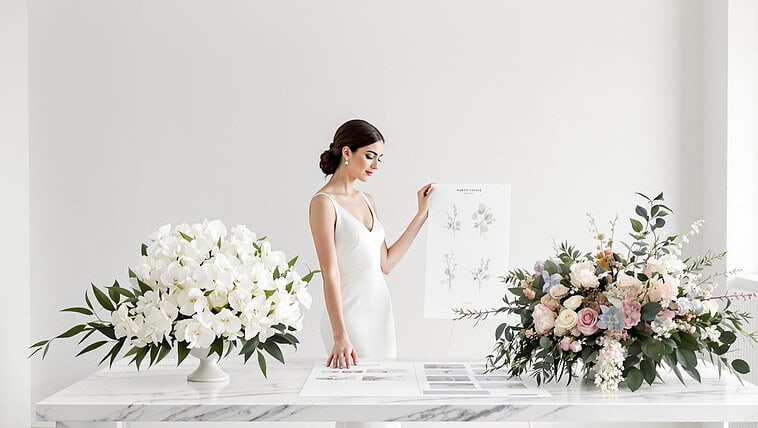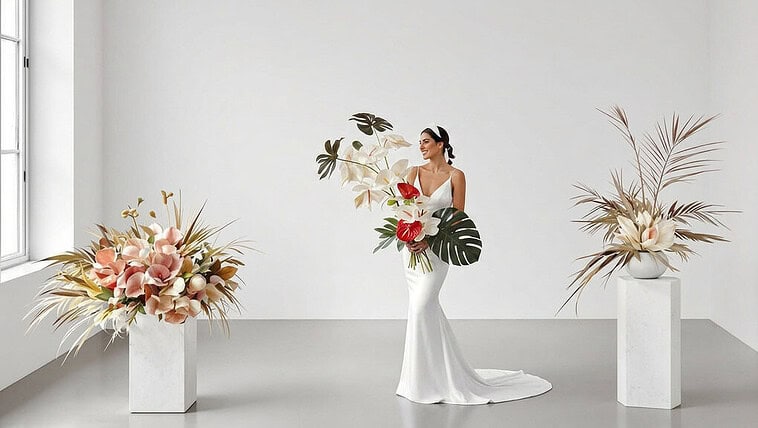
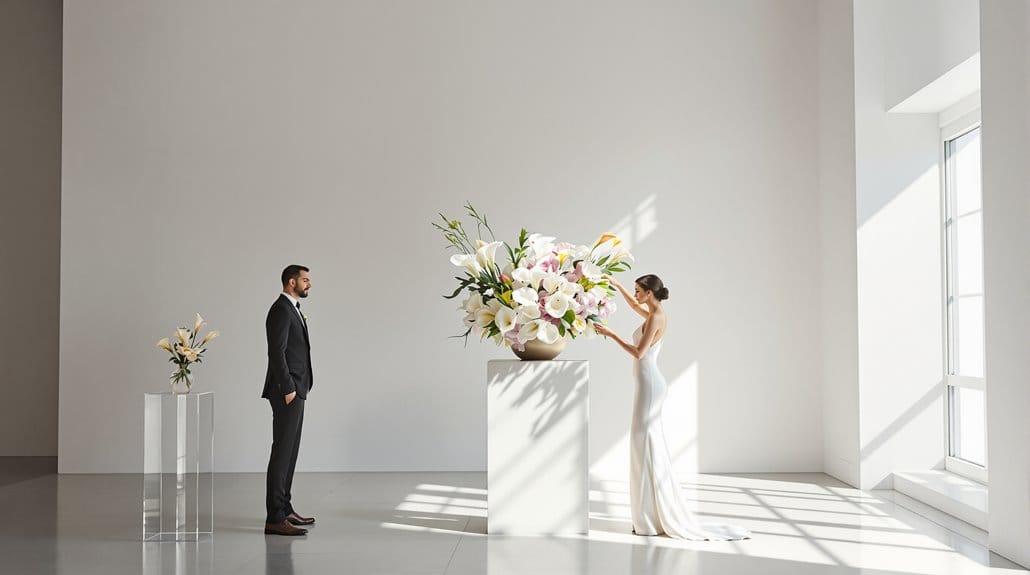
When you approach florals as sculpture—not mere decoration—you transform space rather than simply adorning it. Think volumetrically, considering how stems create sight lines and blooms establish visual mass. Great arrangements command attention through calculated spatial relationships, responding to architectural elements with intention. They’re exclamation points, not footnotes—framing moments, creating thresholds, establishing rhythm. You’re not a Pinterest curator; you’re an installation artist. And yet, this sculptural approach demands both mathematical precision and intuitive understanding of how negative space shapes experience.
The Decoration vs Sculpture Distinction – Essay opening
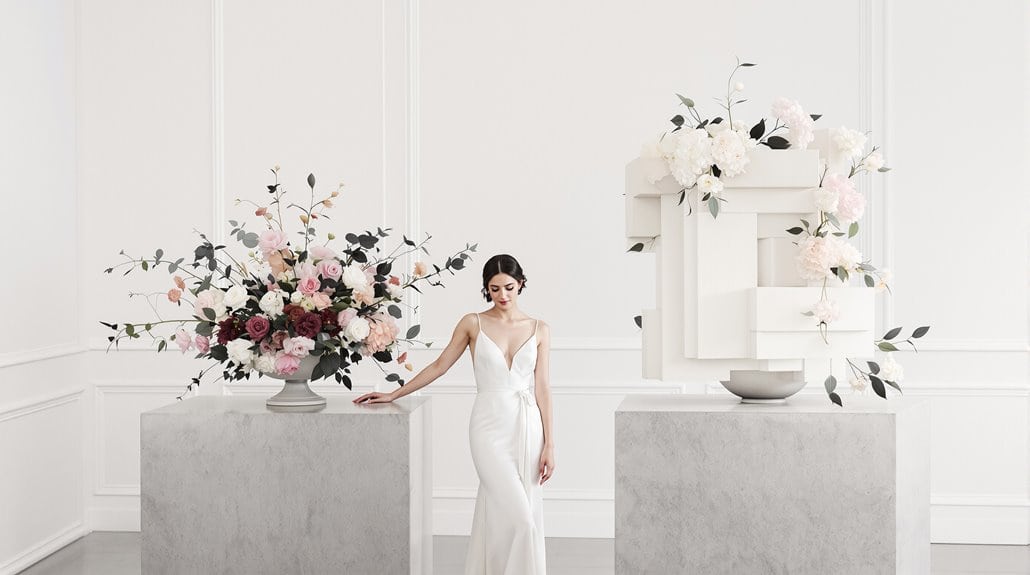
When you walk into a room where flowers exist merely as decoration, you’ll sense something fundamentally different from entering a space where floral arrangements function as sculpture. The distinction isn’t subtle—it’s foundational. Decorative florals sit passively, pretty yet peripheral; sculptural flower design commands attention, shapes experience, transforms environments.
You’ve seen this contrast: limp carnations in a hotel lobby versus a statement installation that stops you mid-stride, forcing reconsideration of the very space you’re standing in. Space intervention florals don’t apologize for their presence—they assert it. They respond to architectural elements, create sightlines where none existed, manipulate your perception of scale.
Bad florals decorate. Great florals sculpt space. And yet, the line between decoration and floral sculpture isn’t merely aesthetic—it’s intentional. When you approach flowers as three-dimensional entities with artistic gravity rather than pretty afterthoughts, you’re engaging with an entirely different medium, one that breathes life into environments rather than merely ornamenting them. For intimate weddings, sculptural florals become even more crucial, as every element must carry weight and meaning in smaller, more intentional spaces. This sculptural approach extends back to Byzantium, where designers created elaborate Espalier arrangements that resembled stylized, conical trees with meticulously spaced clusters of flowers.
How Great Florals Interact with Architecture
The greatest floral installations don’t merely occupy architecture—they interact with it in profound dialogue. You’ll see this when floral design as sculpture responds to a room’s height with dramatic verticals, or creates sight lines that guide your eye through a space. Great florals manipulate scale perception, making expansive lobbies feel intimate or small alcoves expansive.
Consider how architectural florals establish rhythm through repeating elements—five identical arrangements spaced precisely along a corridor, or clustered forms that mirror nearby structural columns. They frame moments, too, creating portals of twisted branches that transform how you experience thresholds. This isn’t decoration; it’s spatial storytelling. These installations function as photographic hotspots, drawing the eye during ceremonies and creating distinct focal points that define ceremonial and transitional zones.
Floral installation art operates through contrasts and complements: soft blooms against hard concrete, rigid geometric forms beside fluid organic shapes. When you’re working with flowers, you’re sculpting negative space, not just arranging stems—and that’s the fundamental shift that transforms decorative into architectural. The most compelling arrangements incorporate purposeful negative space as an active design element rather than an afterthought.
Florals as Spatial Intervention
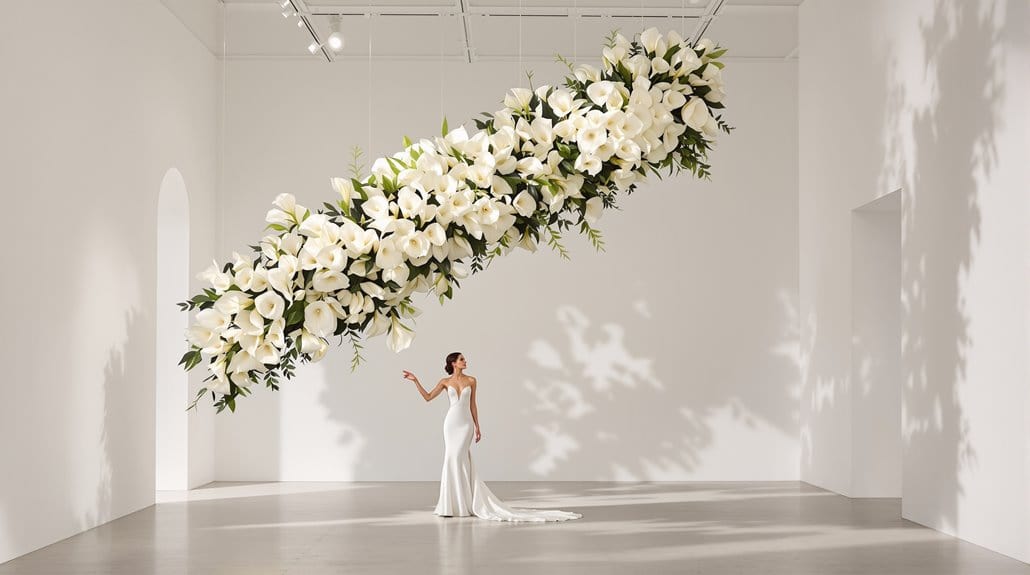
True spatial intervention through florals begins with volumetric thinking—not just what flowers to use, but how their mass occupies and transforms three-dimensional space. You’re not decorating a room; you’re sculpting it. Consider how a floral sculpture redirects movement patterns, establishes sight lines, manipulates perception of scale.
When approaching spatial design, analyze your venue’s proportions first—high ceilings demand vertical elements, broad spaces need expansive spreads. Your arrangements should respond to architecture, not fight it. Cluster identical blooms to create concentrated visual mass; this amplifies impact without requiring more material. And yet, negative space remains equally critical—resist filling every gap. Those empty zones aren’t voids but structural principles that improve your composition’s sophistication.
Your volumetric presence requires tactical placement. Position arrangements at entrances, stages, focal points—places where they’ll optimize viewer involvement. Remember: bad florals sit in corners, great florals command the room. Drawing inspiration from diverse cultural approaches to floral design—from Hawaiian cultural traditions to modern European techniques—can expand your spatial vocabulary and deepen your sculptural practice.
Creating Sight Lines and Framing Moments
Successfully creating sight lines through floral design hinges on mastering the language of lines themselves—those visual paths that direct, guide, and frame your viewer’s experience. You’re not just arranging flowers; you’re sculpting perception.
Vertical lines stretch space upward, while horizontals ground it—combine them to frame architectural features with geometric precision. But diagonal and curved lines? They’re your secret weapons, injecting movement where static arrangements would falter. Notice how three gladioli stems at varying heights create an implied diagonal that pulls the eye through the composition.
When framing moments, consider your line types carefully. Curved arrangements (think swooping branches of quince or forsythia) establish gentle visual paths that frame without confinement. Hard angles frame with authority. Your choice of actual lines—physical stems, branches—versus implied lines created by color progression or flower placement determines whether your framing whispers or announces itself. Either works, if deliberate. Just as no middle seats on a train car ensures unobstructed sight lines for passengers, your floral compositions should provide clear visual pathways that allow the eye to move freely through the design without interference.
Scale Manipulation Through Floral Design
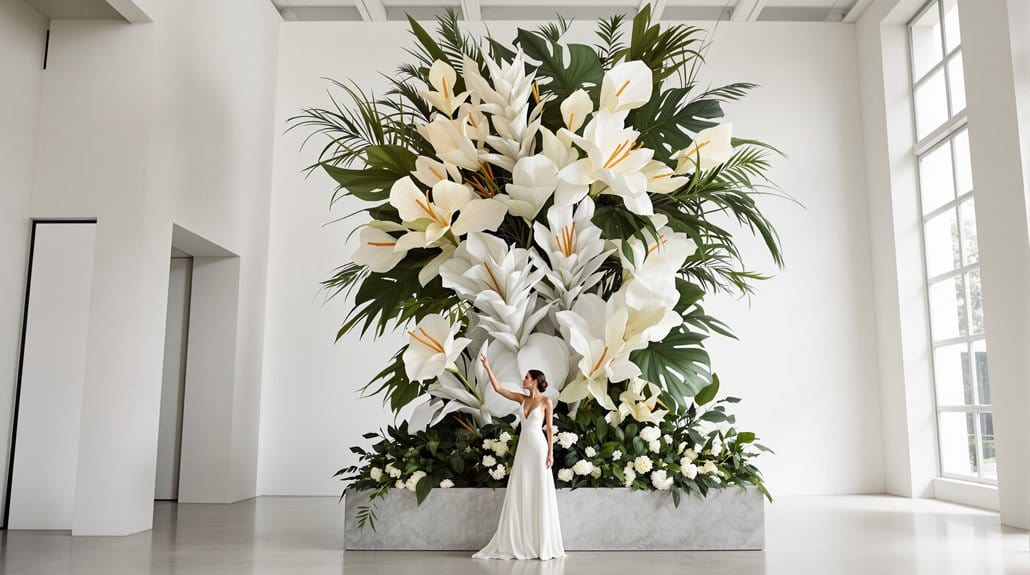
Mastering scale manipulation separates decorative flower arranging from true spatial sculpting, because you’re not just filling space—you’re actively reshaping how viewers perceive it. When you deconstruct larger blooms through feathering techniques, you’re creating visual repetition at reduced scale—forcing the eye to recalibrate its understanding of the room’s dimensions.
In architectural flower design, selective pruning isn’t mere editing; it’s intentional revelation of structure. You’ll find yourself stacking and terracing materials to establish horizontal planes that either compress or expand perceived height. And yet, the most refined floral design as sculpture employs environmental manipulation—accelerating or retarding bloom development through forcing techniques—to create deliberate size variations within single varieties. This isn’t accidental; it’s calculated flowers spatial design that plays with proportion relative to both container and setting. Try pillowing techniques with dome-shaped clusters to consolidate visual mass, or sectioning to create distinct rhythm zones that direct eye movement through your composition. When negotiating these ambitious installations with vendors, focus on scope modifications—such as substituting specific blooms or adjusting material quantities—rather than demanding blanket discounts that undervalue the sculptural expertise required.
Think Like Installation Artist Not Pinterest Curator
Scale manipulation creates architectural impact, but what transforms flora from décor to fine art is perspective—thinking like an installation artist, not a Pinterest curator. You’re not arranging; you’re sculpting space. When planning floral design as sculpture, your calculations must extend beyond color palettes into mathematical precision and cultural symbolism.
Consider the Toledo installation—10,000 locally sourced plants, 1,000 volunteer hours, and six months of planning. That’s not decorating. That’s architecture with petals. The best florals as architecture respond to their environment, creating cocoons that transform how you experience space.
Your arrangements should predict their own evolution—wilting becomes part of the narrative, not its end. Think beyond the vase. Map sight lines. Create journeys through undulating forms. Whether sourcing vessels from curated registry essentials or custom commissioning sculptural containers, every element contributes to the installation’s architectural integrity. When you’ve mastered floral design as sculpture, your work doesn’t just occupy space; it defines it, manipulates it, creates worlds within worlds—and yet remains fundamentally ephemeral.
Prioritize Form Over Sentiment

While sentiment drives floral arrangements for amateurs, seasoned designers understand that form creates the foundation for every sculptural masterpiece. You’re not telling a story—you’re constructing a geometric reality. Those triangular arrangements, radial designs, and Fibonacci spirals aren’t accidents but deliberate spatial mathematics.
Consider your florals through their three-dimensional presence: height, width, depth—all angles matter simultaneously. Wireframes become your skeleton, silhouettes your signature. When you’re mapping those line-mass arrangements, you’re establishing architectural authority, not emotional whimsy.
Your eye should track static verticals and energetic curves with equal precision, noting how they direct movement through space. Divide your composition into thirds, establish rhythm through calculated intervals, build depth through purposeful layering. The cold truth? Those Pinterest arrangements fail because they prioritize sentiment over structure. Great florals don’t merely express feelings—they manipulate perception, sculpt environments, command attention through form alone. Modern museum venues understand this principle with their white walls and minimal decoration, transforming floral installations into the singular sculptural focal point against pristine backdrops.
Conclusion
The architectural mindset transforms floral work from decoration to declaration. When you approach flowers as sculptural elements rather than pretty things to scatter about, you’re participating in a visual conversation with the space itself. Your arrangements become intentional punctuation marks—bold exclamation points drawing the eye upward, ellipses creating pauses along a mantel, question marks that curve and invite exploration around corners.
And yet, this sculptural approach doesn’t diminish the inherent beauty of florals; it amplifies it. By considering sight lines, scale relationships, and spatial framing, you’re actually honoring the botanical material more completely. You’re acknowledging its dimensional presence, its structural integrity, its ability to define and manipulate space.
Treating florals as sculpture means recognizing their power beyond sentiment—as formal elements that carve negative space, establish rhythm, and transform environments. They aren’t just pretty things. They’re architectural collaborators. And when incorporating candlelight among your arrangements, remember that grouping in threes or fives creates stronger visual impact than overcrowding, while maintaining proper safety clearances honors both the beauty and responsibility of working with flame.