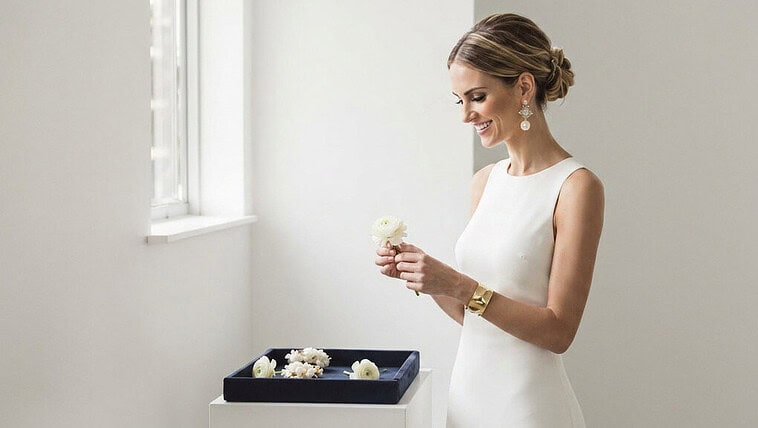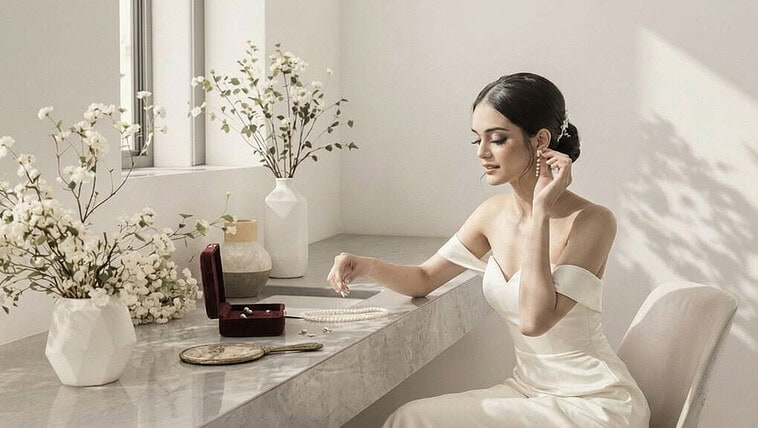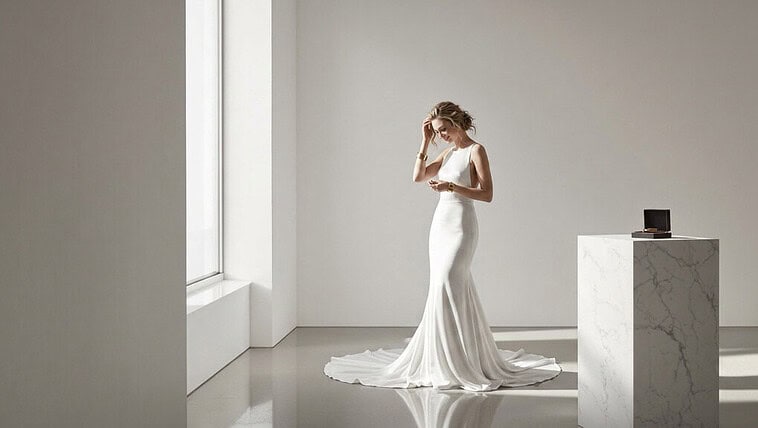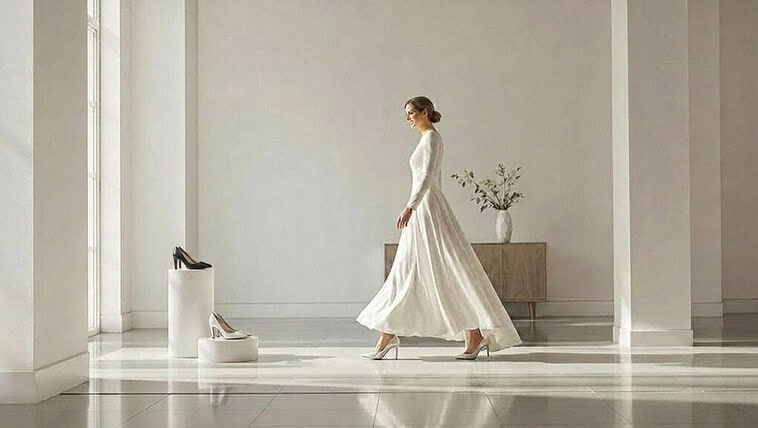

Your veil choice broadcasts complex signals about your values and identity. Wearing one connects you to centuries of tradition, religious symbolism, and cultural heritage—yet skipping it declares independence and practicality. The cathedral-length version communicates reverence; bareheaded signals modern priorities. Consider not just the aesthetic (how it photographs, complements your gown) but what you’re saying to guests about your relationship to convention. This seemingly simple accessory decision reveals far deeper meanings beneath its surface.
What Veils Communicate – Essay opening
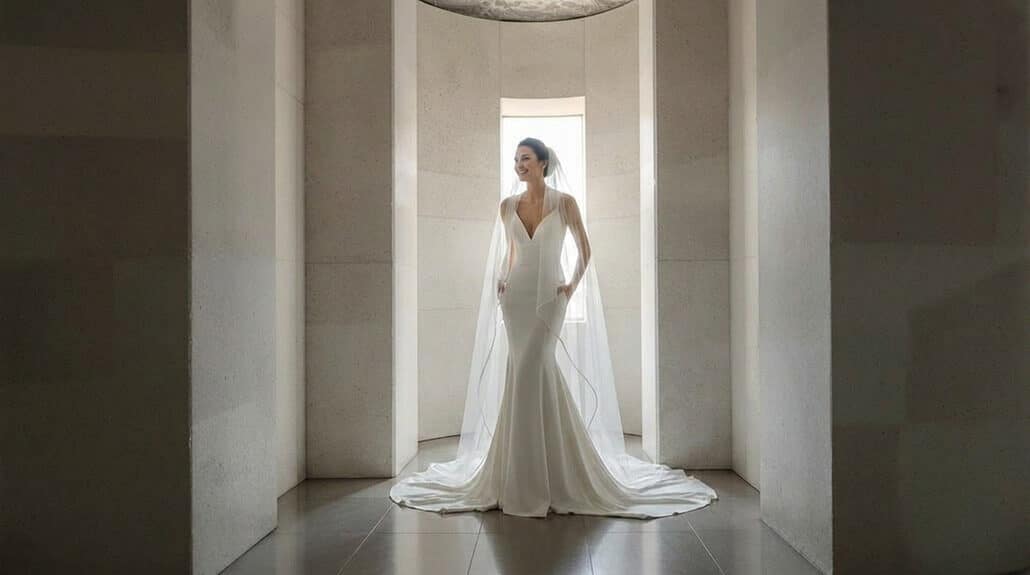
A bride’s veil—that gossamer cloud of tulle or lace—speaks volumes before she utters a single vow. Your bridal veil choice transmits centuries of cultural code in a single accessory. Traditional veils announce virtue, spiritual commitment, and the ceremonial passage from maiden to wife—a visual punctuation mark in your life’s narrative.
Consider the layered wedding veil tradition: in ancient Rome, brides wore flame-colored veils to ward off demons, while Victorian women embraced white tulle as the definitive purity statement. And yet, veil symbolism transcends mere historical footnotes. When you lower that delicate fabric over your face, you’re engaging with 4,000+ years of bridal communication—positioning yourself within or against expectations of femininity. In biblical times, Rebekah’s act of covering herself with a veil signaled her modesty and sanctity before meeting her future husband Isaac.
The veil transforms you, quite literally, into a liminal figure—no longer single, not yet married. It’s both shield and spotlight, concealing vulnerability while announcing your centrality in the ceremonial tableau. Modern venues like the Whitney Museum have witnessed this tradition evolve, hosting contemporary weddings where brides reinterpret these ancient symbols in spaces dedicated to American artistic expression.
Veil as Traditional Signal
When you choose a traditional bridal veil, you’re not simply selecting an accessory—you’re stepping into a lineage stretching back over four millennia. The veil significance in weddings transcends mere fashion; it’s a potent symbol with layers of cultural meaning that communicate your values without speaking a word.
Your veil broadcasts four distinct traditional messages:
- Protection – Ancient Romans wore flame-colored flammeumveils to ward off jealous spirits
- Purity – The white fabric represents virginity, innocence, and moral virtue
- Transition – You’re visually marking passage from single life to married partnership
- Respect – Across faiths, veiling signals reverence for sacred matrimony
The wedding veil meaning has evolved from protective garment to ceremonial marker, yet remains fundamentally unchanged in its core purpose—to distinguish this day from all others. It’s Victorian formalization cemented its status in Western tradition, but its veil cultural meaning predates modern wedding aesthetics by thousands of years. In Jewish tradition, the bedeken ceremony occurs when the groom veils the bride before the wedding, symbolizing that he values her inner qualities over her physical appearance. In some historical contexts, veils served as a practical element in arranged marriages by concealing the bride’s appearance until the ceremony was finalized.
No Veil as Modern Statement
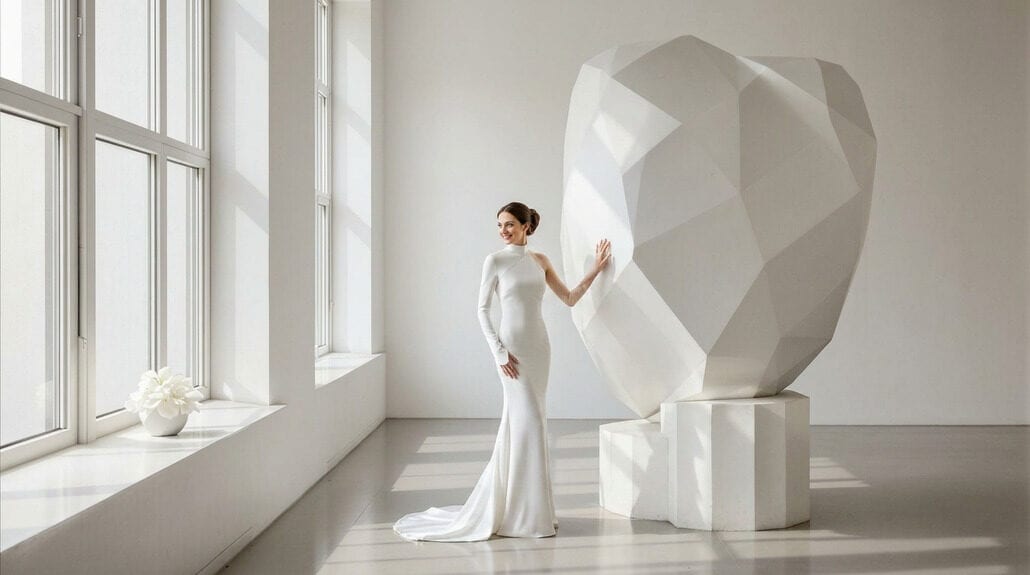
While traditional veils connect you to centuries of bridal history, your choice to forgo one speaks volumes about your modern sensibilities. You’re joining the 14% of brides who reject headpieces entirely, embracing a contemporary wedding veil meaning that prioritizes authenticity over convention.
Your decision isn’t merely aesthetic—it’s practical. Outdoor venues (beaches, gardens, mountains) make veils logistically nightmarish, constantly battling wind and natural elements. But it’s deeper than logistics. The veil cultural meaning has shifted dramatically, with 70% of brides now removing veils for receptions anyway, acknowledging their diminished symbolic importance.
Instead, you’re likely considering alternatives: decorative combs (16%), floral crowns (10%), or fresh flower arrangements (9%). These choices reflect economic prudence too—redirecting $200-1,000 toward investments that outlast the ceremony. Your no-veil wedding signals independence, practicality, and a bride who values personal expression over prescribed tradition—and yet, paradoxically, creates its own powerful statement. Treating this decision as part of your overall wedding budget management ensures you allocate resources toward elements that truly matter to your vision.
Religious and Cultural Veil Meanings
Why does a simple piece of fabric carry such profound spiritual weight? The veil’s meaning isn’t inherent to the fabric itself—it emerges through complex religious discourse, social relationships, and theological structures. When you choose to veil, you’re participating with traditions that span millennia and continents.
Religious veiling functions as:
- A signal of devotion with scriptural basis—Qur’anic edicts and Christian traditions from Genesis onward
- A community marker that correlates with subjective religiosity and religious text engagement
- A social integration mechanism with different enforcement patterns in urban versus rural settings
- A life-stage signifier distinguishing age, marital status, and social position
And yet, these meanings shift dramatically across contexts. The same veil that signals oppression in one community represents liberation in another. Your relationship with veiling reflects not just personal faith but your positioning within intersecting hierarchies of tradition, gender, and cultural belonging. In Canada, debates about veiling have extended into civic ceremonies, including controversies over whether women should be required to remove face coverings during citizenship oath ceremonies.
Aesthetic Considerations Beyond Symbolism
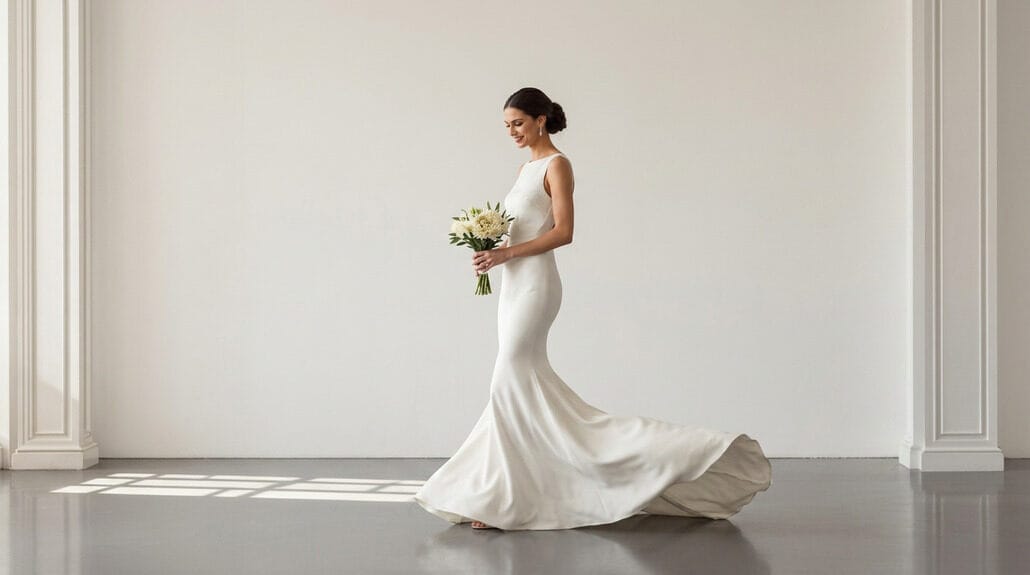
Religious symbolism gives the veil profound spiritual weight, but its aesthetic impact carries its own irrefutable power. When choosing between veiled and unveiled, consider how length dramatically alters your silhouette—fingertip veils flatter universally while cathedral styles create heart-stopping entrances. Your gown’s complexity demands tactical pairing; ornate dresses call for plain veils that won’t compete, yet minimal designs benefit from softly embellished options that prevent underwhelming simplicity.
Photography amplifies these choices tenfold. Veils capture light magnificently, framing your face with ethereal softness, and longer styles enable those coveted “flying veil” shots. And yet, going veil-free opens equally persuasive doors: floral crowns add whimsy, jeweled combs introduce targeted sparkle, and bare hairstyles create clean, modern lines that complement minimalist aesthetics perfectly.
Like contrasting textures in design, the interplay between veil fabric and gown material creates visual interest and depth that a perfectly matched set cannot achieve. The decision transcends tradition versus modernity—it’s about creating the visual story that harmonizes with your deepest aesthetic truth.
What Your Choice Says to Different Viewers
How differently your veil choice reverberates across the kaleidoscope of wedding guests might surprise you. That gossamer accessory (or its deliberate absence) transmits a complex semaphore, projecting vastly different meanings depending on who’s watching.
Your veil decision broadcasts distinctly to:
- Religious observers – A cathedral-length veil signals reverence; bareheaded suggests contemporary faith or none at all.
- Cultural traditionalists – Wearing grandmother’s mantilla demonstrates heritage honoring; skipping it altogether declares current-day priorities.
- Historically attuned guests – Your blusher nods to Roman flammeum traditions; its absence rejects antiquated purity symbolism.
- Personal expression advocates – A dramatic veil proclaims romantic aestheticism; going without emphasizes practical comfort or facial features.
- Photography enthusiasts – Whether you schedule golden hour photos will influence how your veil (or its absence) interacts with natural light, creating either ethereal backlit portraits or unobstructed facial documentation.
You’re simultaneously preserving millennia of matrimonial symbolism and dismantling gendered expectations—and yet, paradoxically, what matters most isn’t the interpretation of others but your authentic connection to whichever choice resonates with your truest self.
Making Intentional Choice vs Default
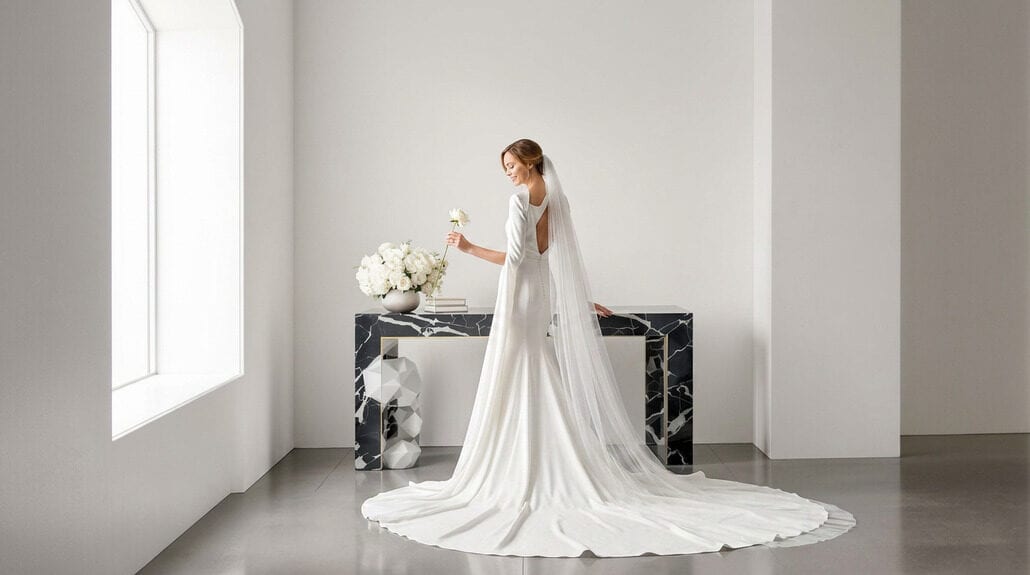
While choosing a veil might appear deceptively simple—yes or no, long or short—the chasm between conscious selection and unexamined default runs devastatingly deep. You’re navigating not just fabric, but identity politics, family expectations, and your own authentic desires.
| Decision Path | Psychological Impact | Relational Outcome |
|---|---|---|
| Reflexive Default | Potential future regret | Reinforces others’ expectations |
| Ritualized Tradition | Sense of continuity | Connects to familial lineage |
| Deliberate Choice | Ownership of narrative | Creates authentic memories |
Most women’s veil decisions exist somewhere between pure autonomy and social conformity—a messy terrain where 65-70% ultimately wear veils. And yet, the process matters enormously. When you consciously evaluate options against your values rather than sleepwalking into tradition, you’re not just selecting headwear—you’re practicing agency. This same principle applies when working with vendors, where viewing them as collaborators shaping experiences rather than mere service providers transforms the entire planning dynamic. The veil becomes neither inherently oppressive nor liberating, but rather what you intentionally make it.
Conclusion
The veil decision stands as a personal referendum on both history and identity—a seemingly superficial choice that actually exposes the intersection of your values, aesthetics, and relationship to tradition. Whether you don your grandmother’s heirloom tulle or reject veiling entirely, you’re making a statement that transcends mere fashion.
Your choice communicates four distinct messages:
- Your relationship with religious symbolism—embracing or reinterpreting sacred traditions
- Your stance on gender conventions—continuing, subverting, or reimagining feminine presentation
- Your aesthetic priorities—theatrical romance versus sleek modernity
- Your family dynamics—honoring expectations or asserting autonomy
Remember: there’s no wrong answer, only unexplored intentions. The most successful choice isn’t about conformity or rebellion, but conscious alignment with your authentic self. And yet, even this personal decision exists within cultural context—your veil choice becomes part of the evolving visual language of matrimony, simultaneously private and public, traditional and transformative. For additional wedding inspiration and to see how other brides approach this decision, platforms like Instagram offer endless visual references from real weddings and styled shoots.