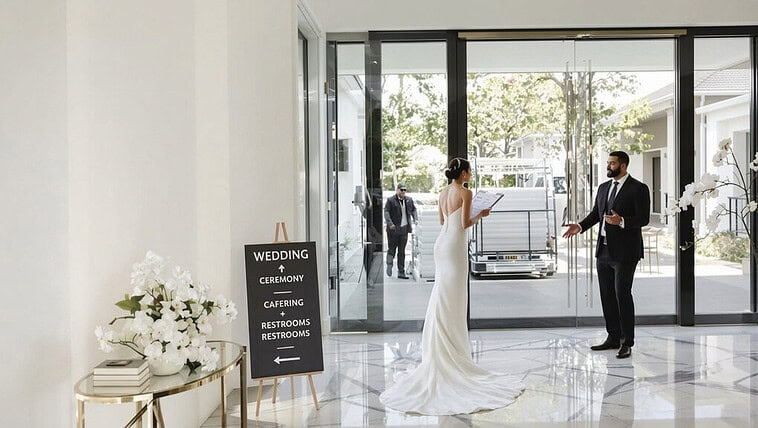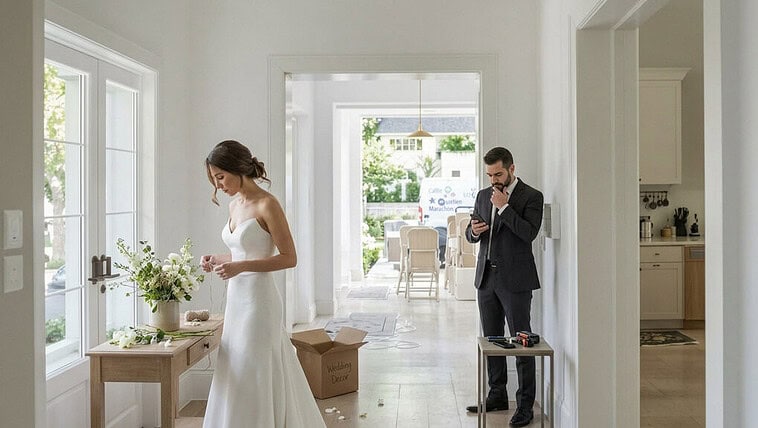

A wedding-ready home isn’t about charm—it’s infrastructure. You’ll need electrical capacity for catering and entertainment, one bathroom per 35 guests, parking for half your guest count, and viable weather contingency spaces. Municipal permits ($25, two weeks advance) are non-negotiable. The most sentimental properties fail without proper flow between ceremony and reception areas, sufficient power distribution, and bathroom accessibility. Your dream backyard venue demands brutal honesty about what lurks beneath its Instagram-worthy surface.
The Suitability Question

While hosting a wedding at your family home promises incomparable intimacy and personal significance, the reality check must happen before you mail a single invitation. Not every beloved property—no matter how picturesque—can functionally support a wedding’s logistical demands.
Your home venue evaluation should start with brutal honesty: can you realistically fit your guest list for both ceremony and reception? Most residential properties struggle to comfortably accommodate 50+ guests without creative space utilization. Property wedding suitability hinges on essential infrastructure—electrical capacity sturdy enough for catering equipment, bathroom facilities proportionate to your headcount (or space for rentals), and parking for at least 75% of attendees. Starting the cleanup process weeks in advance will ensure your space is presentable and free of distractions during the main event. Remember, embracing quiet luxury can enhance the overall ambiance by focusing on elegant restraint in your decor choices.
A thorough wedding venue home assessment must include weather contingency planning. That sun-dappled garden ceremony becomes a liability without adequate indoor backup space. And yet, with proper professional consultation from planners or contractors, seemingly unsuitable properties can transform—if you’re willing to invest in necessary adaptations.
Electrical Capacity Assessment
Most residential electrical systems weren’t designed with DJ equipment, catering stations, and dance floor lighting in mind. You’re asking a 100-amp service—perfectly adequate for daily living—to suddenly power commercial-grade appliances and entertainment systems simultaneously. This is where property wedding suitability hits its first major technical hurdle.
Your home electrical system requires methodical evaluation, not optimistic guesswork. Count every outlet, identify circuits, and calculate amperage requirements for each vendor’s equipment. That vintage farmhouse charm? Utterly worthless when breakers trip mid-reception. And yet, solutions exist for those committed to the vision: supplemental generators (properly rated, not that portable camping unit), professional load distribution planning, and tactical scheduling of high-draw equipment. Consider developing a detailed power distribution plan that maps all equipment locations and wiring paths throughout your property. Effective tier allocation strategies can also help in optimizing your budget for necessary upgrades.
The math is unforgiving but necessary—200 amps might suffice for modest gatherings, while elaborate productions demand 400+ amps, often necessitating temporary service upgrades that transform electrical capacity assessment from afterthought to cornerstone of your planning process.
Bathroom Sufficiency: The 1 per 35 Rule

Unless your at-home wedding is strictly a champagne toast and cake cutting affair, bathroom capacity will become the unexpected bottleneck that derails your celebration. Your private property wedding ready assessment must include a hard look at toilet-to-guest ratios—and not just any ratio. The wedding industry’s standard falls closer to one facility per 35 guests, but it’s complicated.
When evaluating your bathroom sufficiency:
- Calculate true capacity—count only functioning, guest-accessible bathrooms
- Add 20% more facilities when serving alcohol (dehydration’s inevitable companion)
- Consider demographic factors—older guests require more frequent access
- Plan for clustering—post-dinner and pre-dancing create bathroom rushes
- Factor in dress logistics—brides and formal attire require longer facility time
- Recognize that ensuring sufficient bathroom access can enhance the overall guest experience, contributing to a more enjoyable celebration.
The bathroom math feels clinical, and yet it’s intensely human. Your dream home venue transforms into a nightmare quickly when guests spend more time queuing for toilets than celebrating your union.
Parking Accommodation Requirements
Even the most spectacular backyard can’t survive the vehicular onslaught of fifty wedding guests searching for somewhere—anywhere—to leave their cars. Your property wedding suitability hinges on this unglamorous truth: you need one parking space for every two guests, non-negotiable.
When completing your backyard wedding checklist, measure actual space—not wishful thinking. Your idyllic residential street? Probably regulated. Your expansive lawn? Not designed for tire tracks. Local ordinances further complicate matters, with HOAs notorious for swift enforcement against rogue event parking.
The solutions, though, exist. Consider valet services operating from nearby rented lots. Shuttle guests from community centers or schools. Install clear directional signage—those charming wooden arrows aren’t just aesthetic; they’re functional necessities. Your wedding venue home assessment must reconcile the poetry of matrimony with the prose of logistics. Beautiful ceremonies collapse under the weight of parking chaos, and yet—with foresight—this mundane challenge becomes entirely manageable.
Weather Contingency Space Options

While parking plans secure your guests’ arrival, Mother Nature remains the one wedding guest who refuses to RSVP. Your property wedding suitability hinges on having solid backup plans—spaces that won’t leave your celebration drenched if skies open. When you evaluate home wedding potential, look beyond the garden’s beauty to its weather resilience.
- Dual-space properties offer immediate indoor/outdoor alternatives without panicked day-of scrambling
- Clear-top tents provide rain protection while maintaining that coveted open-air aesthetic (book months ahead)
- Covered pavilions with plexiglass side panels block horizontal rain without sacrificing natural light
- Indoor spaces need capacity assessment—they must accommodate your full guest list, not just half
- Modular seating arrangements allow for quick configuration changes without guest confusion
Your wedding venue home assessment isn’t complete until you’ve documented exactly how you’ll pivot when—not if—weather threatens. And yet, these contingencies often create the most memorable moments, turning potential disasters into distinctive celebrations.
Municipal Permitting and Noise Ordinances
After you’ve secured your weather contingency plans, your next hurdle involves maneuvering the labyrinthine world of municipal regulations—paperwork that transforms your private sanctuary into a legally sanctioned venue.
Your wedding ready home must comply with permit requirements that activate with surprising triggers: 25+ attendees, alcohol service, live music, or temporary structures. You’ll need applications submitted 15 days prior in most jurisdictions, though I’d recommend 30+ days to navigate inevitable bureaucratic delays. Each locality’s rules diverge wildly—some allow four special events annually while others scrutinize noise levels with scientific precision.
The property wedding suitability hinges on these ordinances, not just aesthetics. During your wedding venue home assessment, check whether you’ll need portable bathroom permits, fire inspections for tents, or special alcohol service documentation. The standard $25 permit fee seems trivial until you’re scrambling to secure it two weeks before vows.
Property Passes vs Fails Assessment

Once you’ve navigated municipal red tape, the clinical evaluation of your property’s wedding-worthiness begins—a process less about romance than ruthless infrastructure assessment. Your beloved home—where you’ve created countless memories—might fail spectacularly as an event space. And yet, this isn’t about sentiment; it’s about capacity.
The unvarnished reality checklist for residential wedding viability:
- Electrical systems must support multiple caterers’ equipment simultaneously—inadequate amperage means blown circuits mid-reception
- Bathroom-to-guest ratio should approach 1:50—anything less creates undignified queues
- Parking must accommodate 75% of your guest count within reasonable walking distance
- Weather contingency space is non-negotiable—tents require specific dimensions and anchoring capabilities
- Structural flow patterns between ceremony, cocktail, and reception areas demand logical progression without bottlenecks
Your property’s wedding readiness isn’t determined by its charm or your attachment to it, but by its clinical ability to function as a venue—a distinction that separates Pinterest dreams from executable events.
Conclusion
Though transforming your beloved home into a wedding venue represents the final personalization of your celebration, it requires an unsentimental acceptance of logistical realities that few residential properties fully satisfy. Your emotional attachment to the space—the garden where you’ll say vows, the living room transformed for dancing—must be balanced against ruthlessly practical infrastructure needs.
The successful home wedding demands both thorough preparation and strategic compromise. You’ll need emergency kits with safety pins and sewing supplies, 35 ice bags for 100 guests, temperature management systems, and vendor coordination schedules that leave nothing to chance. And yet, even with exhaustive preparation, the right property makes all the difference.
When it works—when bathrooms accommodate your crowd, when electrical systems support catering needs, when parking doesn’t overwhelm neighbors—a home wedding transcends venue rental into something profoundly intimate. The question isn’t whether your home could host a wedding, but whether it should.