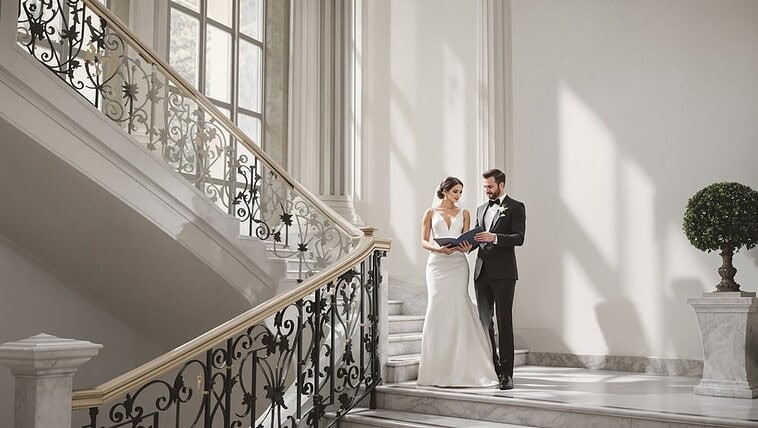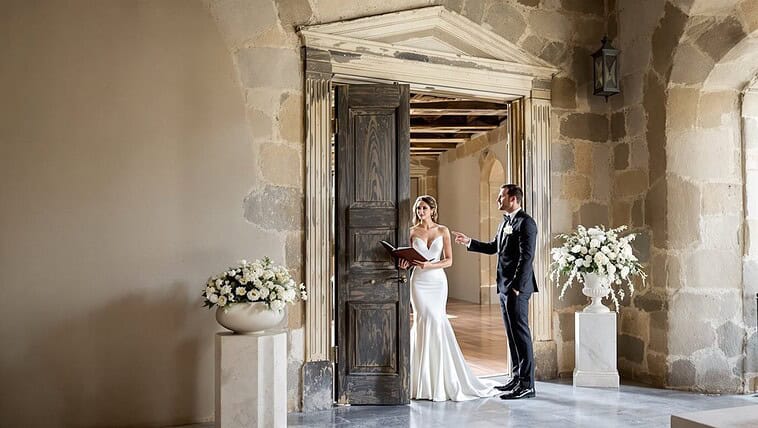
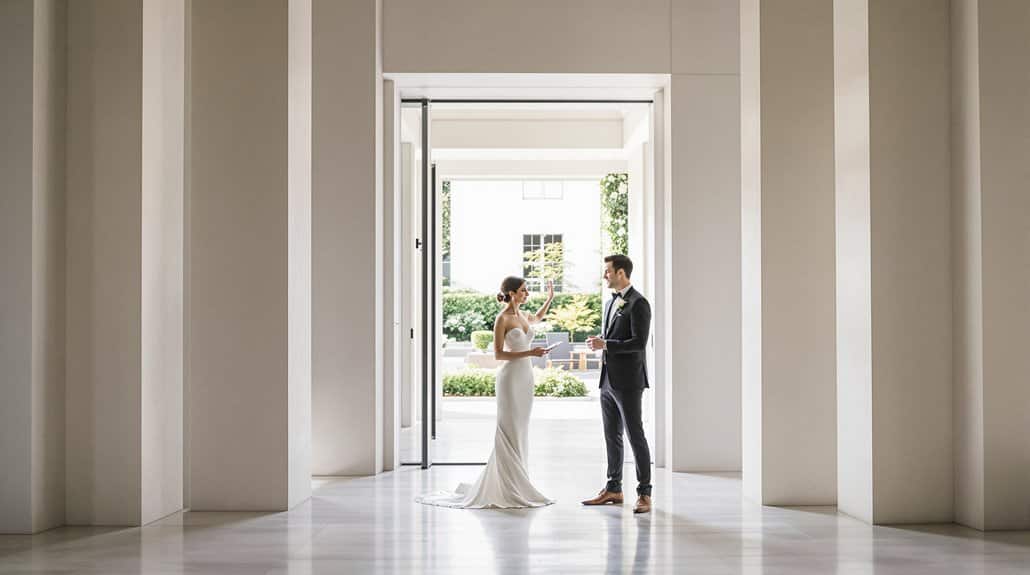
Authenticity separates real estates from wedding factories. You’ll notice genuine venues showcase historical provenance, architectural integrity (original moldings, period details), mature gardens (decades-old trees, not instant scenery), and organic setting integration. Branded venues feel artificial with their Disney-esque aesthetics, standardized packages, and purpose-built photo spots. True estates tell stories through irregular boxwoods, weathered staircases, and documented chains of ownership—they weren’t designed for weddings, they evolved. The distinction transforms not just your photos, but your entire experience.
The Estate Branding Problem – Essay opening
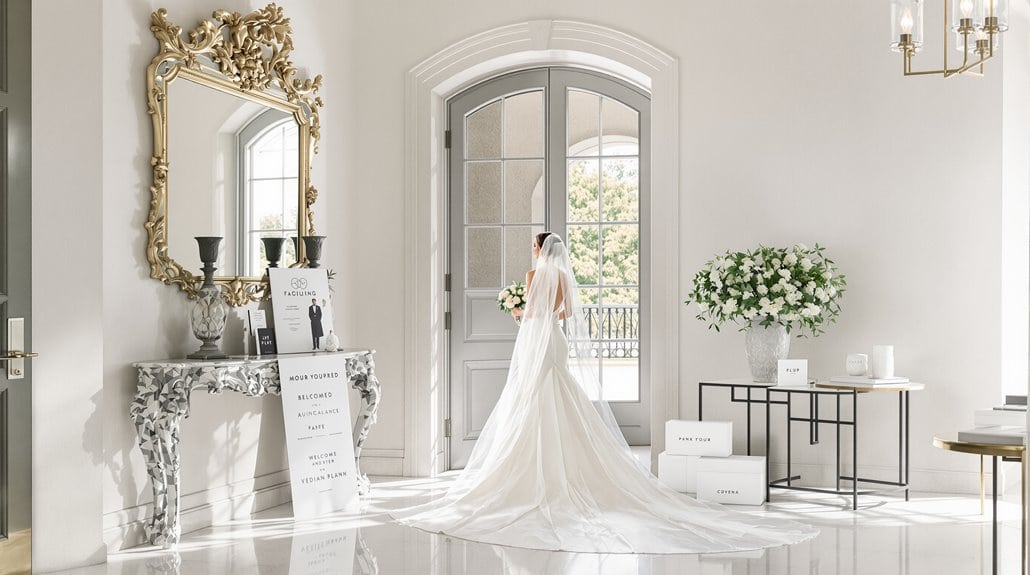
While the term “estate venue” conjures images of ivy-covered stone walls and centuries-old oak trees, the reality facing today’s wedding industry is a branding crisis of authenticity. You’ve seen it—venues with perfectly weathered barn siding (installed last month) and “heritage” gardens planted six weeks before their grand opening. The disconnect isn’t just philosophical; it’s financial.
Genuine heritage properties succeed when their visual identity and design coherence flows naturally from actual history—the typography on their website matching the architectural period of their buildings, the color palette drawn from the scenery that’s evolved over decades, not days. Successful venues must develop a compelling brand story that emotionally resonates with couples seeking authentic experiences. Moreover, quiet luxury is often achieved when venues prioritize elegance and restraint over ostentation, creating spaces that feel both timeless and refined. And yet, even legitimate estate venues frequently undermine their authenticity with fragmented branding: inconsistent signage, mismatched marketing materials, and photography that fails to capture their unique character.
The estate venue authenticity problem isn’t about age—it’s about intention. Does your branding promise align with what couples actually experience when they arrive? That’s the question that separates memorable destinations from forgettable function spaces.
What Makes a Real Estate: Provenance and History
Because anyone can slap “estate” onto their venue’s brochure, discerning couples need to understand what actually constitutes authentic provenance. True estate venue authenticity stems from documented chains of ownership—comprehensive records tracing back decades or centuries, not hastily assembled marketing narratives. You’ll want to examine city directories (1880s-1930s), parcel numbers, and legal descriptions that establish genuine historical lineage. Moreover, estates embody a sense of timeless elegance that reflects the heritage of their design principles.
When evaluating estate venue quality, look for properties with verifiable connections to notable residents or historical events. These aren’t manufactured stories but rather authenticated histories confirmed through comparative techniques and expert verification. Significant properties often demonstrate a history of only two primary families spanning multiple generations. The difference matters. Purpose-built barns with instant gardens can’t replicate what generations of maintenance creates.
Your estate venue evaluation should prioritize properties where provenance documentation exists in catalogues, publications, and verifiable records. Well-documented estates command higher prices for good reason—they offer something that can’t be manufactured: actual history.
Architectural Authenticity vs Disney-esque Details
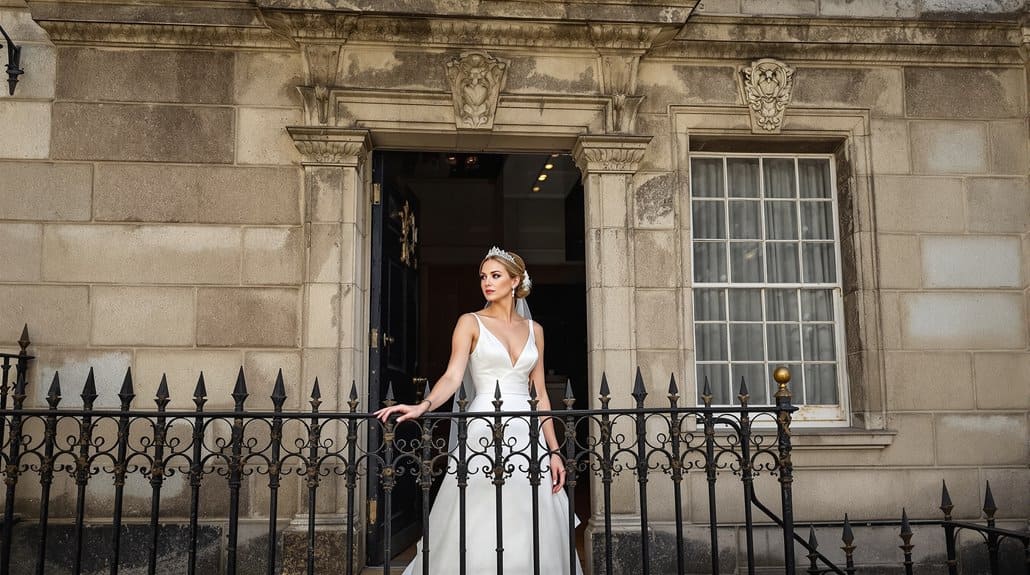
As you walk through the grand entrance of an estate venue, the distinction between authentic architectural integrity and contrived theatrical staging becomes immediately apparent. You’ll notice authentic estate venues showcase ornate moldings, grand staircases, and period-specific elements that breathe life—not manufactured fantasy—into your celebration. These spaces need minimal styling; their Victorian or Edwardian details already tell captivating stories.
Historic fabric and preservation matter tremendously. Gilded Age mansions with their original fireplaces and intricate woodwork provide tactile connections to another era. They don’t rely on theatrical lighting or oversized floral installations to manufacture gravitas.
Architectural authenticity reveals itself through proportions and materials—European-inspired ballrooms achieve drama through structural design, not compensatory decoration. Real estates feature multiple levels with sweeping views and elegant details that feel lived-in, not staged. And yet, these authentic spaces still allow for personal expression—they complement your vision rather than competing with Disney-esque embellishments. Recent luxury trends indicate a growing preference for venues that prioritize historical integrity over artificial embellishments.
Garden Maturity: Decades vs Instant Landscaping
True garden maturity reveals itself through the impossibly subtle markers that no instant landscaping budget can replicate. You’ll spot it immediately at genuine historic estates—the stratospheric oak spreading sixty feet above, adding $10,000 in value but centuries in gravitas.
Look closer. The boxwoods aren’t uniform; they’re slightly asymmetrical from decades of precise trimming against seasonal variations. A real estate venue’s authenticity manifests in gardens that have evolved through generations, not manufactured in months. Mature plant valuation isn’t merely financial—though excellent scenery boost property values 10-20%—it’s experiential.
You’re witnessing living history when walking gardens that have witnessed countless seasons, not just transplanted specimens arranged for immediate impact. The difference? True historic estates possess gardens that tell stories through their scars, irregularities, and unexpected beauty spots. Event barns with instant gardens can’t manufacture time—and your subconscious registers this instantly, even when you don’t.
Integration with Landscape vs Dropped on Property

While evaluating potential wedding venues, you’ll immediately sense which properties belong to their surroundings and which were simply imposed upon them. Authentic estate venues emerge organically from their landscapes—structures that have dialogued with their environment for generations, not merely occupied it.
The real estate venue reveals itself gradually: driveways that follow natural contours, buildings positioned to frame existing vistas, gardens that flow smoothly into native woodlands. And yet, the fake estate venue announces itself with jarring immediacy—a wedding barn plunked atop bulldozed earth, surrounded by immature plantings that haven’t had time to establish relationships with the land.
You’ll notice estate venue authenticity in subtle details: how water flows across the property, whether buildings respond to topography, if gardens incorporate indigenous species. These aren’t superficial design choices, but evidence of a venue that has earned its place rather than commandeered it.
Why Authenticity Matters Beyond Snobbery
The dismissal of authentic estate venues as mere snobbery represents one of the wedding industry’s most successful misdirections—convincing couples that substance and authenticity are luxury indulgences rather than functional necessities. You’re paying for more than bragging rights when choosing a genuine estate; you’re investing in centuries of architectural wisdom that solves problems modern replicas simply don’t anticipate.
| Authentic Feature | Functional Benefit | Guest Experience Impact |
|---|---|---|
| Period acoustics | Natural sound distribution | Speeches heard clearly without harsh amplification |
| Original floor plans | Intuitive guest flow | Reduced crowding at transition points |
| Mature landscaping | Microclimate management | Cooler outdoor spaces in summer heat |
| Heritage materials | Natural lighting advantages | Superior photography without excessive equipment |
| Architectural proportions | Balanced space allocation | Comfortable intimacy without claustrophobia |
These aren’t pretentious distinctions—they’re practical differences that materialize when fifty relatives navigate cocktail hour or when your photographer scrambles to capture moments in challenging light. Authenticity delivers function, not just status.
How to Evaluate Estate Authenticity

How exactly do you distinguish a genuine historic property from a cleverly staged imitation when venues tactically blur these lines in marketing materials? Start with provenance—the historical paper trail matters immensely. A legitimate estate has documented ownership spanning generations, not just a fancy certificate framed at the entrance.
Look for these three authenticity markers:
- Material integrity—examine whether 75% of visible surfaces are period-appropriate, not mass-produced reproductions installed last spring
- Architectural consistency—genuine estates maintain cohesive design languages throughout, rather than jarring contemporary additions masked by strategic photography
- Contextual appropriateness—authentic properties blend with surrounding scenery developed over decades, not hastily planted perimeter gardens
You might feel snobbish scrutinizing these details, and yet this discernment isn’t about elitism—it’s about understanding what you’re actually paying for. The property’s honest physical evidence tells a story that marketing copy cannot fabricate.
Examples: Genuine vs Branded
Examining concrete examples separates marketing fiction from historical reality when comparing venues that merely appropriate estate terminology versus those with legitimate heritage.
You’ll recognize genuine estates by their Victorian architecture with ivy-covered arbors, period-specific details, and gardens that have matured over decades—not manufactured in time for wedding season. They’re run by owners who’ll adjust your timeline because they’re hosting three weddings monthly, not three weekly. And yet, the branded “estates” present uniform carpeting, windowless ballrooms, and rigid six-hour packages with mandatory $15 corkage fees.
True estates let you bring in food trucks or private chefs without penalty. They feature decision-makers with dirt under their fingernails from tending the rose gardens, not corporate managers enforcing standardized protocols across multiple properties. The difference? One venue exists to host weddings; the other hosts weddings because it exists—history first, commerce second.
Conclusion
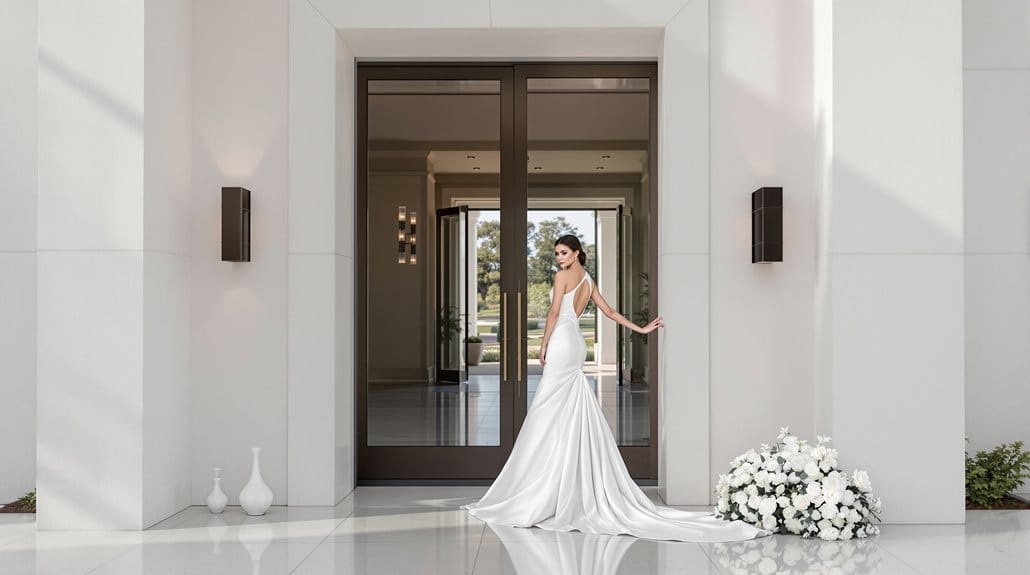
When choosing your wedding venue, distinguishing between authentic estates and their commercial imitations represents perhaps the most consequential decision you’ll make after selecting your spouse. The marketing terminology has become increasingly divorced from reality—what we call “estates” often bears little resemblance to properties with genuine historic provenance. You’re not merely selecting a backdrop; you’re choosing between authenticity and fabrication.
Consider these essential distinctions:
The authentic resists complete transformation, while the artificial merely awaits your preferences.
- Real estates offer historical narrative—architecture that speaks, gardens cultivated across generations, spaces that weren’t designed around photo opportunities
- Purpose-built “estate venues” prioritize wedding logistics over authenticity—convenient but lacking the patina of time
- Genuine estates require adaptation; commercial venues require acceptance of their predetermined aesthetic
The difference lies not in perfection but in integrity. Real estates demand flexibility and imagination; they won’t bend entirely to your vision, and yet—it’s precisely this resistance that creates the meaningful friction from which memorable celebrations emerge.