
Your wedding’s textile choices form a refined sensory language guests unconsciously read. Beyond mere matching, fabrics like invitation paper, dress materials, and table linens must establish intentional relationships—creating depth through contrast while maintaining harmony. The right combinations (silk under metallics, linen with jacquard) whisper a consistent story; disjointed selections compete rather than complement. Trust your tactile instincts when layering textures; they’ll reveal whether your material palette truly speaks with one voice.
Material Language as Design System – Essay opening

When we speak of designing a wedding, we’re actually crafting a sensory language—one that communicates through touch as much as sight. Your wedding’s tactile elements—the crisp cardstock of invitations, the delicate sheen of silk tablecloths, the structured weight of cotton napkins—form a coherent design system that guests unconsciously read.
Wedding fabric coordination isn’t merely aesthetic matchmaking; it’s narrative construction. The materials you select—whether the plush velvet of ceremony chairs or the gossamer tulle of your veil—express values, history, and intention. Your material palette wedding creates a physical vocabulary that reinforces your story through 27 different interaction points throughout the celebration. Additionally, careful budget allocation strategies can enhance your ability to invest in high-quality textiles that elevate your design.
The textile design wedding choices you make reveal everything. Heavy linen speaks of earthiness and tradition; sleek satin whispers luxury. These aren’t arbitrary decisions, but calculated components of a design system. Modern wedding planners utilize visual planning tools for creating cohesive textile arrangements that complement venue layouts and overall aesthetics. They matter immensely—and yet, most couples select fabrics piecemeal, missing the opportunity for material eloquence that transcends mere coordination.
The Cohesion Principle: How Textiles Should Relate
Though many couples obsess over matching bridesmaid dresses or perfectly coordinated boutonnieres, the true secret to wedding design excellence lies in the intentional relationship between every textile element present. Your fabric wedding design decisions should form a coherent language—not matched twins, but conversational cousins.
Consider this: when velvet napkins speak to similarly textured lounge pillows across the room, guests unconsciously register the connection. Material choices wedding planners swear by include deliberate repetition—carrying silk from ceremony backdrop to reception table runners creates an intuitive throughline. And yet, perfect uniformity feels sterile. The magic happens in the variations. Embracing quiet luxury in your textile choices can elevate the overall aesthetic of your wedding.
Your wedding fabric coordination should follow one of three approaches: complementary colors (navy/coral), analogous palettes (sage/olive/emerald), or monochromatic schemes with varying intensities. Layer textures deliberately—washed linen tablecloths under metallic chargers, for instance—to build depth that feels both intentional and effortless. Custom linens with embroidered motifs can powerfully reinforce your story elements while maintaining visual cohesion throughout the celebration space.
Invitation Paper Sets Expectation

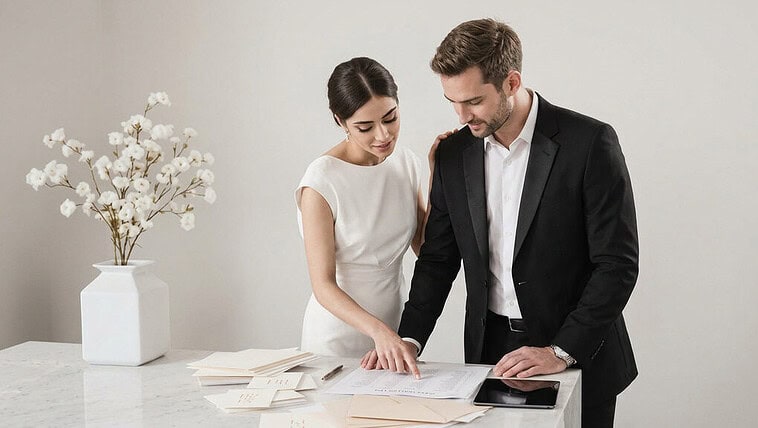
Consider how your paper’s texture—be it linen finish, pearlescent shimmer, or vellum translucency—prefigures your fabric wedding design choices. Smart couples match invitation textures to bridesmaids’ dresses, tablecloths, even bouquet ribbons. These aren’t arbitrary decisions; they’re the grammar of your wedding’s material language. Additionally, the choices you make reflect emerging luxury trends that elevate the overall aesthetic of your event.
Dress Fabric as Design Anchor
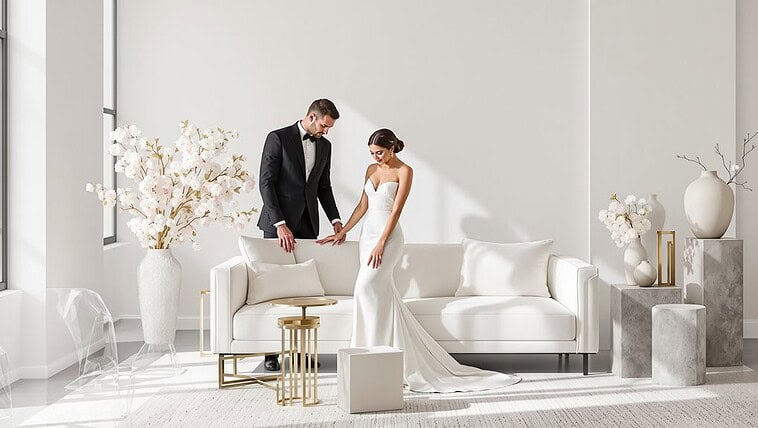
Your wedding gown’s fabric establishes the gravitational center of your entire design universe—everything else orbits around this essential choice. When considering wedding textile choices, the weight alone dictates your silhouette’s entire possibility spectrum: light chiffon creates ethereal movement, heavy satin demands structured drama, while medium-weight crepe balances both worlds. Yet fabric isn’t just functional—it’s your loudest visual statement.
The tactile reality: satin’s glossy elegance speaks differently than crepe’s subtle texture or beaded lace’s dimensional luxury. Your choice creates ripples through every design decision that follows. Contemporary brides increasingly gravitate toward mikado and crepe over traditional satin—a shift that reflects our collective move toward refined minimalism in wedding fabric coordination.
Season matters too. Those airy tulle dreams? Perfect for June, potentially disastrous in December. The wedding fabric coordination across your entire design scheme begins—without exception—with what you’re wearing.
Table Linen as Spatial Material
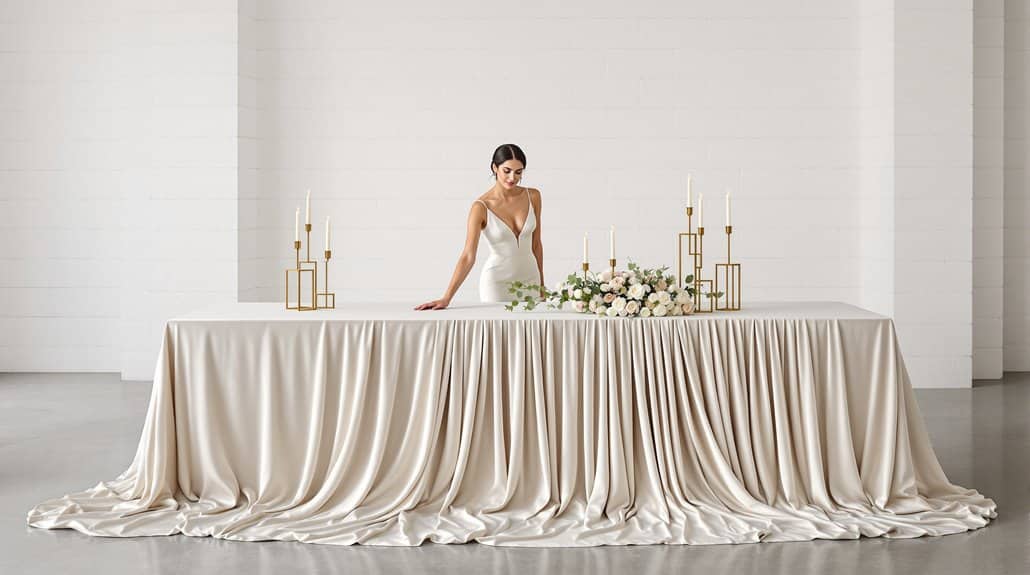
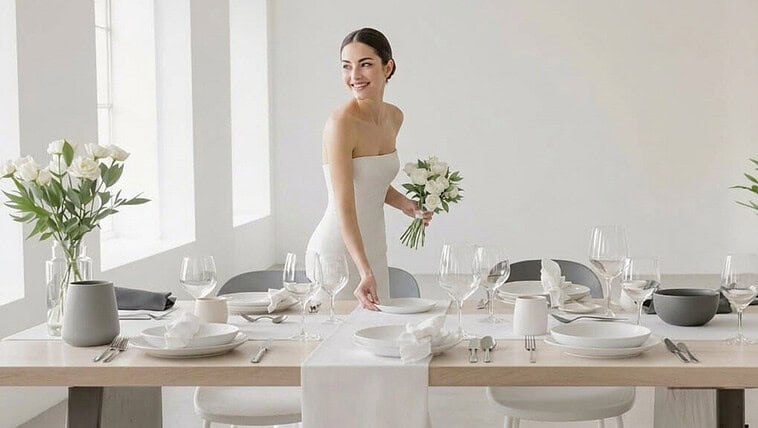
Table linens transform the wedding venue from an empty canvas into a fully realized design statement. You’re not just covering tables; you’re establishing the visual foundation that guests will interact with for 4-6 hours—a tactile experience that colors their entire perception. Velvet tablecloths in Evergreen or Rust create warmth; yet they require balancing with smooth cotton napkins to avoid sensory overload.
Layering creates unmatched dimension—silver-threaded linens beneath delicate tulle, or sequin runners atop matte bases for evening affairs. The contrast makes each element sing.
Your fabric choices should speak volumes: jacquard for traditional elegance, linen for relaxed sophistication, burlap for authentic rusticity. Each carries unmistakable meaning. The smartest approach? Select patterns that reduce the need for additional décor—checkered runners or floral prints functioning as both canvas and art simultaneously, saving both budget and visual clutter.
The Texture Palette Approach
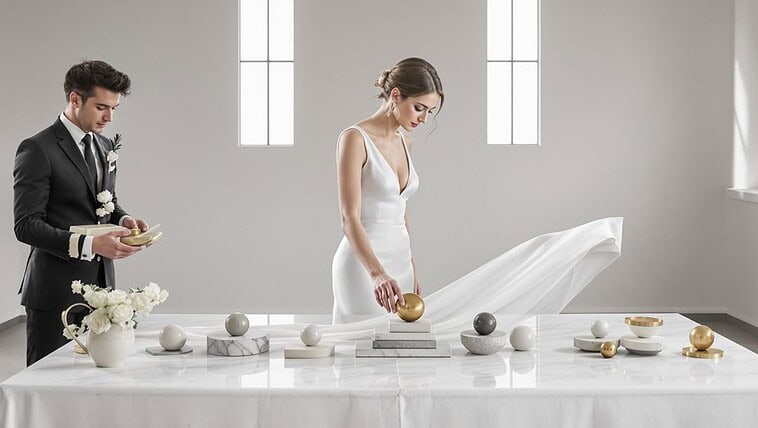
While color selection dominates most wedding planning conversations, the texture palette finalizes how your design will translate from Pinterest board to lived experience. You’re not just choosing sage green—you’re deciding between sage in silk’s liquid shimmer, cotton’s humble matte, or velvet’s light-absorbing richness. These aren’t trivial distinctions; they’re the difference between a wedding that photographs flat and one that feels three-dimensional.
Create depth through purposeful contrast rather than mindless matching:
- Layer weights strategically—pale silk napkins against medium-toned linen tablecloths and deep velvet seating
- Combine structured and soft textures within a monochromatic palette to prevent visual monotony
- Juxtapose matte finishes with metallic accents to establish visual rhythm
The most refined wedding designs employ single-hue palettes explored through textural variation. Your dusty blue becomes a narrative told through different materials—each fabric adding its chapter to your color story. And yet, even perfect texture choices fail without cohesive material language throughout your event space.
Examples: Cohesive vs Disjointed Material Choices

To understand material choices in practice, let’s examine weddings that got it right—and painfully, those that didn’t. The difference between cohesive and chaotic isn’t subtle—it’s instantly felt by every guest who walks into your venue.
| Element | Cohesive Choice | Disjointed Mistake |
|---|---|---|
| Invitation | Deckle-edge cotton paper with silk ribbon | Glossy cardstock with plastic gems |
| Bridal Gown | Mikado silk with cathedral train | Polyester satin with tulle overlay |
| Table Linens | Belgian linen tablecloths | Satin tablecloths with polyester runners |
| Napkins | Hand-dyed silk in signature palette | Bright paper napkins in clashing hue |
| Chair Covers | Natural linen with textured sash | Spandex covers with sequined bows |
You’ll notice the cohesive examples share a language—natural, luxurious textures that communicate intentionality. The disjointed choices? They’re screaming different stories at once, creating visual noise rather than harmony. Your materials should whisper the same secret to every guest, not compete for attention.
How to Build Your Material Vocabulary
Developing a refined material vocabulary means learning to distinguish between textiles not just by sight, but through touch, weight, and behavior—qualities that transform your wedding from a pretty picture into an immersive sensory experience. The difference between duchesse satin and silk charmeuse isn’t merely academic; it’s the tactile narrative guests unconsciously absorb while witnessing your celebration.
Begin your textile education with these foundational approaches:
- Visit fabric stores with a notebook—touch everything, record your visceral reactions, and ask relentless questions about weight, drape, and seasonal appropriateness
- Request swatches of your top five contenders and test them in your venue’s lighting—fabrics that appear ivory indoors can read yellow under garden sunlight
- Study high-end wedding publications with a magnifying glass, identifying how textural contrasts create depth without dissonance
Fabrics speak volumes about formality, seasonality, and your aesthetic sensibilities—and yet, the most successful designs often juxtapose unexpected materials with masterful restraint.
Conclusion
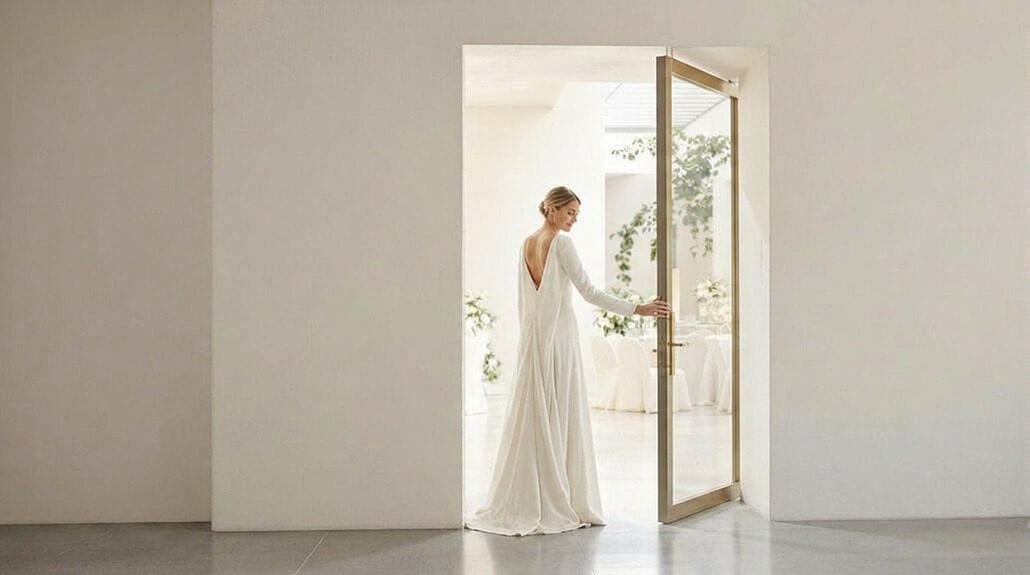
As you step into the world of wedding textile design, your fabric choices become the unspoken poetry of your celebration—the tactile language guests experience without consciously registering. Consider the layered dimensionality of jacquard against skin, the architectural potential of properly structured satin, the whispering movement of hand-ruched tulle as you move through your reception.
Your textile selections aren’t mere decorative afterthoughts—they’re the foundational grammar of your wedding’s aesthetic. Combine materials deliberately: graphic lace atop clean silk creates editorial impact; 3D floral appliqués transform flat surfaces into sculptural gardens; feathered elements introduce movement where stillness might otherwise reign.
The most successful designs speak in cohesive material dialects: invitation paper, dress fabric, table linens, ribbon textures—all conversing in the same tactile language. Trust your fingertips. When fabrics feel right together, when textures create depth without chaos, you’ve found your wedding’s material voice—complex yet harmonious, distinctive yet timeless.