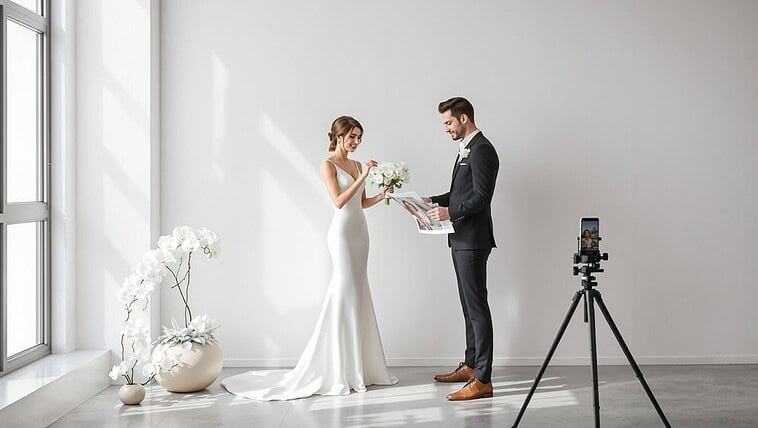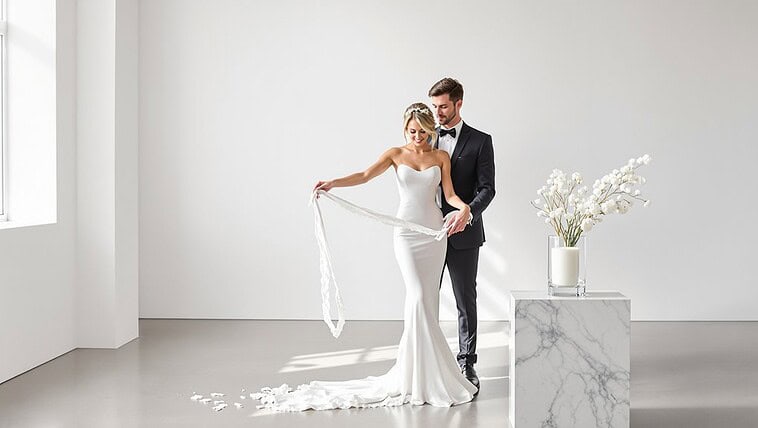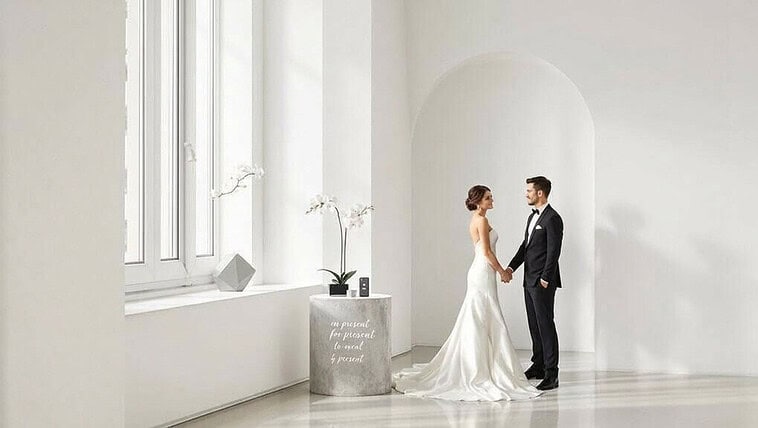

Your wedding doesn’t need a theme—it’s a widespread misconception fueled by wedding marketers. While birthday parties benefit from thematic direction, weddings thrive on aesthetic coherence through color discipline, material consistency, and thoughtful restraint. Data shows couples prioritize venue (90%), photography (87%), and catering (84%) over manufactured motifs. Instead of forcing Hawaiian luaus or Bridgerton cosplay, focus on authentic elements that genuinely represent your relationship. True sophistication emerges from intentional curation of meaningful details, not thematic restrictions.
The Theme Question Problem – Essay opening
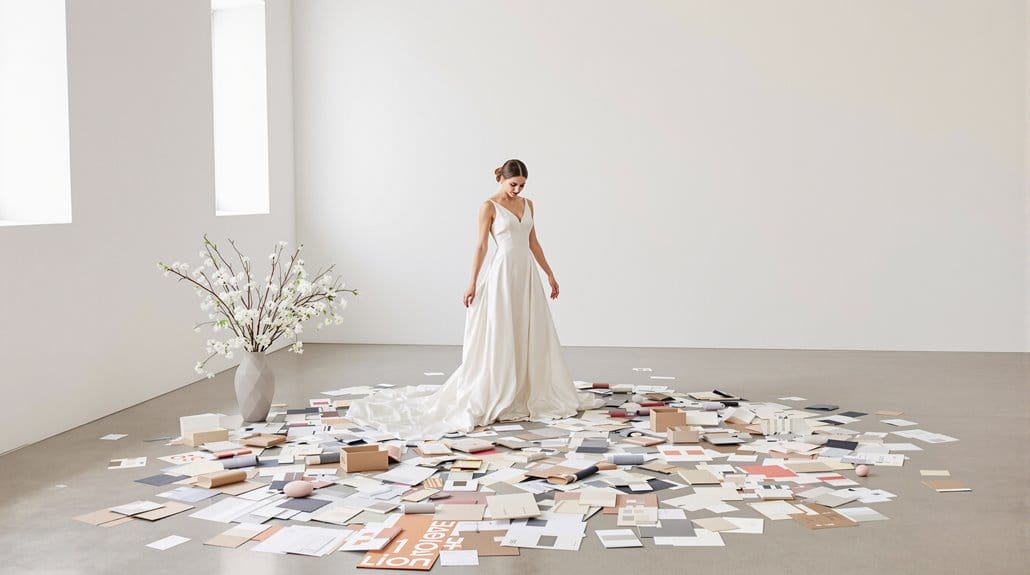
When well-meaning friends or overeager wedding vendors lean across the table and ask, “So, what’s your wedding theme?” they’re starting with the wrong question entirely. This seemingly innocent inquiry smuggles in an assumption—that your celebration needs a unifying motif, a packaged concept, a Pinterest-ready label.
It doesn’t. And market data confirms this truth: while wedding magazines and planners aggressively market themed weddings (generating $66.16 billion across 2.01 million celebrations annually), most couples still prioritize venue (90%), photographer (87%), and caterer (84%) over thematic coherence. A wedding without theme isn’t lacking—it’s liberated.
Consider this: only 44% of couples now have traditional receptions, yet themed weddings remain squarely outside most couples’ priority hierarchies. Why? Because refined celebrations don’t require Hawaiian luaus or Bridgerton cosplay to feel complete. They need what you’re already obsessing over: the dress, the space, the food, the photos. The authentic elements that, frankly, guests actually remember. Instead, couples gravitate toward what creates lasting impressions—the luxury beauty products for their bridal preparation, the carefully selected vendors, the quality of experience over manufactured motifs. This is particularly evident with younger couples hosting larger weddings despite smaller budgets, as they’re choosing to prioritize community and connection over stylistic themes and luxury elements.
Themes Are for Birthday Parties
A good birthday party often benefits from a theme—you’ve attended enough to recognize the pattern. Casino nights transform living rooms into miniature Vegas strips; murder mysteries convert dinner parties into whodunit investigations; Gatsby affairs resurrect the Roaring 20s through feathers and fedoras. These structures serve a practical purpose: they guide decisions, create visual coherence, and facilitate guest interaction through shared experience. The decades party elevates nostalgia with iconic fashion references that transport guests back to a specific era of cultural significance.
Your wedding, nevertheless, deserves something more refined. A wedding without theme isn’t themeless—it’s aesthetically disciplined. It’s the difference between “underwater adventure” and “a precise palette of dusty blue and silver with consistent material choices throughout.” Themes provide shortcuts for birthdays, which is perfectly appropriate for annual celebrations requiring fresh concepts. And yet, your wedding happens once. It demands coherence through restraint rather than concept—color discipline instead of “rustic-chic barnyard,” material consistency rather than “enchanted forest fantasy.” Modern couples increasingly favor disciplined 2-3 hues over sprawling five-to-seven color schemes that dilute visual impact. The sophistication lies in what you carefully exclude, not what you pile on.
Aesthetic Coherence vs Thematic Design

The distinction between aesthetic coherence and thematic design represents the watershed moment separating refined weddings from forgettable ones. When you choose aesthetic versus theme, you’re selecting sophisticated visual harmony over literal storytelling—a crucial difference.
Your wedding doesn’t require pirates, Parisian cafés, or peacock motifs to feel complete. Instead, anchor your celebration in design principles: balanced visual weight, proportioned elements, and unified details that create a sense of wholeness without costume-party overtones. A disciplined color palette—whether analogous, triadic, or monochromatic—weaves through every decision from stationery to florals, creating coherence without constraint.
The most memorable weddings establish pattern through repetition: that custom monogram appearing on cocktail napkins, menus, and welcome signs creates immediate recognition. And yet, there’s room for evolution—your design can transition from ceremony’s romantic softness to reception’s celebratory energy while maintaining that elusive thread of intentional cohesion. This same principle of purposeful editing applies to bridal accessories, where restraint and balance create visual harmony without overwhelming the overall aesthetic.
How Sophistication Works Without Theme
True refinement emerges not from thematic restrictions but through intentional curation of details that authentically matter to you. A wedding without theme liberates your aesthetic decisions from arbitrary constraints, allowing personal significance—not Pinterest categories—to drive design choices. Your venue’s industrial beams might pair unexpectedly with heirloom china; your vinyl collection could become table numbers that spark actual conversations.
Color discipline develops organically when you follow genuine preferences rather than predetermined schemes. That sage green appears repeatedly? Not because you declared “woodland theme” but because it strikes a chord with your shared history. The minimalist approach—editing ruthlessly, including only what serves purpose or brings joy—creates visual coherence without thematic declaration.
DIY elements aren’t just budget-friendly; they’re refinement engines, forcing intentionality with every handcrafted detail. And yet, this freedom demands more thoughtfulness, not less. Your design narrative becomes multilayered, complex, authentic—precisely what refined design actually means. Consider how vintage-style letterpress invitations offer this same philosophy, where traditional printing methods and quality materials create sophistication through craftsmanship rather than decorative excess.
Examples: Theme-Driven vs Design-Driven

Consider these side-by-side comparisons to understand what separates theme-driven from design-driven celebrations.
A “Rustic Woodland” theme dictates every choice—mason jars, burlap runners, pinecone place cards—creating a predictable tableau you’ve seen on Pinterest. A wedding without theme, nonetheless, might feature bare wood tables, delicate glassware, and garden roses because they’re beautiful together, not because they tell a story.
Theme-driven couples struggle when a perfect venue doesn’t match their “Vintage Paris” concept—suddenly needing to force Eiffel Tower motifs into a modern space. Design-driven couples, on the other hand, observe their venue’s architecture, letting its natural features guide their selections.
When you follow the room instead of forcing your Pinterest board onto it, magic happens naturally.
The theme approach asks, “Does this fit our travel narrative?” The design approach simply questions, “Is this beautiful, meaningful, and in harmony with our other choices?” One locks you into a conceptual box; the other liberates you to create something uniquely elegant, nuanced, and true to yourselves. When it comes to the gown itself, designers like Vera Wang have built entire collections around elegant design principles rather than thematic constraints, allowing brides to select dresses based on beauty and personal style.
Color Discipline Material Consistency Restraint
While fanciful themes leave couples trapped in thematic prisons, a polished wedding emerges from the disciplined application of three fundamental design principles: color hierarchy, material consistency, and aesthetic restraint. Rather than following the tired “what’s your theme?” script, embrace the refined structure of limited choices—a wedding without theme doesn’t mean without direction. Establish your one main color, one supporting shade, one accent, one neutral, and one metallic. Then, anchor bold choices in replaceable elements (signage, napkins, florals) while keeping architectural components classic.
- Your invitation’s color palette creates an instant emotional promise of what awaits
- Each material choice—velvet, linen, wood, marble—tells a sensory story without words
- Bold colors convey confidence; pastels whisper tradition; your selection reveals values
- Seasonal constraints aren’t limitations but natural guardrails for authentic design
- Restraint isn’t boring—it’s the negative space that allows beauty to breathe
- The venue’s architectural elements—whether towering columns or expansive glass facades—already provide decorative structure, requiring thoughtful restraint rather than thematic overlay
Conclusion
When did we collectively decide that a wedding required gimmicks rather than genuine expression? Somewhere between Pinterest boards and wedding expos, we surrendered to the notion that our celebrations needed a “theme”—as if marriage itself weren’t theme enough.
Your no theme wedding isn’t lacking—it’s liberated. It’s the difference between a curated art exhibition and a carnival, between enduring elegance and fleeting trends. And yet, this isn’t about minimalism for its own sake. It’s about creating space for what truly matters: the authentic connection between two people, witnessed by those who love them most.
Remember this: in twenty years, you won’t reminisce about how cleverly your centerpieces referenced your shared love of underwater basket weaving. You’ll remember how it felt to stand together, making promises that would shape your lives. That moment needs no theme, no gimmick, no explanation—just your unembellished truth. What truly matters is securing your California marriage license and the legal foundation that makes your commitment official, not the decorative flourishes surrounding the ceremony.