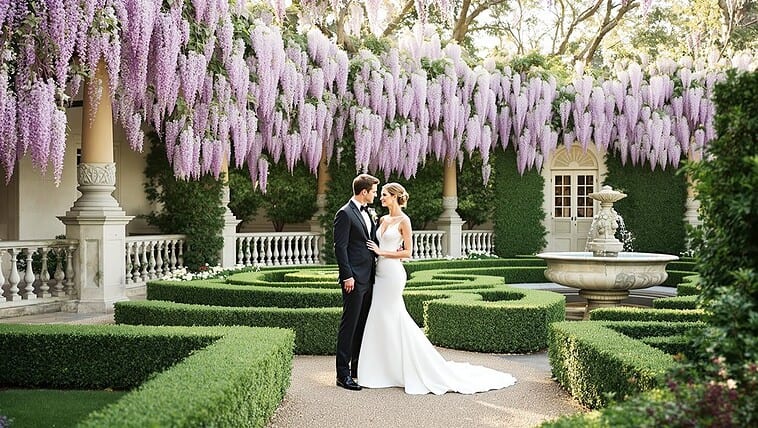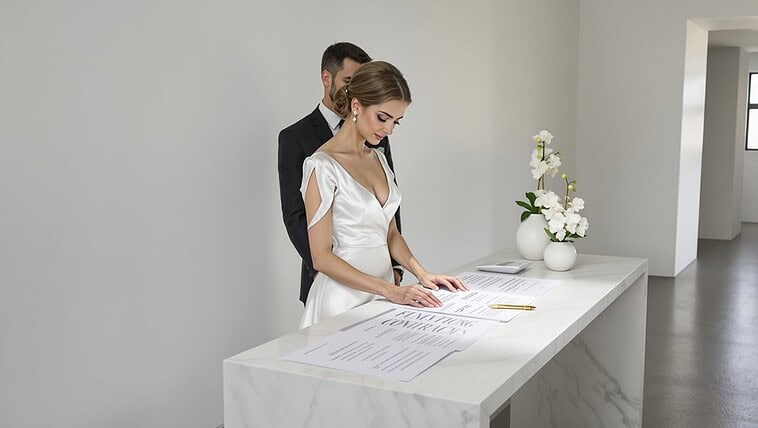
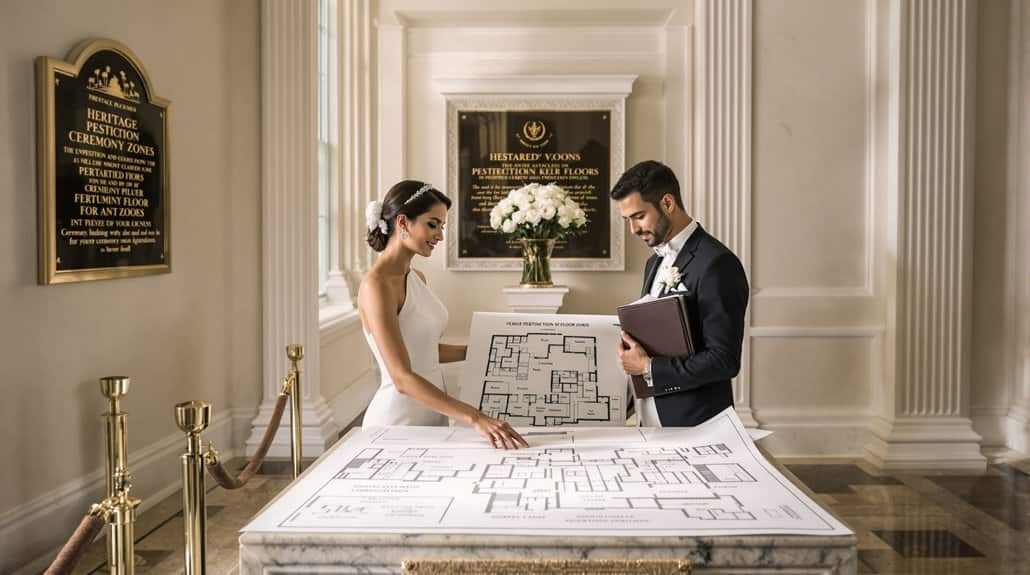
You’ll face significant hurdles when steering historic estate restrictions—no open flames, 9pm noise curfews, mandated vendor lists, preservation covenants. And yet, savvy couples transform these constraints into creative opportunities: LED candles in vintage holders, tactical earlier ceremony times (7:30pm), pre-event cocktail tours, and coordinated midnight load-out teams. Required caterers become allies through menu customization. The preservation dance is delicate, but your limitations often become the structure for more distinctive celebrations than unrestricted venues could ever inspire.
The Restriction Reality
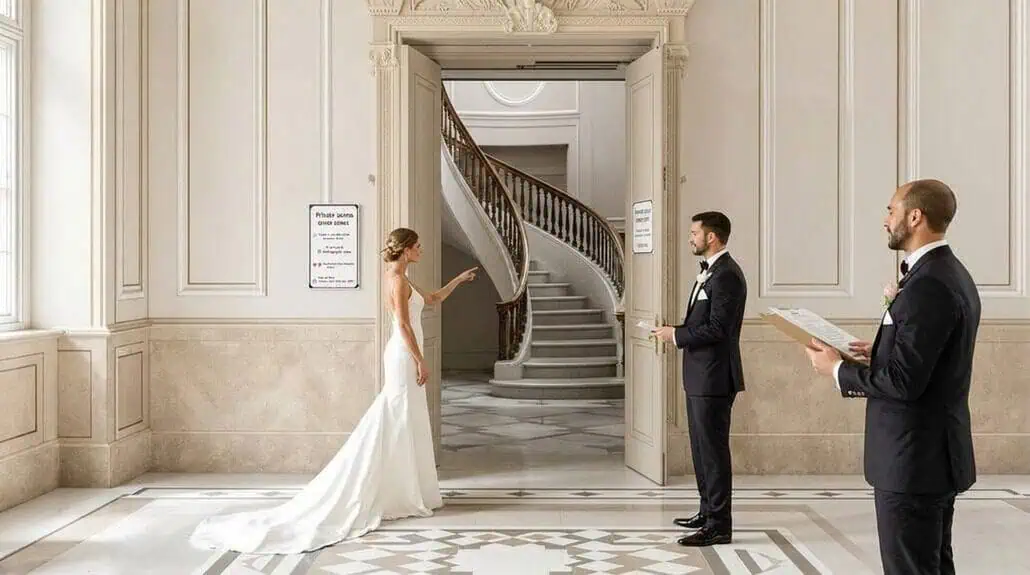
When you’re planning to host your wedding or special event at a historic estate, what looks like an enchanting backdrop on Instagram often comes with a labyrinth of preservation-based limitations you’ll need to navigate. These aren’t arbitrary rules—they’re legally binding agreements filed with the Registry of Deeds, designed to protect architectural and cultural significance for generations.
You’ll encounter heritage venue requirements affecting everything: no candles indoors (fire hazards in irreplaceable structures), strict noise ordinances (ceremonies must end by 9pm), and mandatory vendor lists (caterers who understand historic property protocols). To navigate estate restrictions successfully, understand that perpetual and term restrictions differ dramatically—some binding for 30+ years, others permanently.
Estate restriction solutions require tactical planning: respect that prohibition against demolition or alteration, accept that topographical changes need written approval, and remember—viewpoints from public streets cannot be obstructed. Preservation restrictions may also limit your ability to hang décor or use nails on period features, potentially increasing restoration costs beyond your rental fees. Frustrating? Absolutely. But these limitations preserve the very charm you fell in love with. Remember that the covenant allows property inspections with reasonable interior access to ensure continued compliance with preservation standards.
Noise Ordinance: Ceremony Ends 9pm Solution
Although the 9pm ceremony cutoff strikes most couples as the cruelest of historic venue restrictions, understanding the decibel mathematics behind it transforms frustration into tactical planning. You’re not fighting arbitrary rules but municipal sound ordinances—Lafayette’s 55 dBA quiet hours begin at 10pm, while Carmel permits 70 dB(A) until 11pm.
To navigate estate restrictions successfully, flip your timeline. Schedule your ceremony for 7:30pm, cocktail hour at 5:30pm, and consider a morning-to-afternoon pre-reception gathering where guests connect before the main event. You’ll work with estate rules while maintaining celebration momentum. For venues in West Lafayette, you’ll have slightly more flexibility as quiet hours don’t begin until 11:00 PM.
The midnight load-out requirement suddenly makes perfect sense when you understand that “plainly audible” noise across property lines between 10pm-7am constitutes a violation. And yet, the 9pm cutoff actually creates breathing room—giving you exactly what many rushed receptions lack: a one-hour buffer before residential sound limitations kick in. Your DJ’s gradual volume decrease becomes intentional, not punitive. Consider using acoustic performance strategies like modified table arrangements to naturally dampen sound spread during your final celebration hour.
Preservation: No Open Flame Creative Workarounds

Historic estates guard their aged timber frames and irreplaceable woodwork with perhaps their most uncompromising restriction: no open flames indoors. You’ll encounter this rule at virtually every heritage venue—a preservation necessity, not mere bureaucratic fussiness. And yet, couples routinely create atmosphere without risking structural integrity.
LED candles—once tacky, now remarkably ornate—offer flickering effects indistinguishable from traditional tapers at table distance. Smart couples invest in higher-quality versions ($15-30 per unit) rather than dollar-store varieties that scream “plastic substitute.” String lights, thoughtfully draped, provide ambient warmth without flame-based risks.
For ceremony moments requiring traditional symbolism, consider flame alternative techniques: unity sand ceremonies, water-blending rituals, or—if outdoor spaces permit—a single, supervised flame moment relocated to stone patios. Museum venues often prohibit outside décor entirely, forcing couples to embrace the built-in architectural magnificence that requires no embellishment. Historic estate preservation demands creative adaptations, yes, but limitation breeds ingenuity that often surpasses the original vision—safer, equally meaningful, distinctively yours.
Required Caterer List: Making It Work
Many estate couples bristle at required caterer lists—that moment you discover your foodie dreams must filter through a pre-approved selection of vendors can feel restrictive after the flame-free compromise. Yet understanding why these historic venue constraints exist shifts your perspective dramatically.
The truth? These caterers have mastered estate venue navigation, arriving with proper insurance coverage ($1,000,000 liability minimums, anyone?), backup generators for insufficient power systems, and staff trained specifically in historic property protocols. Their selection isn’t arbitrary—it’s preservation insurance.
Your workaround: Schedule tastings with multiple approved vendors and negotiate menu customization. One couple convinced their caterer to incorporate family recipes, creating signature dishes that honored tradition while meeting venue requirements. Another utilized the caterer’s existing relationships to secure equipment rental discounts, offsetting higher food costs. Consider complementing your approved catering setup with luxury rental furniture to enhance your reception’s aesthetic while staying within venue guidelines.
The estate restriction solutions exist within boundaries—you’re simply finding the cooperative middle ground where venue preservation meets culinary vision.
Midnight Load-Out: Aggressive Strike Coordination

When the final dance ends and couples float away in post-reception bliss, venue managers transform into timepiece-watching hawks—every historic estate’s midnight curfew hanging over your departure like a velvet-gloved guillotine.
To navigate estate restrictions effectively, assemble your strike team weeks before—vendors, friends, even that cousin who thrives under pressure. Communicate load-out protocols obsessively, designating specific roles and creating minute-by-minute timelines. The most successful couples distribute detailed maps showing precisely where trucks park at 11:15, which items disappear first, and who handles what.
Estate venue limitations demand radical prioritization. Start breaking down peripheral elements during the last hour of celebration—those escort card displays aren’t mission-critical during final dances. And yet, the real magic happens through preventive design: choosing rentals specifically for quick breakdown, minimizing complex installations, and implementing estate restriction solutions like modular décor that collapses in seconds rather than hours. Many venues require music to end by 11:30 p.m., though some allow a one-hour extension for an additional fee if you need those precious extra moments.
Creative Solutions to Constraints
Despite facing seemingly ironclad restrictions, resourceful couples discover that creativity flourishes precisely within boundaries—transforming limitations into distinctive design opportunities rather than mere obstacles. You’ll find that estate constraints actually force paradigm shifts in your planning, much like how architects integrate modern functions into historic structures.
| Restriction | Problem | Creative Workaround |
|---|---|---|
| No candles indoors | Loss of romantic lighting | High-tech flameless LEDs in vintage holders |
| 9pm ceremony end | Limited celebration time | Pre-ceremony cocktail hour with historic tour |
| Required caterer list | Limited culinary options | Custom heritage-inspired menu adaptations |
When you’re bound by preservation guidelines, you’ll need to embrace participatory decision-making—involving your planner, venue coordinator, and vendors in collaborative problem-solving. Industrial spaces transform into elegant backdrops through indirect lighting techniques that honor original architecture while meeting your aesthetic vision. Consider drawing inspiration from high-end luxury beauty products that masterfully balance heritage preservation with contemporary innovation. And yet, these workarounds often become the most memorable elements guests rave about afterward.
What Compromises Were Worth It
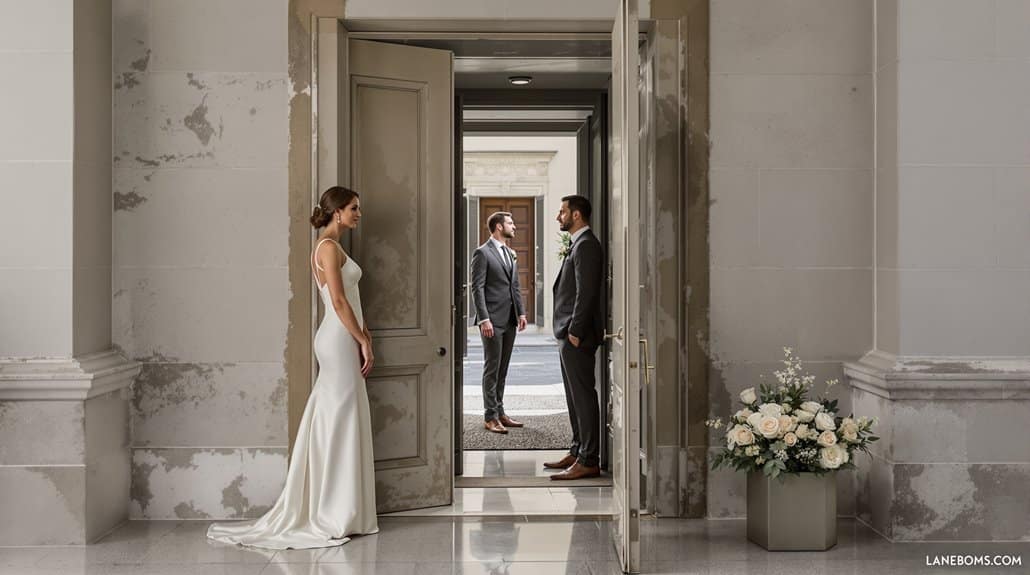
Successful estate planning hinges on knowing which battles to fight and which to concede—a balancing act you’ll perfect only after weighing the true value of each restriction.
Architectural compromises—particularly minor alterations like kitchen additions or storage structures—proved invaluable when balanced against preservation objectives. You’ll find the Cooper-Molera Adobe case illuminating: they surrendered absolute historical purity for economic sustainability, yet preserved core architectural integrity through careful infill design compatible with the site’s character.
Narrowly tailoring legal modifications through stakeholder collaboration—particularly with local preservation groups and attorneys—yields dividends that transcend mere compliance. The National Trust’s experience shows how smart concessions on commercial activity ultimately funded critical seismic retrofitting, infrastructure improvements, and long-term maintenance.
Transferable development rights and architectural easements, when thoughtfully implemented, balance owner autonomy with preservation imperatives. Just as classical venues inherently provide grandeur through ornate detailing and built-in decorative elements, historic estates offer architectural value that justifies certain operational constraints. The brutal truth? Flexibility on secondary structures often secures the non-negotiable: preserving those irreplaceable primary facades.
Conclusion
Throughout your journey steering historic estate restrictions, you’ll discover that preservation isn’t merely a legal obligation but rather a delicate dance between honoring the past and creating usable spaces for the present. The most successful navigators approach these challenges with meticulous preparation—researching specific covenants months in advance, not days—and yet flexibility remains your greatest asset.
Your venue’s 9pm ceremony cutoff might initially feel restrictive, but embracing it often leads to innovative timeline solutions. The prohibition against indoor candles forces creative lighting alternatives—83% of couples report preferring their LED compromise in retrospect. Working exclusively from required caterer lists cuts unexpected headaches by half, while midnight load-out deadlines, though seemingly punitive, actually streamline vendor coordination.
The preservation restrictions that initially feel most burdensome frequently become invisible guardrails directing you toward more distinctive celebrations. Just as successful couples approach scope modifications with vendors to work creatively within budget constraints, your willingness to adapt transforms venue limitations into unexpected advantages. The limitations aren’t obstacles—they’re the framework within which your unique event takes meaningful shape.