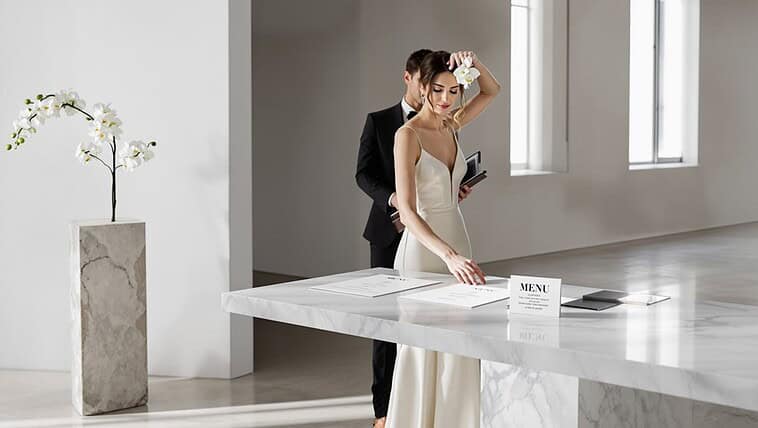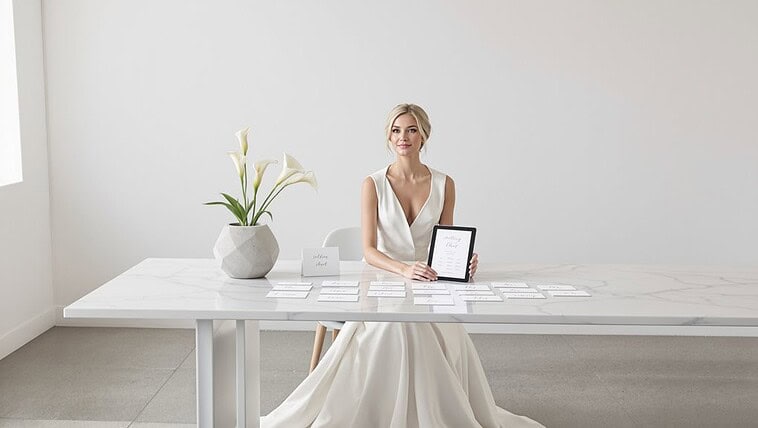

Your day-of paper elements—those programs, place cards, signage—are the final details you’ll approve but the first impressions guests encounter. They’re small yet mighty, consuming just $518 of your budget while silently orchestrating guest flow, preventing awkward moments, and establishing trust in your event’s organization. Couples often sacrifice these tangible breadcrumbs when budgets tighten, and yet these physical artifacts serve both as operational tools during your celebration and archival keepsakes for decades afterward. The paper trail you create guides your guests’ entire experience.
First Impression on Arrival – Essay opening

When your guests first arrive at your wedding venue, they’re not just entering a physical space—they’re stepping into a narrative you’ve carefully crafted. The first impression on arrival sets the entire tone for your celebration—and yet, it’s often overlooked until the last minute.
Your signage, programs, and place cards form the visual prologue to your wedding story. Clear directional signage eliminates the awkward “am I in the right place?” moments that can create immediate anxiety. Programs don’t merely outline the day’s events; they’re the literary introduction to your shared history. And those place cards? They’re personal acknowledgments—silent messengers telling each guest, “We anticipated you specifically.” Much like the growing trend of pre-wedding shoots in India, these paper elements create lasting memories that couples and families value deeply.
The psychology behind these paper elements runs deeper than aesthetics. They provide cognitive anchoring, reducing uncertainty and creating immediate emotional comfort—transforming strangers into participants in your carefully orchestrated celebration. Just as luxury cosmetics enhance the bride’s haute couture look, these thoughtfully designed paper details elevate the entire wedding aesthetic from the moment guests arrive.
What Guests Encounter Immediately
The moment of arrival marks itself permanently in memory. Your guests—disoriented, expectant, juggling phones and gifts—immediately scan for cues. Wedding signage isn’t merely decorative; it’s their cognitive lifeline. A directional arrow saves twenty awkward conversations. A prominently displayed timeline prevents thirty whispered questions.
Most couples obsess over invitation suites but neglect these critical first-contact materials—the exact items that prevent your aunt from wandering into kitchen storage or your college friends from missing the ceremony entirely. Consider that at destination weddings, where only 60-70% of invitees typically attend, these navigational elements become even more crucial for travelers in unfamiliar surroundings.
The invitation gets framed; the directional sign prevents chaos. Your guests remember which one actually enhanced their experience.
Three essential contact points anchor guest experience: clear directional signage (preferably visible from parking areas), ceremony programs that outline what’s happening and when, and personalized place cards that eliminate seating anxiety. Each item transforms confusion into confidence.
And yet, these paper goods remain afterthoughts in most wedding budgets—finalized weeks after invitations, when creativity and funds have dwindled. Their impact, however, far exceeds their price tag, establishing immediate trust that your celebration has been thoughtfully orchestrated.
Paper Goods as Attention to Detail Signal
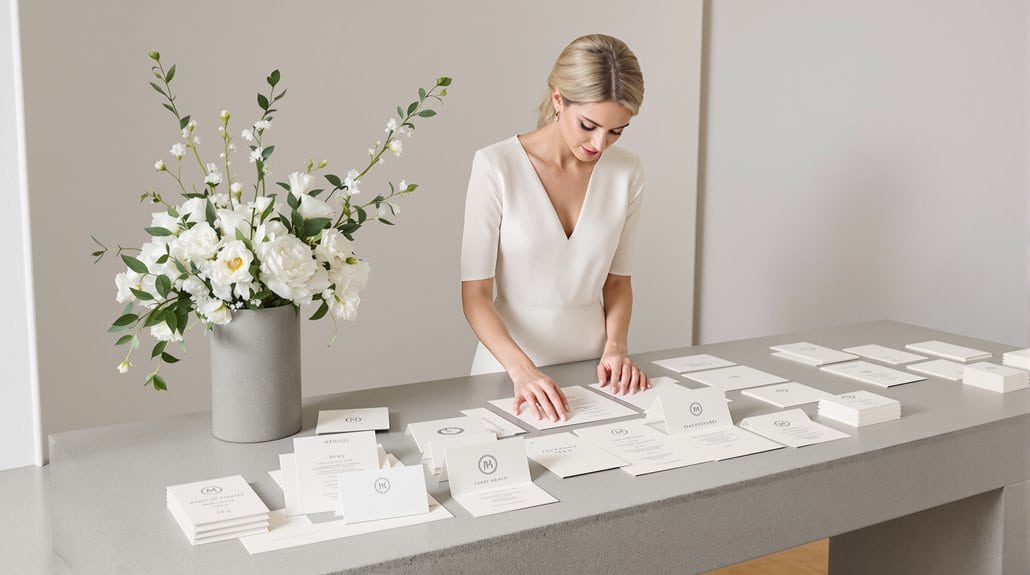
Why do wedding paper goods matter so intensely? They’re the silent storytellers of your celebration’s quality—invisible until they’re not. When guests hold a substantial program card or trace their finger across letterpress typography, they’re receiving tactile confirmation that you’ve considered everything.
Your stationery creates the first physical interaction with your wedding experience, communicating intentionality before a single word is exchanged. The 28% of couples worldwide who selected customized invitations in 2024 understand this visceral truth: paper weight signals care. And yet, it’s not just about expense—it’s about alignment. When your signage maintains visual consistency from save-the-dates to thank-you cards, you’re demonstrating thorough planning rather than piecemeal decisions. From vintage presses to contemporary techniques, traditional printing methods combined with quality paper stock create dimension that digital processes simply cannot replicate.
Why Couples Skip These
Despite their storytelling power, these carefully crafted paper goods frequently land on the chopping block when wedding budgets tighten—and in today’s economic terrain, they’re often the first casualty. Wedding paper goods matter fundamentally, yet 61% of couples report inflation directly impacting their planning decisions, forcing brutal prioritization.
You’re not alone in this dilemma. With the average wedding cost jumping $5,000 in just one year, couples are making tough calls about what stays and what goes. Here’s why day-of paper often disappears:
- Budget constraints force elimination of non-essentials (paper goods falling squarely into this category)
- Digital alternatives provide free or low-cost solutions via QR codes and online platforms
- Reduced guest lists (down by 29 guests on average) diminish printed material needs
- Couples prioritize experiential elements over tangible paper items when finances tighten
When negotiating with stationery vendors, focus on scope adjustments—reducing quantities, simplifying designs, or eliminating certain pieces—rather than asking for discounts that devalue their craft. You’re making rational trade-offs—and yet, this decision carries unexpected consequences for your guests’ experience.
The Case for Final Detail Care

While many couples overlook day-of stationery in their rush to slash budgets, these final paper touches accomplish what digital alternatives simply cannot: they physically welcome your guests into your carefully crafted celebration story. Wedding paper goods matter in those first vital moments when attendees arrive—disoriented, expectant, dressed in their finery—searching for tangible guidance.
| Element | Function | Emotional Impact |
|---|---|---|
| Programs | Orient guests through ceremony | Creates shared experience |
| Place cards | Guide seating arrangements | Personalizes attendance |
| Menu cards | Preview dining experience | Builds anticipation |
| Signage | Directs movement and flow | Reduces anxiety |
You’ll spend countless hours selecting flowers that wilt in hours, yet hesitate on stationery that guests physically handle and potentially preserve for decades. Consider this: the $518 average investment represents less than 1% of your total budget but delivers disproportionate impact, bridging the gap between your digital planning and the tactile celebration you’ve imagined. Just as certified wedding professionals from the Bahamas Bridal Association understand that seamless planning requires attention to every coordinated detail, your day-of paper goods serve as the physical manifestation of the care you’ve invested in your guests’ experience.
What Guests Touch Read Keep
From the moment your guests arrive at your venue, they’re steering a physical experience crafted through paper contact points you’ve carefully positioned. These wedding paper goods matter—they’re tactile breadcrumbs guiding everyone through your carefully orchestrated day.
Your guests will interact with more printed materials than you realize:
From invitation to favor tag, your paper choices form a tangible guest journey that lingers long after the celebration ends.
- First impressions: Directional signage and welcome displays orient guests immediately, preventing that awkward where-do-I-go shuffle
- Ceremony navigation: Programs outline not just who’s who, but signal transitions, explain traditions, and acknowledge loved ones
- Dining rituals: Place cards transform a room of strangers into a curated seating arrangement, while menus prepare palates
- Take-home sentiments: Favor tags and thank-you notes extend your celebration beyond the day itself
And yet, these aren’t mere functional pieces—they’re the physical artifacts people touch, read, and sometimes keep for decades, becoming tangible memories when the music stops.
Conclusion
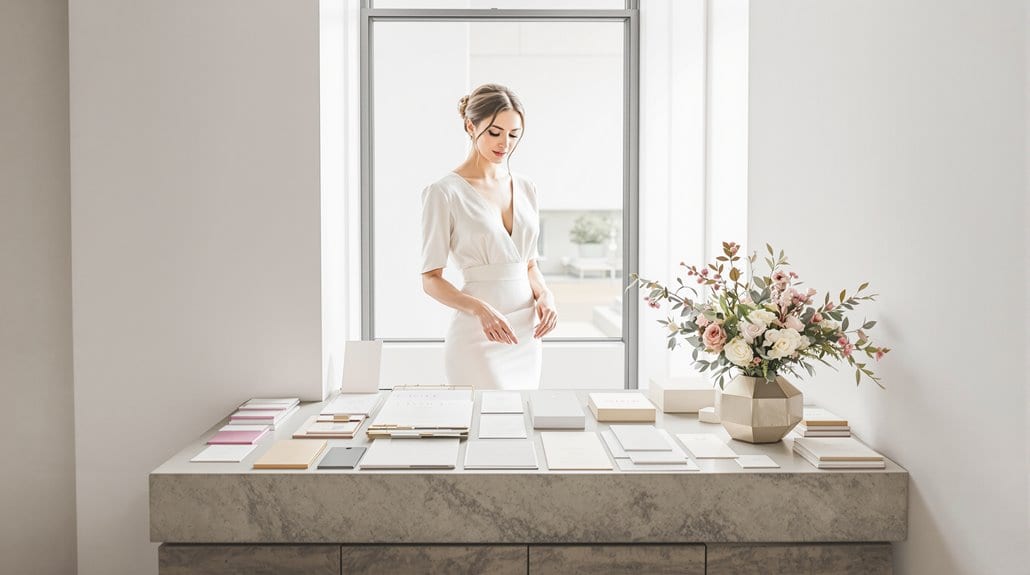
Your day-of wedding paper represents the paradoxical heart of your celebration—a seemingly small detail that exerts outsized influence across every moment guests experience. These tactile touchpoints silently communicate your story, organize the event flow, and create lasting impressions when wedding paper goods matter most—at first glance and final goodbye.
| Element | Purpose | Impact |
|---|---|---|
| Invitations | First impression | Sets design expectations |
| Programs | Ceremony guide | Creates emotional context |
| Place cards | Guest navigation | Ensures seamless experience |
| Menus/Signage | Information delivery | Eliminates confusion |
Budget accordingly. Prioritize professional design for your invitation suite and programs, then extend that aesthetic through your remaining stationery elements. Consider cotton paper from heritage stationery makers for formal invitations that convey lasting quality and sophistication. The return on investment isn’t merely aesthetic—it’s functional, emotional, and archival. Your paper goods become both the unsung operational heroes of your wedding day and the tangible mementos guests cherish long after your vows echo into memory.