
Your place card choice reveals more than seating—it’s a declaration of priorities. Hand calligraphy ($2.25-$3.75/card) communicates artisanal luxury, tradition, and exacting attention, demanding 6-8 weeks of lead time. Digital printing ($1-$2/card) offers modern efficiency, faster turnaround, and budget-conscious elegance. The $600 difference for 100 guests? It’s not just money—it’s a statement about what matters: bespoke craftsmanship or practical sophistication. Each brushstroke or pixel carries meaning beyond mere names.
What Place Card Execution Signals

When guests approach your painstakingly arranged reception tables, those tiny name cards are silently broadcasting volumes about your event’s caliber and your attention to detail. Hand lettered place cards, with their delicate flourishes and personalized imperfections, signal ultimate formality—a $400-$800 investment that whispers, “This occasion merits extraordinary effort.” They communicate an intimate, bespoke experience where every detail has been considered.
Digital place cards, by contrast, offer clean precision for $100-$200. They’re efficient, yes, and can be remarkably designed—but they lack the tangible humanity of calligraphy’s subtle ink variations and distinctive penmanship. And yet, their contemporary aesthetic might perfectly complement your modernist venue or tech-forward brand. Many couples now incorporate Variable Data and QR codes that connect physical place cards to digital seating arrangements or personalized guest messages.
Your choice reveals volumes: traditional elegance versus contemporary efficiency, artisanal craftsmanship versus streamlined production. The question isn’t simply about aesthetics but about the emotional texture you’re creating—whether guests should feel wrapped in time-honored formality or invigoratingly current sophistication. Drawing inspiration from luxury cosmetics brands that master the balance between heritage and modernity, your place cards can harmonize traditional techniques with contemporary sensibilities.
Hand Calligraphy: Ultimate Formality Investment
Though your guests may never fully appreciate the painstaking process behind it, hand calligraphy represents the apex of place card formality—an investment that begins at $1.50 per card but quickly scales with volume and customization. The hand lettering versus digital debate ultimately comes down to the statement you’re making about your event’s significance.
What exactly justifies the premium ($400-800 versus $100-200 for digital printing)? Consider:
- The artisan’s process—pencil guidelines, precision centering calculations, and pointed-pen technique
- The tactile quality—heavy card stock in multiple finishes (cream, pink, craft, chalkboard)
- The metallic options—gold, silver, bronze, and rosegold inks unavailable in standard printing
- The intangible significance—each guest receives a genuinely unique artifact
You’re not merely displaying names; you’re signaling that no detail was too small for personal attention. For couples planning celebrations at prestigious venues, hand calligraphy aligns with the elevated atmosphere of locations like the Getty Center and Villa, where architectural grandeur demands equally refined details. And yet, the 3-4 week production timeline requires planning foresight that rushed events simply can’t accommodate. Each card measures 3.5×2.5 inches, folded and is hand cut from premium cardstock for an elegant presentation.
Digital Printing: Clean Efficient Modern
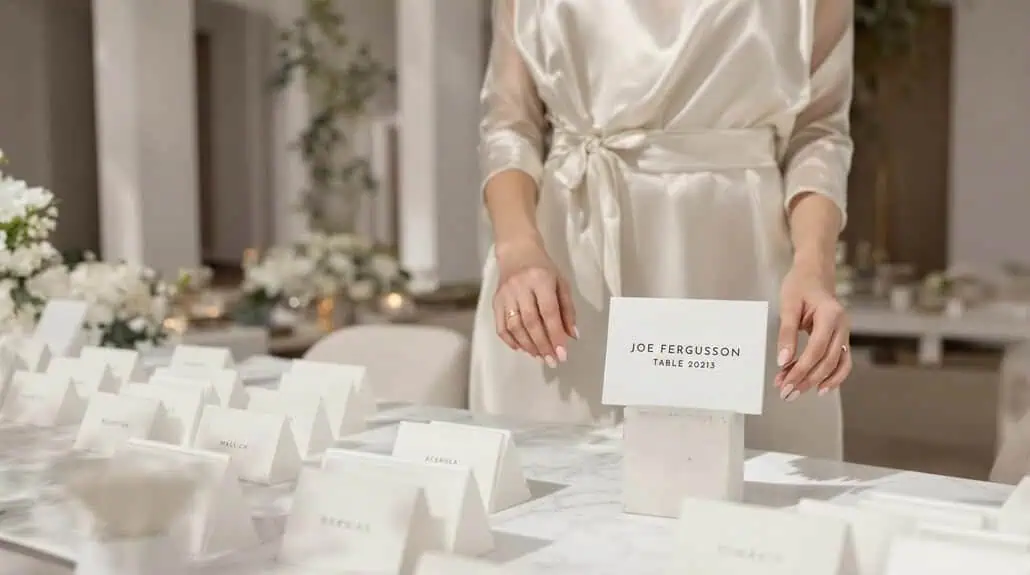
While hand calligraphy exudes traditional elegance, digital printing offers a mesmerizing alternative that won’t drain your wedding budget. At $100-200 for your place cards (versus $400-800 for hand calligraphy), you’re saving essential funds without sacrificing quality. And yet, this isn’t merely about cost-cutting—it’s about smart allocation of resources.
Digital printing’s razor-sharp resolution delivers impeccable results in days, not weeks. You’ll enjoy CMYK versatility that reproduces watercolor effects, photographs, even calligraphy-inspired fonts with striking precision. For premium results, consider pairing your digital printing with cotton paper from established stationery houses known for formal invitations. The calligraphy vs digital place cards debate isn’t simply traditional versus modern; it’s investment versus practicality.
Contemporary couples appreciate digital’s sleek aesthetic—clean lines, consistent spacing, flawless execution. Your guests won’t fixate on production methods; they’ll notice the refined presentation. Digital printing democratizes elegance, making the impossible suddenly attainable. Wedding budgets have breaking points; this choice ensures yours won’t shatter over place cards.
Cost Comparison: $800 vs $200
Let’s scrutinize the numbers that truly matter—because your wedding budget deserves rigorous analysis, not just emotional decisions. The calligraphy vs digital place cards debate becomes startlingly clear when examining your 100-guest celebration: hand-lettering will command $250-$800 of your budget while digital options require merely $200-$400, all-in.
The financial reality is stark—and revealing:
- Individual calligraphy cards start at $2.25 each, ballooning to $3.75+ with extras like gold ink and flourishes
- Digital templates through Canva cost nothing beyond your time and printer paper
- That $600 difference represents your honeymoon flight upgrade, additional photographer hours, or upgraded wedding wine
- Volume discounts exist for printing but barely materialize with hand-calligraphy
You’re paying for artisanal craftsmanship with calligraphy—an investment in tradition and tactile luxury. But don’t mistake romance for necessity; digital options deliver clean sophistication without decimating your budget. Before committing to any vendor, scrutinize contracts for price escalation clauses that could inflate costs by 10-30% without your consent—a hidden budget killer that transforms your carefully calculated place card investment into an unpredictable expense.
What Each Choice Communicates

Your place card selection broadcasts volumes about your wedding’s character long before guests even taste the appetizers. Opting for hand-calligraphy signals unwavering dedication to artisanal quality—a six-to-eight-week investment that prioritizes craftsmanship over convenience. Guests notice this immediately, often photographing these mini-masterpieces that later become framed keepsakes.
Is calligraphy worth it wedding-wise? Absolutely, if your aesthetic leans romantic, vintage, or bohemian. The handcrafted elegance communicates refined taste and rigorous attention to detail. And yet, digital printing isn’t merely the budget alternative—it’s a deliberate statement about modern efficiency, perfect for contemporary, minimalist celebrations.
Your choice ultimately reveals your planning philosophy: the painstaking personalization of calligraphy demonstrates commitment to creating one-of-a-kind experiences, while digital’s quick turnaround suggests a streamlined, practical approach. Neither wrong, both deeply revealing—your place cards tell guests exactly how you approach both celebration and life itself.
When Calligraphy Matters vs When Digital Honest
Beyond the symbolism lies the pragmatic question every couple must confront: when does calligraphy truly matter, and when is digital printing honestly the better choice?
Beyond aesthetics, couples face the timeless dilemma: when to invest in handcrafted elegance versus practical digital alternatives.
Is calligraphy worth it for your wedding? It depends entirely on your priorities. Hand-lettering shines for intimate gatherings under 150 guests where every detail matters—but becomes financially prohibitive at scale. Digital printing delivers exceptional efficiency for last-minute planners (ready in 3-7 days versus calligraphy’s 6-8 weeks).
Consider these important factors:
- Budget reality – $400-800 for hand-calligraphed place cards versus $100-200 for digital
- Timeline pressure – Last-minute changes accommodate printing; calligraphy requires commitment
- Guest count impact – Each additional guest multiplies calligraphy costs dramatically
- Keepsake intention – Only invest in calligraphy if you’ll treasure it afterward
Sometimes the most elegant choice isn’t the handcrafted one, but the one that prevents wedding-day stress and financial regret. Like heirlooms that serve as bridges between eras, your place cards can honor tradition while embracing practical modern solutions that reflect your authentic style.
Conclusion
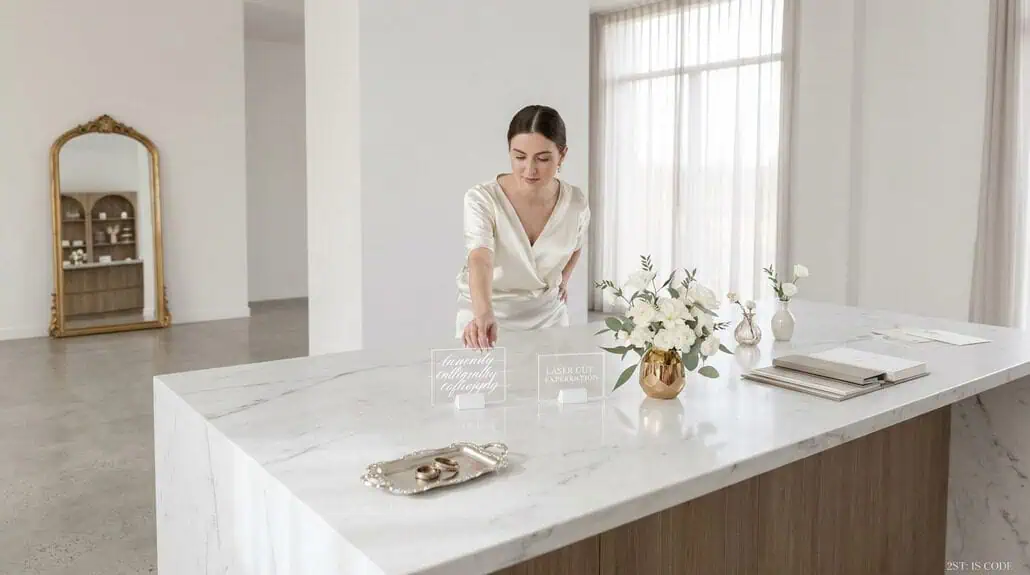
While the artistry of calligraphy undeniably communicates a level of luxury and attention to detail that digital printing cannot fully replicate, the choice between these two options ultimately reflects your unique wedding priorities rather than universal rules of etiquette.
Is calligraphy worth it for your wedding? Yes—when you value the handcrafted aesthetic, desire frame-worthy keepsakes that guests will photograph, or have planned an intimate gathering where each card becomes meaningful. And yet, digital printing commands its own respect through crisp execution, budget consciousness ($100-$200 versus $400-$800), and practical adaptability for larger guest lists.
Your place cards speak volumes about your values—whether you prioritize artisanal tradition, modern efficiency, or something beautifully in between. The decision isn’t merely aesthetic but philosophical: what matters most on your day? The tangible impression of handwritten art? Or allocating resources elsewhere while maintaining polished presentation? If you’re planning a destination celebration, working with certified wedding planners can help ensure every detail—from place cards to venue—reflects your vision while managing the logistics of bringing your dream wedding to life. Both choices are valid expressions of your wedding vision.