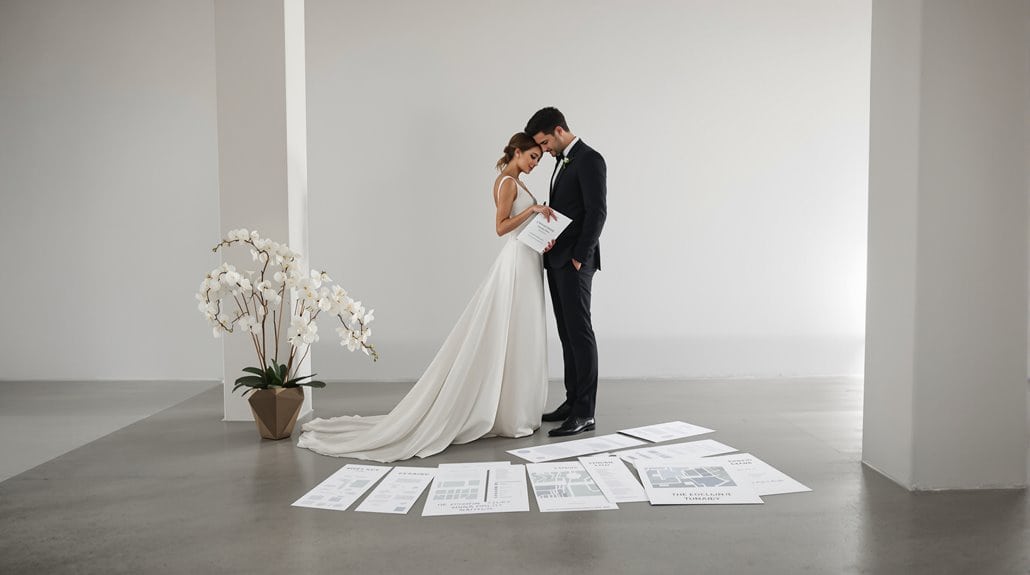
Wedding programs may seem like a budget-cutting opportunity—47% of couples cite finances as their top planning challenge—but they’re worth the investment. They orient your guests through unfamiliar rituals, identify key participants, and explain cultural elements that might otherwise confuse attendees. Beyond practicality, programs serve as cherished keepsakes and conversation starters. DIY versions cost just $50-100, while templates run about $0.99 per unit. The difference between confused guests and captivated participants often lies in this single, underestimated piece of paper.
Why Most Couples Skip Programs

Why do so many couples forgo wedding programs entirely? Simply put: budget constraints trump traditional expectations. With 47% of couples citing financial planning as their top challenge—and 61% reporting economic pressures already impacting decisions—those little paper guides become prime casualties of the cost-cutting knife.
Is wedding program design worth your dwindling dollars? Most couples say no. Consider this: when 77% of Americans believe too much money gets wasted on weddings, and 41% actively modify plans due to inflation, ceremony program value becomes questionable. And yet, the practical reasons extend beyond finances. Those who choose sign and go ceremonies don’t need programs for what amounts to a brief legal transaction.
The ceremony itself has changed. With 54% preferring to skip traditional proceedings altogether and another 54% keeping guest counts below 50, the logistical need has diminished. Small, intimate gatherings (preferred by 47% of couples uncomfortable with crowds) simply don’t require elaborate printed guides to function smoothly. However, couples who do want memorable keepsakes can leverage photo editing tools to create digital programs that preserve the day’s details without the printing costs.
The Case for Programs: Guest Orientation
When exactly does the unity candle happen, and who’s that woman doing the second reading? These questions evaporate when wedding ceremony programs guide your guests through every meaningful moment. Programs transform confused attendees into engaged participants—they’re not just paper, but roadmaps for emotional investment.
Your carefully structured ceremony program benefits guests in tangible ways: identifying your college roommate-turned-bridesmaid, explaining why you’re incorporating your grandmother’s Greek Orthodox traditions, and preventing the awkward shuffling during transitions. Programs improve ceremony comprehension by 87%—and yet their value extends beyond mere logistics. They serve as tangible keepsakes that guests can take home to remember your special day.
Consider your aunt from Tennessee sitting beside your fiancé’s coworker from Boston. That program becomes their conversation starter, their orientation to your love story, their invitation to fully witness—not merely attend—your union. It’s the difference between passive observation and active participation in your milestone. This mindset of fostering genuine connections applies not only to your guest experience but also to working with the vendors who help bring these meaningful touches to life.
Explaining Cultural Rituals to Unfamiliar Guests
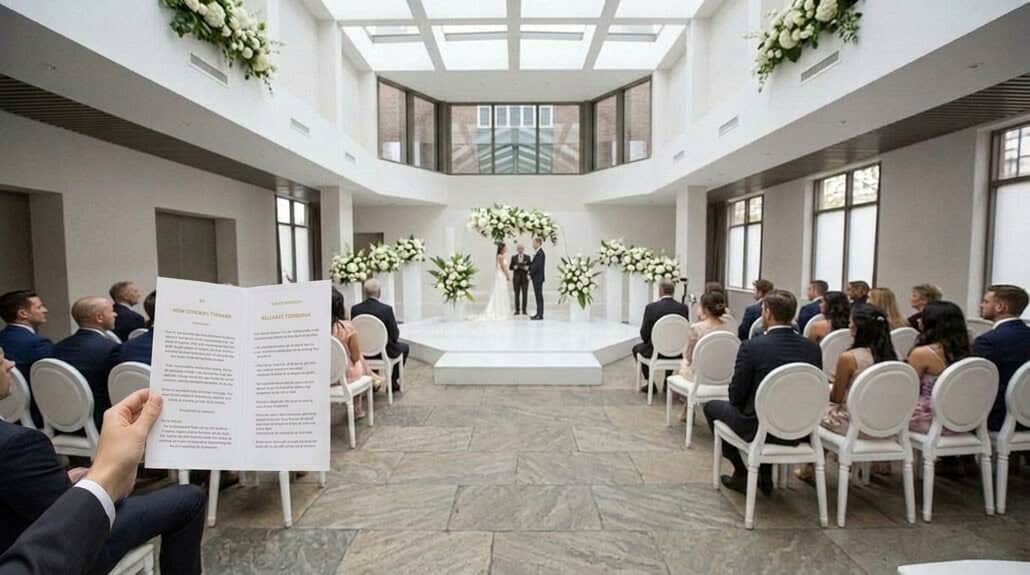
Although your ceremony holds profound meaning for you, half your guests may sit bewildered when you circle the mandap seven times or when your officiant presents the stefana crowns.
Wedding programs worth it? Absolutely, when cultural elements shape your ceremony. Your Hindu saptapadi (those seven sacred steps) or Jewish ketubah signing deserve context—not just mysterious spectacles for the uninitiated. Programs improve ceremony comprehension, transforming confusion into appreciation as guests understand why you’re jumping that beautifully decorated broom or why those ribbons connect your Greek wedding crowns.
Consider wedding ceremony programs as cultural translators: explaining that Celtic handfasting isn’t just pretty ribbons but represents specific virtues through each color, or noting that the mandap distinguishes Hindu ceremonies from other traditions. Your Filipino cord ritual or African-American libation ceremony carries generations of meaning—meaning your college roommate or coworker might completely miss without those carefully crafted program notes you almost skipped producing. Jewish weddings include the breaking of the glass, a moment that symbolizes the destruction of the Temple in Jerusalem and marks the conclusion of the ceremony with joyous celebration.
Vendor Credit and Recognition
Behind every breathtaking wedding lies an invisible battalion of professionals who transform your vision into reality, yet programs provide the perfect opportunity to shift these behind-the-scenes heroes into the spotlight they deserve. Your wedding programs—those ostensibly minor paper elements—become powerful platforms for professional recognition when you dedicate space to naming every contributor, from your photographer who captured 3,500+ moments to the florist who hand-wired 87 boutonnières.
This recognition transcends mere politeness. When guests marvel at your centerpieces or soundtrack, they’ll know exactly whom to approach for their own celebrations. Including vendor credit creates a ripple effect of industry appreciation, transforming your programs from disposable papers into networking stimulants. The most effective acknowledgments pair business names with specific contributions—”Enchanted Bakery, whose four-tier creation featured hand-painted sugar flowers mirroring our invitations.” Your vendors invested countless hours perfecting your celebration; acknowledging them costs nothing but means everything. Consider creating a visual collage format in your program that showcases vendor names alongside small images of their work, transforming the credits section into an inspiring reference guide for your guests.
Programs as Printed Keepsake

Why do couples preserve their wedding programs alongside cherished heirlooms like pressed bouquets and ceremonial goblets? Because wedding ceremony programs transcend their utilitarian purpose to become tangible memories that outlive the fleeting digital echoes of your day. You’ll revisit them years later—tactile reminders capturing details your memory has surrendered to time.
Wedding programs worth it? Absolutely. The global market speaks volumes: printed wedding merchandise will hit $22.38 billion by 2034, with couples investing $3,000-$4,000 in stationery alone. And yet, their value transcends commerce. Programs elevate ceremony experiences while creating artifacts that document who stood beside you, what music played, and which readings moved guests to tears.
They’re evolving, too—from simple paper folds to QR-enhanced keepsakes on recycled stock. For $1-$6 per unit, you’re creating something guests will touch, read, and potentially keep—a physical anchor to your most significant promises. Just as luxury cosmetics brands understand the power of tangible beauty experiences, wedding programs offer couples a physical touchpoint that transforms ceremony details into lasting impressions.
Design Integration with Invitation Suite
Beyond preserving memories, your wedding program must visually sing the same melody as your invitation suite. Those fonts, colors, and design elements you carefully selected for invitations? They’re your visual brand—your aesthetic signature that deserves continuation through every paper touchpoint. Wedding programs worth it? Absolutely, when they extend your carefully crafted visual story.
Your ceremony programs shouldn’t look like distant cousins to your invitations, but rather siblings—unmistakably related through consistent typography, matching color palettes, and cohesive finishing touches. The laser-cut details adorning your invitations should echo in your program design; your envelope palette should inform your program’s presentation.
Programs elevate ceremony comprehension, yes, but they also complete the design narrative you’ve established. Consider them not just informational tools but integral components of your wedding’s visual identity—the thread connecting your first announcement to the celebration itself, creating a seamless journey for your guests. Premium materials like cotton paper provide the same elegant foundation for programs that distinguished formal invitations have relied upon for generations.
Cost-Effective Program Approaches
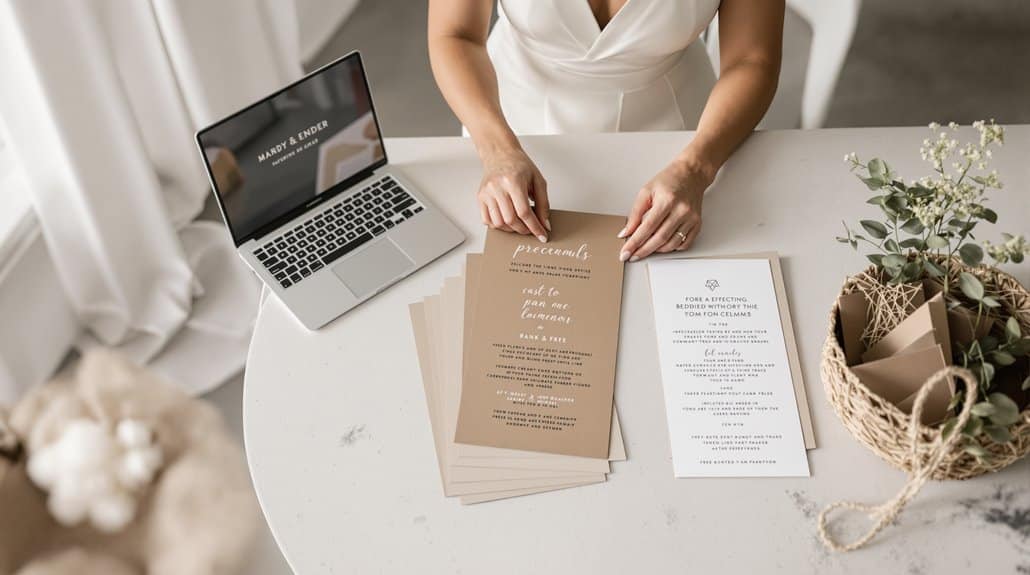
While wedding programs represent a precious keepsake, they needn’t drain your carefully managed budget—even during inflation. The question isn’t whether wedding programs are worth it (they are), but rather how to create them without financial strain. DIY options range from $50-$100 total for basic projects, while pre-made vendor programs start at just $0.99 per unit—a modest investment that dramatically enhances ceremony navigation for guests.
- Utilize customizable templates from Creative Union Design or The Knot Paper ($30 average) for professional-looking designs you print yourself
- Consider non-traditional formats like cootie catchers or newspaper-style programs that combine functionality with unexpected charm
- Select 110lb white matte card stock for durability without extravagance, or standard printer paper for maximum savings
Wedding program investment pays dividends in guest experience and personal satisfaction. And yet, the most successful programs aren’t necessarily the most expensive—they’re the ones thoughtfully aligned with your celebration’s character.
Conclusion
As you make your final program decision, remember that meaningful ceremony communication surpasses tradition every time. Wedding ceremony programs serve a distinct purpose—guiding guests through unfamiliar ritual territory, crediting your thoughtfully selected vendors, and yes, creating a tangible memory—and yet, 77% of Americans already believe we’re overspending on weddings. You’re not obligated to print elaborate booklets when a QR code linking to your wedding website might suffice.
Consider your specific circumstances: complex cultural elements? Multi-hour ceremony? Elderly relatives who’d appreciate paper guidance? Programs boost ceremony comprehension in these scenarios. But for brief, straightforward ceremonies with tech-savvy guests, digital alternatives won’t diminish anyone’s experience.
If you do allocate budget toward printed keepsakes, consider directing those funds toward elements guests will genuinely treasure—perhaps investing in an elegant bridal collection or quality favors instead.
Are wedding programs worth it? That depends entirely on your ceremony structure, budget constraints, and personal priorities. Trust your judgment—you understand your wedding’s needs better than any planning checklist possibly could.