A second shooter adds $800-$1,500 to your wedding investment but delivers 200+ additional images capturing parallel moments you’d otherwise miss. You’ll gain simultaneous documentation—your nervous smile while your partner tears up, those fleeting reactions during vows—plus technical redundancy against equipment failures. One photographer works for intimate gatherings under 50 guests, but becomes insufficient with 100+ attendees or complex venues. Your choice fundamentally hinges on which irreplaceable angles matter most to your story.
The Second Shooter Question
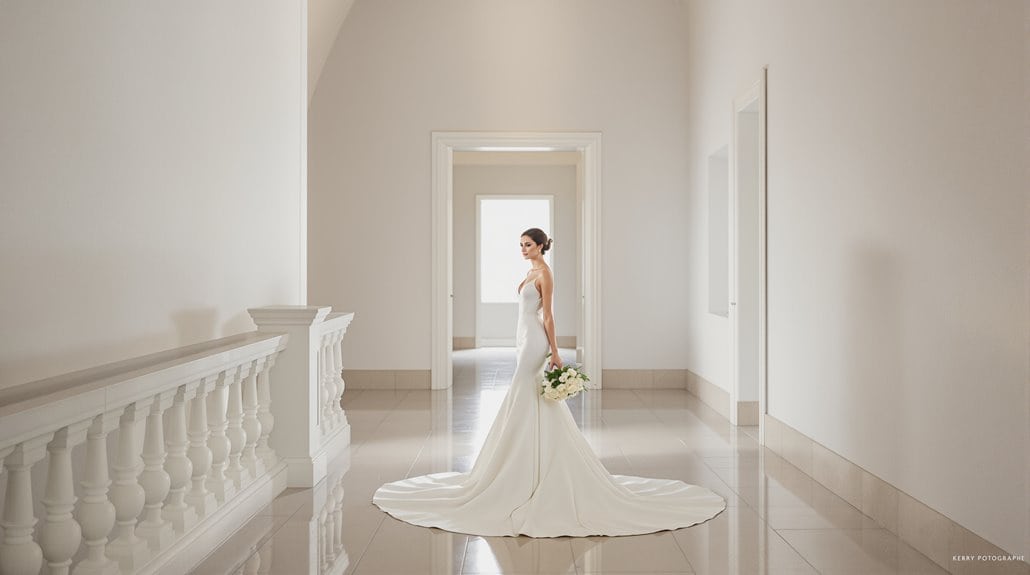
When planning your wedding photography, perhaps no decision looms larger than whether to invest in a second shooter. You’re weighing a significant investment—typically $800-$1,500 additional—against the promise of all-encompassing coverage that captures your day from multiple angles simultaneously.
Is dual photographer coverage worth it? Absolutely, if you value narrative depth and moment preservation. Your main photographer, focused on your first kiss, can’t simultaneously document your mother’s tears or your best friend’s jubilant reaction. And yet, the calculus shifts with wedding size and style. For intimate gatherings of 50 guests, a single skilled photographer often suffices.
The backup photographer element shouldn’t be underestimated. Equipment fails. Memory cards corrupt. People fall ill. Having redundancy means your once-in-a-lifetime moments aren’t vulnerable to a single point of failure—a form of wedding insurance few consider until it’s too late. With a second shooter, you’ll receive approximately 200+ additional photos that provide lasting memories and enhance your wedding’s storytelling capabilities. After the wedding, professional photo editing and organizing tools can help your photographers efficiently enhance and deliver your images across multiple devices, ensuring your memories are beautifully preserved.
What Second Shooter Adds: Simultaneous Coverage
Although a single photographer can produce breathtaking wedding imagery, they can’t defy physics—they simply cannot be in two places at once. This fundamental limitation dissolves with dual photographer coverage, transforming your timeline from a high-wire balancing act into an expansive canvas for storytelling.
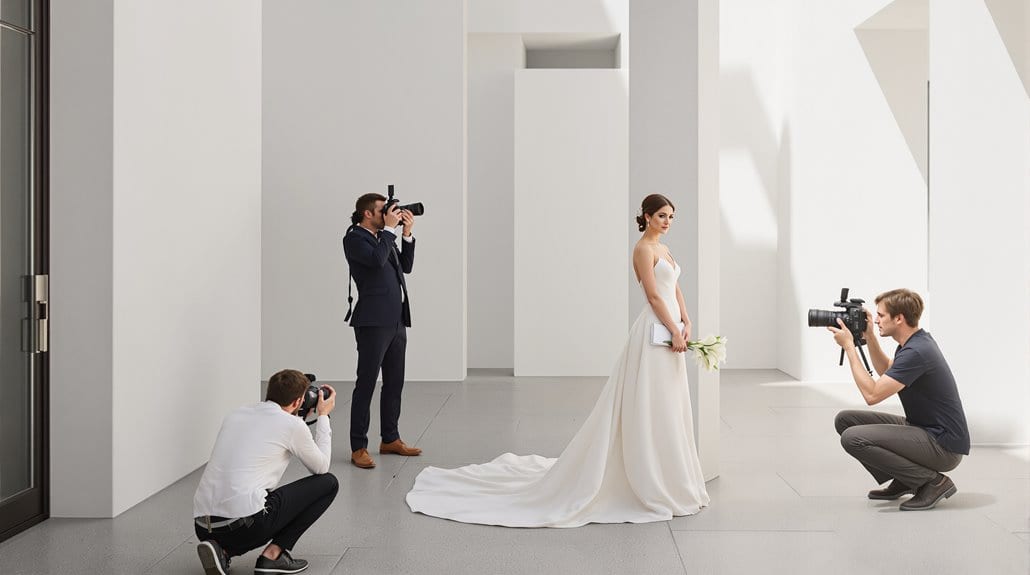
Your wedding day unfolds in parallel tracks: you’re getting ready while your partner does the same across town; you’re exchanging vows while your mother dabs tears; you’re posing for portraits while guests celebrate at cocktail hour. A wedding photography assistant captures these concurrent narratives—the groom’s nervous adjustment of his tie while the bride receives her final touches. This approach creates a more comprehensive visual story of your special day from beginning to end.
The second shooter value manifests most dramatically during critical moments—your first look documented from both perspectives, your ceremony captured from multiple angles, your reception’s spontaneous joy preserved while formal portraits proceed elsewhere. When discussing coverage options with photographers, focus on adjusting scope elements like hours and angles rather than demanding discounts on their rates. You’re not just buying another camera—you’re purchasing the impossible: being everywhere, seeing everything, missing nothing.
Backup Protection Value
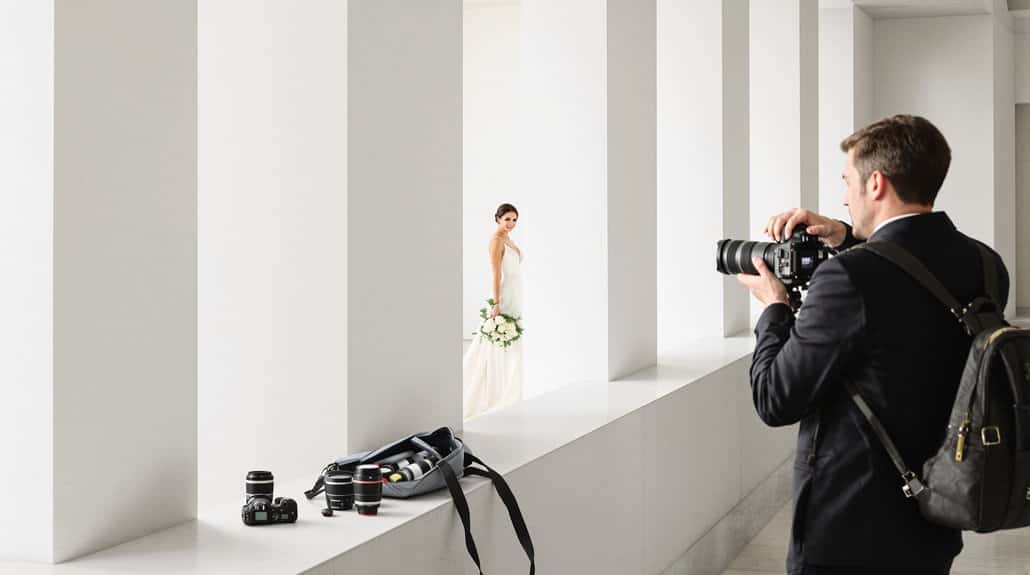
The silent guardian of your wedding memories isn’t just the second photographer—it’s the protection system they represent against the chaos of real-world events.
When you invest in dual photographer coverage, you’re purchasing something priceless: certainty. Consider this—your primary photographer’s camera fails during your first kiss. With a second wedding photographer present, that moment isn’t lost forever; it’s safely captured from another angle. Equipment malfunctions, battery failures, flash misfires—these aren’t hypothetical disasters but common occurrences professionals prepare for.
Two photographers wedding packages create a comprehensive safety net. Your second shooter isn’t merely taking additional photos; they’re providing technical redundancy that dramatically reduces the probability of critical moment loss. And yet, this insurance policy delivers more than peace of mind—it ensures continuity throughout your day when the unexpected inevitably happens. Camera bodies fail. Memory cards corrupt. Professionals get ill. But with doubled systems, your memories remain protected.
Just as websites employ security services to protect against attacks and system failures, your wedding photography team uses redundant systems to safeguard against technical disasters.
More Candids and Varied Perspectives
Imagine yourself standing at the altar, focused entirely on your partner’s vows—you’re completely unaware of your grandmother dabbing tears, your best friend’s knowing smile, or your father’s subtle nod of approval. These fleeting, irreplaceable moments vanish unless captured.
A second shooter transforms your gallery from linear documentation to multidimensional storytelling. While your lead photographer frames your first dance, their second captures your maid of honor wiping away tears, your nephew’s impromptu dance moves, your parents squeezing hands—the emotional architecture surrounding central moments.
Beyond candids, you’ll gain perspective diversity—your ceremony from both front and back, your first look from two angles, your toast reactions and speaker simultaneously. The mathematical advantage is irrefutable: two angles of three key moments equals six unique perspectives rather than three.
Your wedding unfolds in concurrent narratives—parallel stories intersecting in a single day. A second shooter ensures none of these storylines disappear forever. More importantly, documented backup plans for photographer illness or equipment failure protect you from losing coverage entirely on your wedding day.
Cost Premium: $800-$1500

When considering a second shooter for your wedding day, you’ll need to account for an investment ranging from $800 to $1,500 in your photography budget. This isn’t arbitrary pricing—it reflects real professional value. Experienced second shooters command $75-$100 hourly in competitive markets like Southern California, while Michigan rates start at $25-$50 for standard coverage.
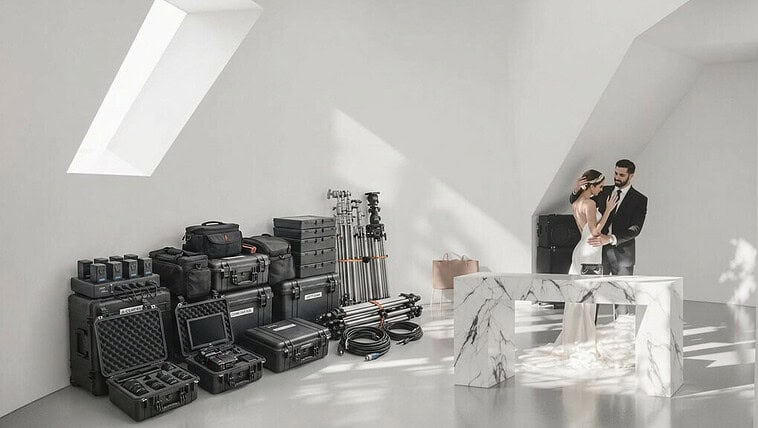
What drives this premium? Equipment requirements, for starters. Professional second shooters arrive with two camera bodies, premium lenses (typically 24-70mm and 70-200mm f/2.8 zooms), and backup lighting systems—gear that represents significant investment. Experience matters too. Those commanding top-tier rates deliver consistent, publication-worthy images without supervision.
The investment scales logically: partial-day coverage (four hours) typically runs $500, while full eight-hour coverage averages $800 with flat-rate structures. And yet, geography dramatically impacts your costs—NYC second shooters often start at $50-$65 hourly, while Connecticut professionals average $40-$65. This dual-photographer approach becomes particularly valuable during critical moments like golden hour photos, when the main photographer captures sunset portraits while the second shooter documents candid reception moments simultaneously.
Style Coordination Considerations
Coordinating styles between multiple photographers requires far more finesse than simply hiring another person with a camera. You’re not just paying for two shutters—you’re investing in visual harmony that tells a cohesive story. The aesthetic alignment between shooters determines whether your gallery flows as one narrative or feels jarringly disconnected.
| Coordination Element | Successful Approach | Potential Pitfall |
|---|---|---|
| Visual Style | Pre-booking portfolio review | Clashing aesthetics |
| Editing Process | Standardized presets/parameters | Mismatched processing |
| On-Set Communication | Non-verbal cues, positioning plan | Duplicate angles, crossed paths |
Your primary photographer must select a second shooter whose work complements—not competes with—their established aesthetic. And yet, even complementary styles require intentional management. Most couples don’t realize that post-processing protocols matter as much as in-camera technique; two perfectly matched photographers can still produce disjointed galleries if editing approaches differ. The most successful pairings involve photographers who’ve developed anticipatory rhythms through previous collaboration. Just as blending tradition with modernity requires thoughtful integration of vintage and contemporary elements, coordinating photography styles demands seamless fusion of different visual approaches into a unified aesthetic.
When Second Shooter Essential vs Luxury
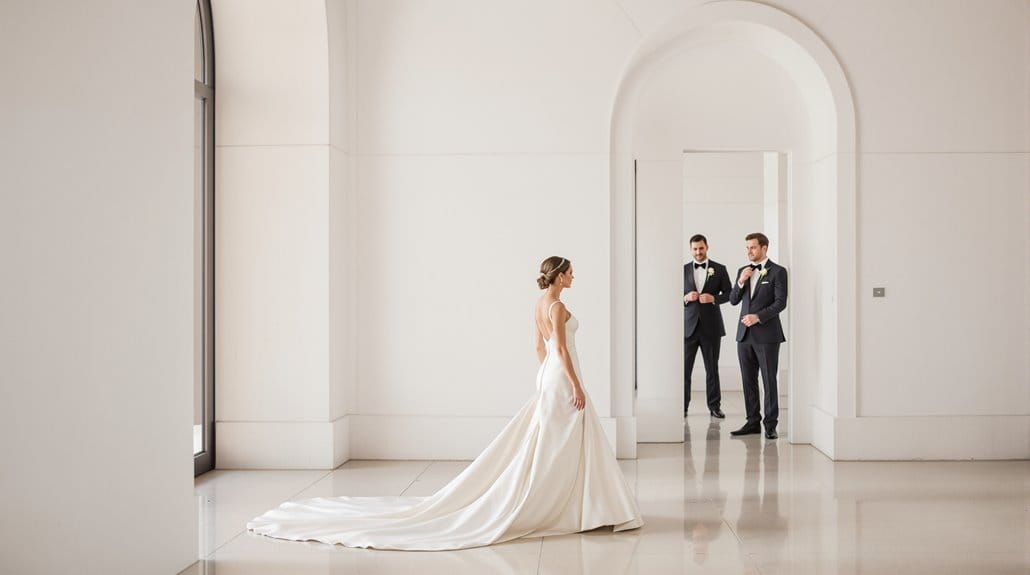
The distinction between necessity and luxury in second shooter scenarios hinges primarily on the scale and complexity of your wedding.
If you’re hosting fewer than 50 guests, that additional $800-1,500 investment might be unnecessary—your intimate gathering can be beautifully documented by one skilled photographer. And yet, once your guest count crosses 100, a second shooter transforms from splurge to practical necessity. Those simultaneous moments—your processional while capturing ceremony details, cocktail hour while shooting family formals—become logistically impossible for one person.
The middle ground (50-100 guests) requires honest assessment. Your budget might strain with that extra $500-800 day rate, but complex venues with separate getting-ready locations might justify it. Connecticut second shooters command $40-65 hourly; NYC professionals demand $100+. Consider, too, the hidden costs—their equipment requirements, travel expenses, meals.
Second shooters aren’t just about quantity—they’re about capturing the ephemeral moments one person simply can’t witness. This represents a strategic tier mixing approach: investing heavily in photography coverage for your 1-3 non-negotiable priorities while potentially economizing on other vendor categories.
Decision Framework
To determine whether a second shooter represents necessity or luxury for your wedding, you’ll need a structured approach—one that weighs multiple factors against your unique circumstances. Start by honestly evaluating your guest count—above 80 tilts toward necessity, especially once you hit that 100+ threshold where group management becomes unwieldy.
Next, map your timeline against physical space. Separate getting-ready locations? Simultaneous documentation becomes critical. A sprawling venue with hidden corners and multiple levels? Solo coverage creates inevitable blind spots. But a tidy linear schedule in an intimate setting? One photographer handles this beautifully.
Identify your non-negotiable moments—that processional shot from both perspectives, the reaction of your partner during vows, guest emotions during toasts. Budget constraints exist, yes, but weigh the £450+ premium against what’s irreplaceable. Some weddings demand dual coverage; others find it superfluous—and you’ll know which is yours by examining these factors systematically. If you need further assistance evaluating your specific photography needs, consider reaching out for personalized assistance at 800.362.4073 to discuss your registry and wedding planning essentials.
Conclusion
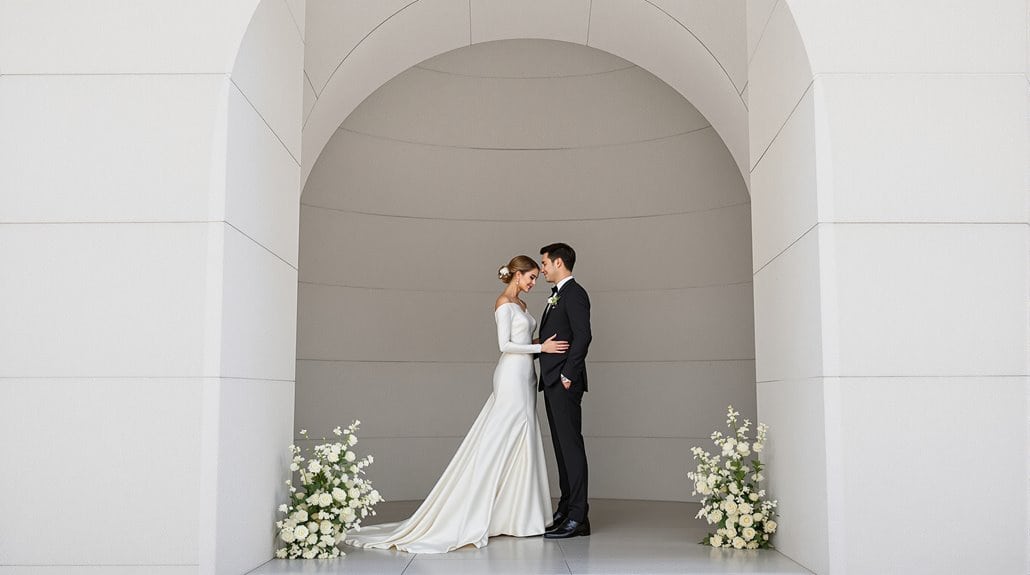
In the end, your decision between a solo photographer or adding a second shooter hinges on balancing practical realities with aesthetic aspirations. Your venue layout, guest count, and timeline complexity should drive this choice more than emotional pulls toward “complete coverage”—and yet, photography remains the one wedding element that outlasts the day itself.
For 80+ guests spread across multiple locations with a compressed timeline, that additional £450 investment delivers tangible value: simultaneous angles, backup protection, and fundamentally, the ability to document both your vows and your guests’ reactions to them. But for intimate gatherings with straightforward schedules? A skilled solo photographer can craft a thorough narrative without the second shooter premium.
The calculus becomes personal: Would you rather have two photographers delivering 1,500+ images from varied perspectives, or allocate those funds elsewhere? Just as securing your California marriage license requires careful planning and documentation, so too does choosing the right photography approach for your wedding day. Trust your instincts here—you’ll know which approach aligns with your documentation priorities.