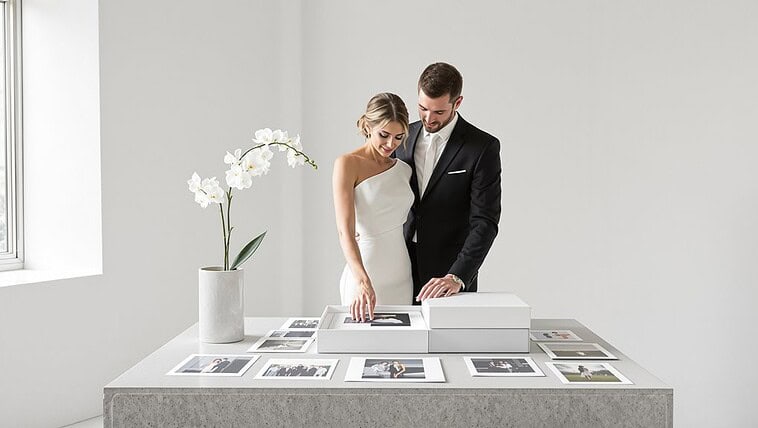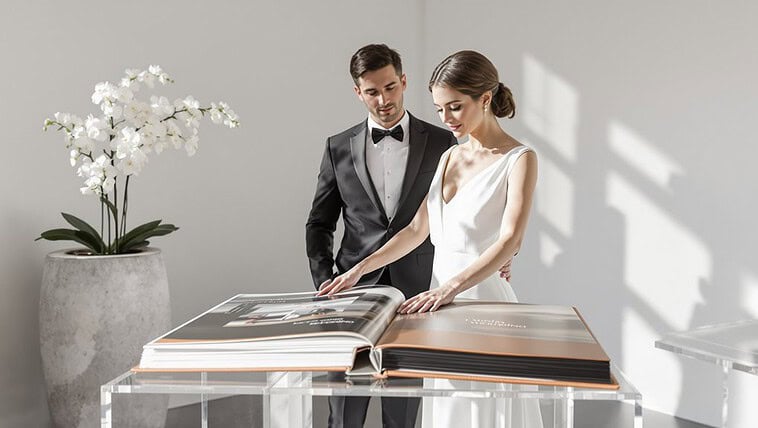

Wedding albums aren’t photo storage—they’re memory architecture. You’ll transform 2,000+ shots into 80-120 curated images that build an emotional arc rather than a chronological dump. Create visual conversations through deliberate juxtaposition, balance density with negative space (2:1 ratio), and use rhythm shifts to maintain involvement. Great albums employ detail pairing, non-linear jumps, and spread crescendos to enhance core memories. The difference between albums rarely opened and those treasured for generations lies in this artful distillation.
Album as Memory Architecture
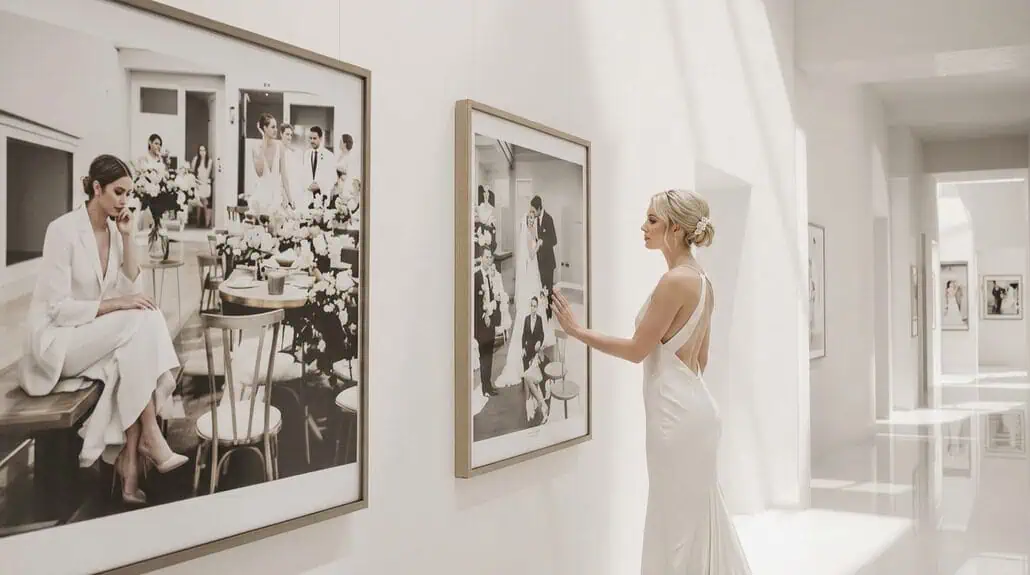
Your wedding album isn’t just a collection of pretty pictures—it’s the architectural blueprint of how you’ll remember one of life’s most significant days. When you flip through those pages twenty years from now, your brain won’t reconstruct chronology from timestamps; it’ll rebuild emotional truth from the sequencing you’ve curated.
Effective wedding album layout demands ruthless selectivity. You’ll need to identify which 80-120 images, from thousands, will anchor your memory narrative—arranging them in a progression that mirrors the day’s emotional arc rather than merely its timeline. And yet the best memory album designs aren’t strictly linear; they breathe through white space, creating visual pauses that emphasize crucial moments.
Your categorization system matters enormously. Sort images into architectural “rooms”—pre-ceremony anticipation, ceremonial exchange, celebration release—to establish cognitive waypoints. But don’t mistake organization for sterility; authentic memory architecture preserves micro-moments of unscripted joy alongside the expected milestones. Consider incorporating candid shots that reveal genuine emotions, creating a more authentic representation of your special day. For enhanced personalization, complete a Beauty Profile to receive tailored recommendations that complement your wedding aesthetic and individual style preferences.
Selection Strategy: 300 Images to 80
While photographers might capture upwards of 2,000 images on your wedding day, the difference between a mediocre album and an exceptional one lies not in brutal editorial discipline. Your wedding album layout demands ruthless curation—a process where less truly becomes more.
The photo album curation pathway typically follows four critical stages:
- Initial selection – Gather 100-200 foundational images that capture diverse moments
- Categorical organization – Sort into 11-12 distinct categories (rings, dress, ceremony, etc.)
- Redundancy elimination – Choose only 1-2 variations of any single moment
- Visual balance refinement – Ensure mix of wide shots, details, candids, and emotional peaks
Your album selection strategy should privilege emotional resonance over exhaustive documentation. A perfectly curated 80-image album tells a more captivating story than 300 mediocre shots arranged chronologically. And yet, this reduction process preserves precisely what matters—the emotional architecture of your day, not just its documentation. For optimal storytelling, select images that create a cohesive narrative flowing naturally from preparation moments through to post-wedding celebrations. The same dedication to perfection that defines haute couture bridal designers applies to album curation, where each image must justify its place in your visual story.
Sequencing That Tells Story
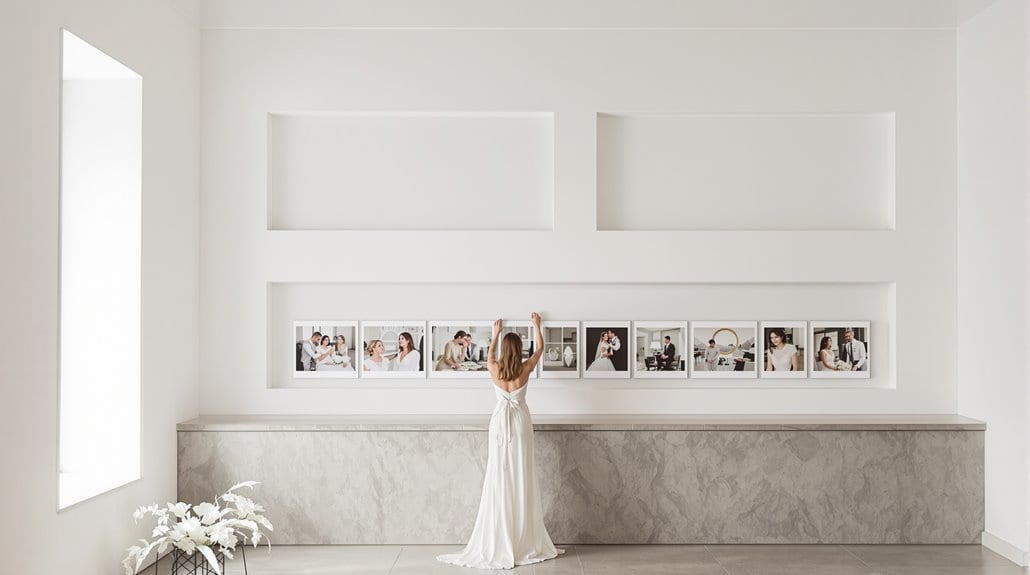
How can eighty perfectly arranged photos transform from mere documentation into an emotional odyssey? The magic lies in album sequencing—the architecture of memory itself. You’re not just arranging images chronologically; you’re curating wedding photos into a narrative that breathes, pulses, and lingers.
| Sequence Type | Purpose | Impact |
|---|---|---|
| Emotional arc | Builds tension | Guests revisit multiple times |
| Detail pairing | Creates context | Elevates mundane moments |
| Rhythm shifts | Prevents fatigue | Maintains engagement |
| Non-linear jumps | Mirrors memory | Creates “aha” moments |
| Crescendo spreads | Amplifies climax | Cements core memories |
Your wedding album layout should reject rigid chronology—and yet, must maintain coherence. Begin with that getting-ready stillness, but don’t hesitate to place the champagne toast before ceremony if it creates emotional resonance. The most successful albums feel simultaneously inevitable and surprising, like all great stories do. Modern photo editing and organizing tools enable you to experiment with different sequences across desktop, web, and mobile platforms before committing to your final album layout.
Layout Composition and Scale Variation
Layout composition transforms ordinary wedding photos into visual poetry through deliberate scale variation and thoughtful arrangement. Your wedding album design isn’t just a collection—it’s a carefully orchestrated visual rhythm that guides viewers through your story. When crafting layouts, resist the urge to cram every photo onto the page; breathing room elevates impact.
Less photos, more impact. Every wedding album layout is a visual rhythm where strategic spacing elevates your most precious moments.
For maximum visual power in your wedding album layout:
- Limit yourself to three images per page—sometimes less is monumentally more
- Alternate between full-bleed spreads and multi-photo grids to create energetic pacing
- Size images proportionally to their emotional significance—key moments deserve scale
- Position critical facial expressions away from page creases, even in layflat albums
Album sequencing and layout decisions shape how memories are preserved and experienced. The most effective designs balance visual density with negative space, creating a 2:1 ratio that draws the eye precisely where you want it. Just as intentional density in event design creates intimacy regardless of guest count, strategic clustering of images on select pages can amplify emotional impact far beyond evenly distributed layouts. Bold, yet polished.
Images in Conversation Not Isolation
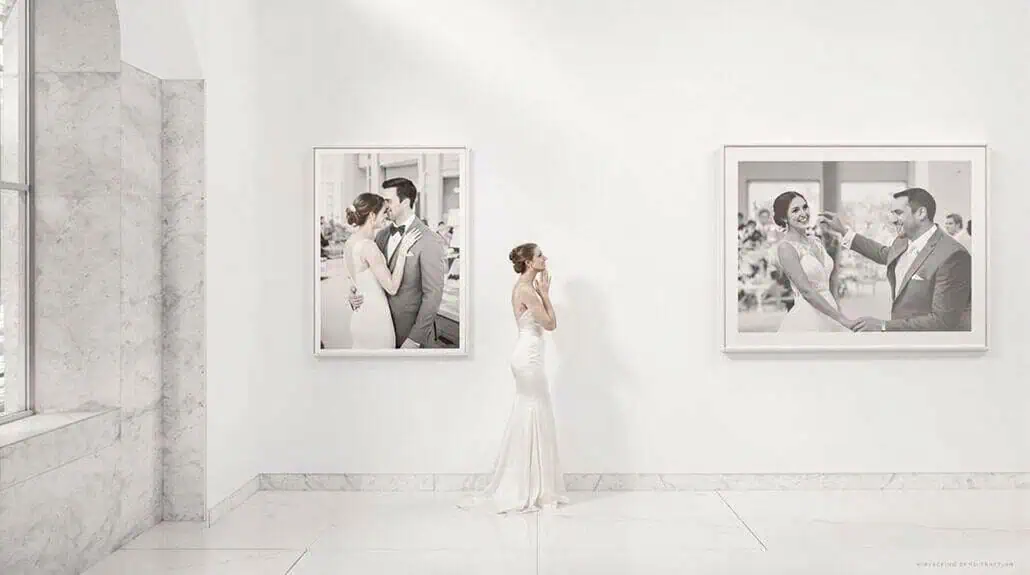
When photographs stand isolated, they merely document; when they converse, they transform into narrative. This conversational quality emerges through deliberate juxtaposition—placing images with related color palettes, complementary compositions, or thematic connections on the same spread. You’re not just displaying pretty pictures; you’re orchestrating relationships.
Consider how horizons align across facing pages, creating a visual thread that guides the eye. Three similar images in sequence build momentum through repetition. Related photographs—a detail shot beside a wider context frame—provide depth rather than disconnection.
Color consistency matters enormously, and yet it’s often overlooked. Jarring tonal shifts between adjacent images fracture the visual flow you’ve worked so hard to establish. Your editing style must remain consistent across all photographs—same warmth, same contrast levels. Choose 2-3 hues that harmonize throughout the spread, using dominant tones with subtle accents to create visual rhythm rather than competing for attention.
The best spreads feel inevitable, as if these images were always meant to stand together—a visual conversation rather than a random meeting.
Creating Albums That Get Opened
The most beautiful album in the world remains worthless if it’s condemned to permanent shelf exile. Your album must beckon—magnetic enough to survive coffee table rotation, accessible enough for casual browsing, yet substantial enough to warrant repeat viewing. You’re crafting not just documentation but a physical artifact that lives with your clients.
Albums get opened when they follow four essential principles:
- Size matters – 15-20 page albums hit the sweet spot between substantive and approachable
- Clean aesthetics – Monochromatic, minimalist designs meld with home décor rather than clash
- Narrative pull – A captivating story arc with clear beginning-middle-end invites complete viewing
- White space abundance – Breathing room prevents visual exhaustion and signals luxury
The most-viewed albums typically feature fewer images (60-120) but present them with intention and space. Your editing process isn’t subtraction—it’s distillation, transforming raw documentation into curated memory architecture. Like wedding attire where proper fit transforms garments from costume into authentic self-expression, album design succeeds when form and content align naturally with how clients actually interact with their memories.
Bad Albums: Chronological Dumps

Perhaps the most devastating mistake wedding photographers make: chronological dumps. You’ve seen them—albums bursting with 300+ unfiltered images arranged by timestamp rather than emotional resonance. A visual assault of four nearly identical first-look shots, followed by seventeen variations of the same bridesmaid arrangement.
Your album isn’t a storage device; it’s memory architecture. When you stuff pages with redundant images and rigid chronology, you sacrifice narrative power. Related moments become fragmented across pages, emotional highs get buried among repetitive content, and the breathless joy of your ceremony bleeds into reception chaos without visual breathing room.
The most tragic failure? These albums rarely get opened. Without intentional curation—strategic sequencing, visual grouping, deliberate pacing—your most precious moments become simply another digital burden. Viewers need guidance through your story, not an exhaustive documentation of timeline minutiae. Just as luxury cosmetics brands like Dior Beauty understand that curation elevates the experience from mere product to artistry, wedding albums demand ruthless editing and purposeful design.
Conclusion
Designing your wedding album fundamentally transcends photography—it’s an act of emotional preservation and personal mythology. When you select those 45-70 images from thousands of captures, you’re not just picking pretty pictures; you’re architecting how future generations will understand your beginning.
Your album becomes meaningful through deliberate choices, not exhaustive inclusion. Consider these four principles that distinguish impactful memory objects:
- Narrative coherence over chronological completeness
- Visual breathing room rather than maximum image density
- Material permanence that signals multi-generational value
- Design restraint that uplift moments to artistic significance
The most powerful albums feel simultaneously curated and inevitable—a distillation so precise that each spread feels both surprising and exactly right. Your wedding deserves this level of consideration, transforming what could be mere documentation into something that feels like truth itself: selective, beautiful, and deeply yours. For Ontario couples, understanding marriage license requirements ensures your celebration is legally sound before focusing on these creative preservation choices.