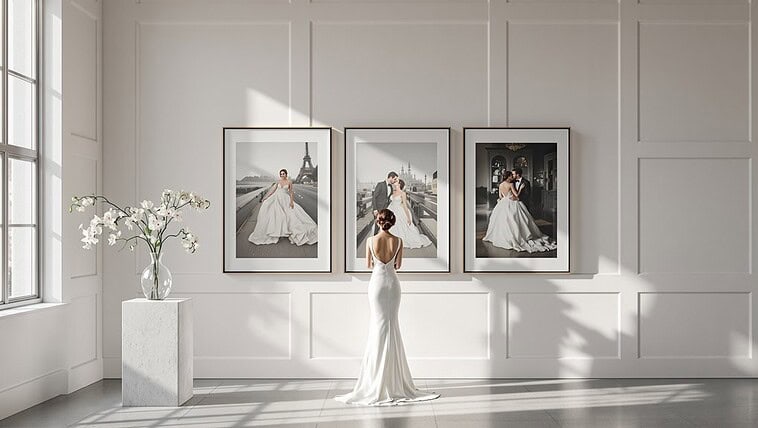
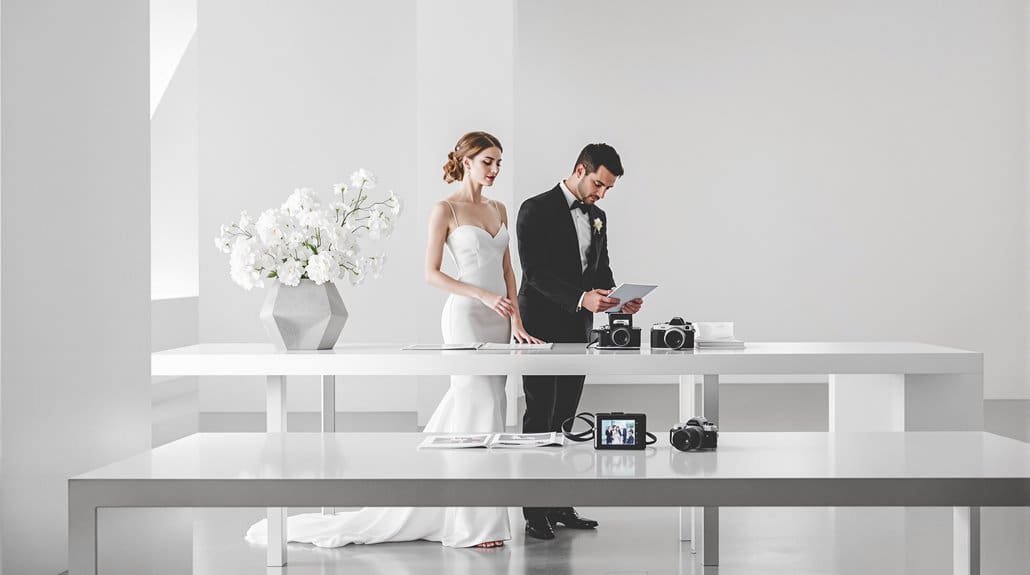
When choosing between film and digital for your wedding, you’re selecting more than an aesthetic—it’s a workflow and risk decision. Film delivers dreamy, timeless images with superior highlights and romantic tones, but costs €450+ per event with physical fragility risks. Digital offers reliability in low light, unlimited shots, and instant verification, yet lacks film’s distinctive warmth. Most pros now use both: film for golden-hour portraits, digital for dimly-lit receptions. Your perfect wedding album likely contains both approaches, tactically deployed.
The Format Choice Beyond Aesthetics

While most couples fixate on the dreamy, washed-out look of film or the crisp clarity of digital, the decision between these formats extends far beyond what meets the eye. When choosing film vs digital wedding photography, you’re selecting entire workflows, business models, and practical realities.
Digital offers immediate feedback—shoot, check, adjust, repeat—creating a safety net that film simply doesn’t provide. Film demands deliberation: each frame costs money, each moment must be anticipated rather than reacted to. And yet, this limitation creates an intentionality that affects everything from your photographer’s movement to their mental presence. Digital medium format cameras bridge this gap by offering both technical excellence and a distinctive aesthetic with their rich dynamic range and superior tonality that adds depth to wedding imagery.
The wedding photo format debate includes brutal economic math: film processing adds $500-$1,000 to your investment. Digital versus film wedding considerations require calculating risk tolerance against potential reward. Do you value the security of 3,000 digital images, or the craftsmanship behind 300 scrupulously composed film frames? Before making this choice, ensure you’ve obtained your California marriage license so your photographer can document a legally recognized celebration.
Film Photography: Process Cost Risk Aesthetic
Understanding the underpinnings of film photography—its process, cost structure, inherent risks, and unique aesthetic—reveals why this medium inspires such devotion despite its practical challenges.
When you choose film, you’re committing to a deliberate workflow: exposed rolls sent to labs, chemical development, scanning into digital files. Processing costs add up—$500-$1,000 for a wedding, frankly. You’ll shoot fewer frames, carefully composing each one without the luxury of preview. And yet, this constraint forces intentionality that shapes the final product.
The aesthetic—that distinctive film look—comes with technical limitations. Digital options allow you to capture sequence shooting with 15-25 rapid images, something film simply cannot accommodate. Low-light venues require higher ISO film stock; winter weddings might necessitate mid-event film changes. Your control over color rendition depends partly on your scanner operator’s decisions. This workflow parallels how floral designers coordinate with venue managers months in advance, both requiring pre-event planning that shapes the final deliverable. But this distinctive visual quality—softer, more purposeful—is precisely why couples seek it out. The film process, with all its challenges, creates an irresistible differentiation from standard digital imagery.
Digital Photography: Flexibility Volume Certainty
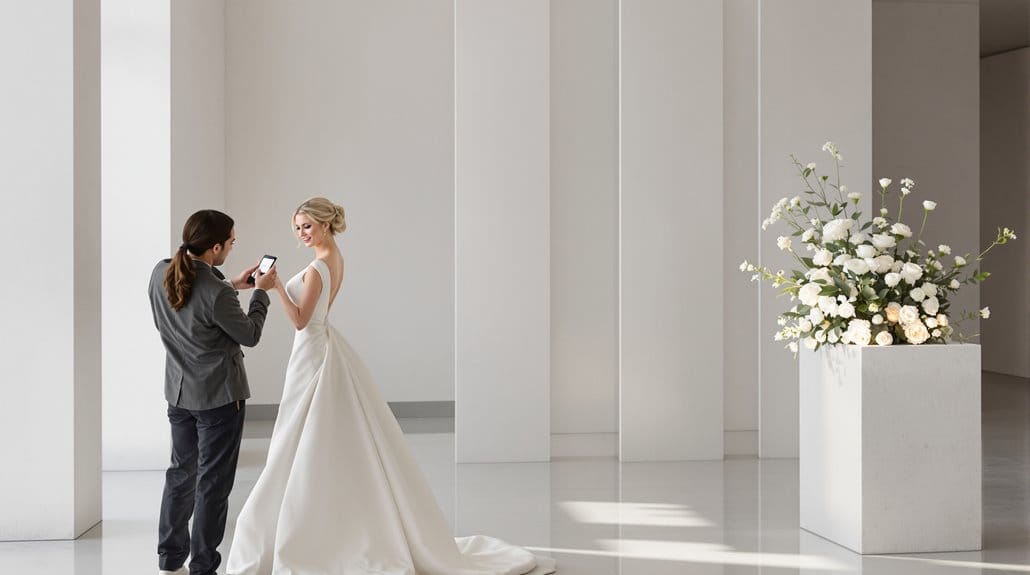
Digital photography liberates wedding photographers from the constraints that define the film experience, offering technical adaptability that transforms how special moments are captured and preserved. You’re gaining the freedom to shoot hundreds—even thousands—of images without the nagging anxiety of running out of film during that vital first dance.
Your photographer can instantly verify critical shots were captured correctly, adjusting settings on-the-fly when lighting shifts from church sanctuary to outdoor sunset. This certainty eliminates the stomach-churning wait to see if film processing revealed or ruined your memories.
The sheer volume digital photography enables isn’t merely excessive; it’s insurance against blinked eyes and awkward expressions. It creates space for spontaneity—those unplanned moments when your grandfather tears up or your flower girl goes rogue. Many couples now create visual idea collections on platforms like Pinterest to share inspiration with their photographers before the big day. And yet, this abundance requires disciplined curation, transforming raw documentation into the narrative that best preserves your day’s emotional truth.
Cost Implications Comparison
Beyond surface-level creative debates, the financial equation between film and digital wedding photography reveals stark economic realities you’ll face when selecting your documentation approach.
The numbers don’t lie—film wedding photographers absorb approximately $450 in material costs per event (15-25 rolls plus development), expenses inevitably transferred to you through package pricing. Your digital vs analog wedding decision translates to a three-year cost differential of about €1,000 favoring digital workflows, despite comparable initial camera investments.
Film’s €3,400 three-year running total stems from its fundamentally consumable nature—each frame literally burns money. And yet, many couples willingly pay premium rates (€1,900-8,500) for film’s distinctive aesthetic, accepting limited coverage as the economic trade-off.
Digital offers unlimited shooting flexibility after upfront investments in memory cards and €12/month editing subscriptions. You’re essentially choosing between recurring material expenses versus infrastructure depreciation—a financial philosophy as much as a photographic one.
When discussing costs with photographers, approach the conversation as a partnership rather than focusing solely on aggressive negotiation, which can damage the relationship and limit the service quality you’ll ultimately receive.
Risk Assessment: Film Damage Possibilities
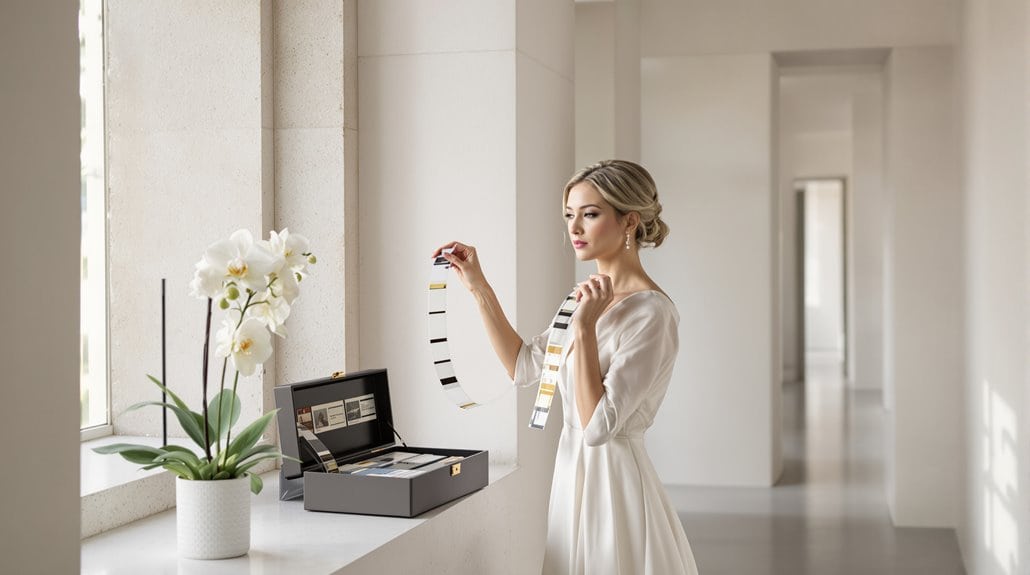
While financial considerations paint one picture, the inherent fragility of film creates an entirely separate risk profile you’ll need to weigh. Is film photography worth it when handling and physical damage risks can devastate your most precious memories? Unexposed rolls fumbled during loading, exposed film accidentally dropped—each represents a catastrophic failure point with no recovery options. And yet, the tactile experience draws us in despite these dangers.
Your images face a gauntlet: assistant mishandling, lab processing errors, transportation vulnerabilities, weather exposure, and equipment failure. That breathtaking coastal ceremony? One assistant’s stumble could destroy every frame. Those perfect reception moments? Potentially lost to improper film storage during transit.
Digital offers immediate verification and virtually eliminates these physical vulnerabilities. Consider coordinating with your wedding party’s attire choices, such as traditional suiting options that photograph consistently across both mediums. Film versus digital photos isn’t merely an aesthetic choice—it’s a calculated risk assessment. The romantic notion of film deserves to be tempered with the sobering reality of its fragility.
Aesthetic Differences and Personal Preference
When choosing between film and digital photography for your wedding, the aesthetic differences transcend mere technical considerations—they fundamentally shape the emotional resonance of your memories. Film renders skin tones with a creamy, warm quality—transforming ordinary moments into painterly vignettes with depth that digital sensors simply cannot replicate. And yet, digital provides unmatched clarity that some couples prefer.
Is film photography worth it? Consider how film captures shadows with dimensional softness while maintaining highlight details in harsh lighting conditions. Your film wedding photographer will deliver images with an inherently timeless quality—photographs that won’t appear dated as digital trends evolve.
The film vs digital wedding photography debate ultimately centers on intention. Film forces deliberate composition—each of your 24-36 frames demands thoughtfulness. Digital allows creative exploration through hundreds of shots. Film produces watercolor-like images with superior tonal range, maintaining color accuracy across platforms where digital may require careful post-processing adjustments. Your decision isn’t merely technical but deeply personal—choosing between romanticized warmth or crisp reality as the aesthetic foundation of your wedding memories.
When to Insist on Film vs Accept Digital
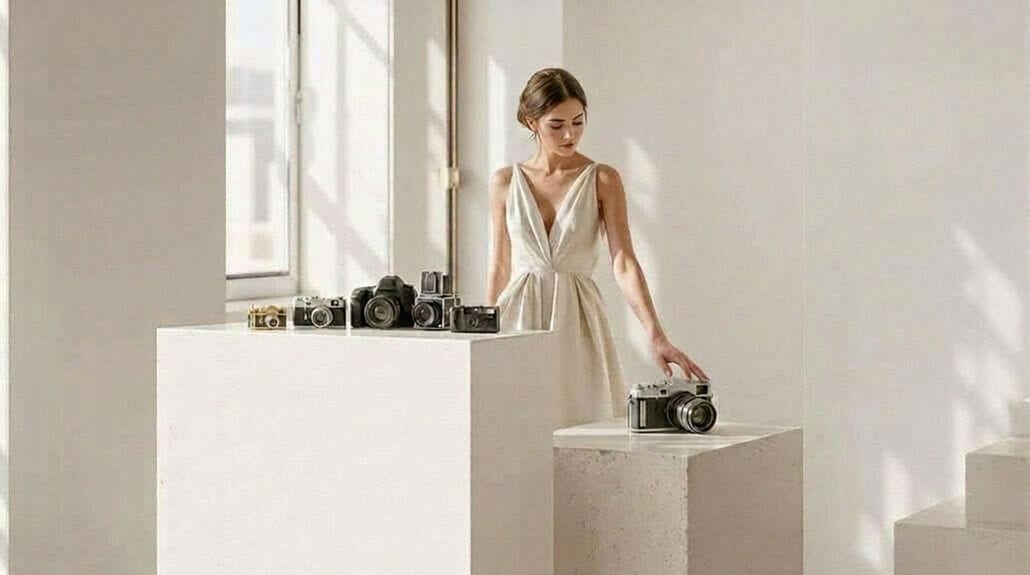
Deciding between film and digital photography for specific wedding moments isn’t merely about preference—it’s about tactical optimization of each medium’s strengths.
Insist on film for your outdoor portraits and golden hour couple shots where that legendary highlight retention will transform harsh sunlight into buttery magic. Film’s natural color melting creates dreamlike skin tones without heavy filtering—perfect for those frame-worthy portraits. And yet, digital becomes non-negotiable for your dimly-lit reception where ISO 3200 capabilities capture ambient candlelight moments that film simply can’t without disruptive flash.
For your ceremony, consider your venue’s lighting. Dark churches? Digital wins. Sun-dappled garden ceremony? Film excels. When time constraints tighten—during family portraits or rapid-fire reception moments—digital’s unlimited captures and immediate feedback prove invaluable. Unpredictable weather situations? Digital’s adaptability trumps film’s calculated approach. Your photographer might suggest a hybrid approach—film for portraits, digital for everything else—which often represents the perfect marriage of both worlds. Just as you’ll celebrate your love story with carefully chosen engagement rings and wedding bands, your photography style should reflect the meaningful symbols that represent your unique relationship.
Conclusion
The wedding photography industry has evolved beyond the false dichotomy of film versus digital into something far more nuanced—a carefully calibrated fusion of both mediums. Your photographer isn’t choosing between polarized options but tactically deploying each format where it excels: film for that dreamy getting-ready sequence bathed in window light, digital for your candlelit first dance when reliability trumps romance.
What matters isn’t the tool but the craftsperson wielding it. The best photographers—those worth their $4,000+ packages—think in terms of moments rather than mediums, effortlessly shifting between formats you’ll likely never notice in final delivery. And yet, understanding these distinctions enables you to have substantive conversations about coverage priorities. Film creates unmistakable magic in certain conditions; digital ensures nothing essential slips through the cracks.
Your memories deserve this hybrid approach—a technical marriage as meaningful as your own, combining film’s timeless quality with digital’s unwavering dependability. Once captured, tools like Adobe Lightroom allow photographers to enhance photo quality across desktop, web, and mobile platforms, ensuring your final images achieve their full potential regardless of which medium was used.