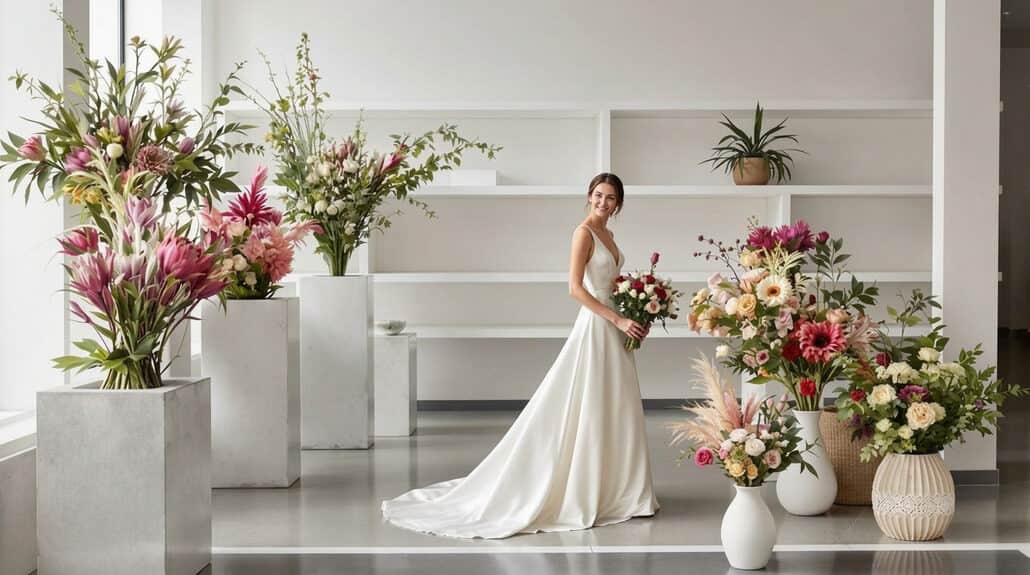
Roses are the comfort zone of floral choices—familiar, safe, algorithmically reinforced. Yet they’re often selected through default rather than deliberation, costing 30-60% more than seasonal alternatives. When chosen intentionally (David Austin varieties, architectural purposes), roses justify their environmental footprint. But most scenarios call for breaking tradition: consider ranunculus (7-10 days lifespan), protea (2-3 weeks), or monstera leaves—each offering richer symbolism, visual interest, and often better value. The courage to bypass roses opens a world of aesthetic possibilities.
The Rose Default

The Rose Default
When faced with the flower-buying moment of truth, most of us default to roses without even realizing we’re not making a conscious choice. You reach for roses because they’re the safe bet—reliable, universally recognized, abundantly available at every price point. And yet, this autopilot selection obscures an entire universe of alternatives to roses that might better express your actual intentions.
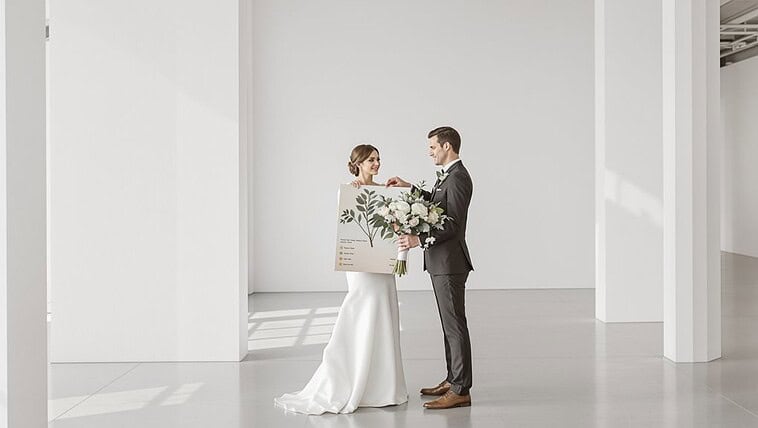
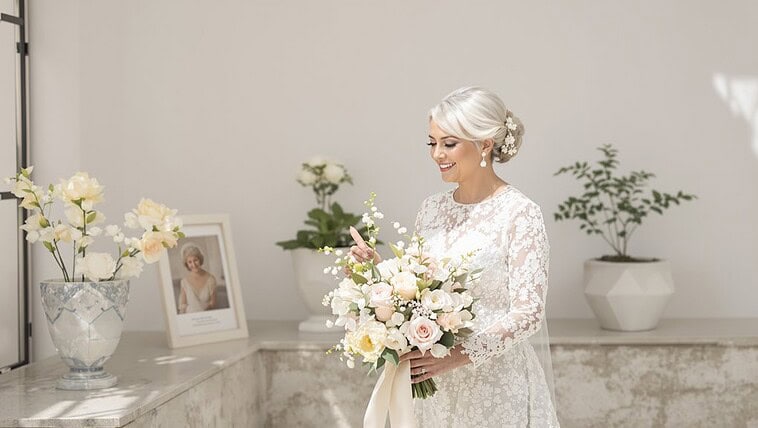
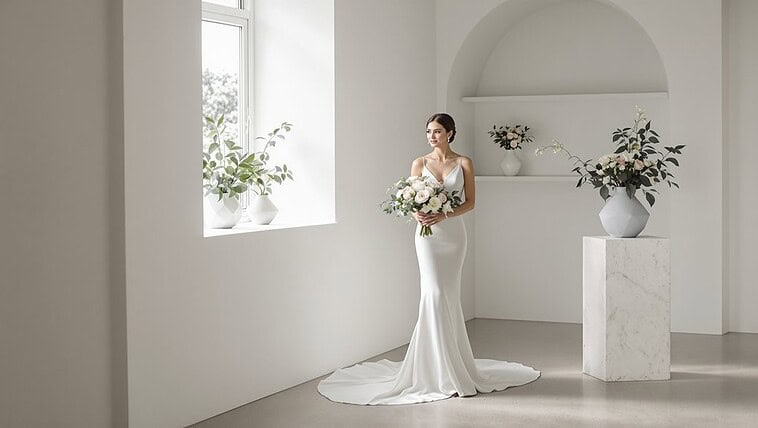
Wedding florals particularly suffer from this phenomenon. Couples select roses vs other flowers wedding after wedding without questioning if those classic blooms truly align with their aesthetic vision or budget. The florist offers suggestions, you nod along, and suddenly you’ve committed to twelve centerpieces of predictable red roses instead of distinctive ranunculus, characterful dahlias, or architectural proteas. Choosing a specific number like 12 roses particularly limits expression, as they inherently epitomize classic romance, rather than potentially more fitting sentiments for your unique relationship.
Wedding flowers besides roses exist in spectacular abundance—each with their own symbolism, seasonal significance, and visual impact—waiting for you to make an actual choice rather than a default non-decision. In reality, bloom grade matters far more than flower type, meaning that AA-grade carnations arranged with intention can convey more luxury than mediocre roses selected out of habit.
When Roses Are Genuinely Right Choice
Despite our cultural conditioning to question defaults, roses genuinely earn their floral supremacy in specific contexts where their unique combination of characteristics cannot be matched. Consider milestone celebrations—weddings, anniversaries, proposals—where flower symbolism transcends mere decoration. Your 25th anniversary deserves David Austin’s “Sweet Juliet,” not because tradition demands it, but because its $3.7 million development cost reflects unmatched breeding excellence. However, these traditional choices come with significant environmental costs, as Dutch roses generate 2.437 kg CO2e per stem.
You’ll find wedding alternatives everywhere, and yet nothing speaks “once-in-a-lifetime commitment” like climbing roses cascading down cathedral walls. Their scent—distinctively rose, never confused with tulips—creates olfactory memories that last decades. Their three growth forms (shrubs, ramblers, climbers) offer architectural solutions other flowers simply can’t provide. When you need vertical impact reaching second-story windows or delicate clusters covering unsightly structures, roses aren’t the default—they’re the solution. Sometimes conventional wisdom gets it right.
When Roses Are Lazy Pinterest Choice

Scrolling through endless Valentine’s Day boards, you’ll spot them immediately—those predictable, algorithm-friendly arrangements where red roses dominate every conceivable romantic scenario. You’re not seeing genuine floral passion—you’re witnessing digital inertia. The default flower choice becomes a Pinterest echo chamber, with users replicating what’s already trending rather than exploring alternatives to roses that might better express individuality.
When considering flowers instead of roses for your wedding or special event, remember:
- Algorithmic exposure doesn’t equal personal resonance—your connection to ranunculus or dahlias might run deeper than roses
- Cultural conditioning has trained us to equate roses with romance—yet other blooms often carry more nuanced meanings
- Decision fatigue makes defaulting to roses tempting—but your celebration deserves intentional choices
- Visual homogeneity on platforms rewards sameness—while your unique story deserves florals that stand apart
The roses vs other flowers wedding debate isn’t just aesthetic—it’s about authentic self-expression. True floral design begins with the architectural context to guide your choices, ensuring your blooms respond to the venue’s inherent character rather than simply following trends.
Alternative Blooms: What They Offer
Unlike roses with their generic symbolism, alternative blooms offer profound depth and nuance that elevate your floral choices from mindless tradition to meaningful statement. You’re not just selecting flowers instead of roses—you’re making a declaration about thoughtfulness and intention.
| Flower | Symbolic Power | Practical Advantage |
|---|---|---|
| Peonies | Prosperity, fortune | Showstopping presence |
| Ranunculus | Beauty, admiration | Rose-like elegance, lower cost |
| Lisianthus | Sophistication | Extended vase life, “poor man’s rose” |
| Carnations | Endurance | Significantly longer lasting |
Consider this: when everyone defaults to roses, your alternatives to roses stand out. Dahlias bring contemporary geometric beauty; anthuriums convey hospitality with tropical flair. And while rose alternatives might seem unfamiliar—that’s precisely their power. They demonstrate you’ve moved beyond the expected, beyond Pinterest’s first page, into a world where floral choices reflect genuine sentiment rather than habitual convenience. For destination weddings, consider sourcing blooms that complement your venue’s natural environment—whether you’re exchanging vows in lush tropical gardens or against dramatic coastal backdrops, your florals can echo the landscape’s inherent beauty.
Impact Comparison: Roses vs Alternatives
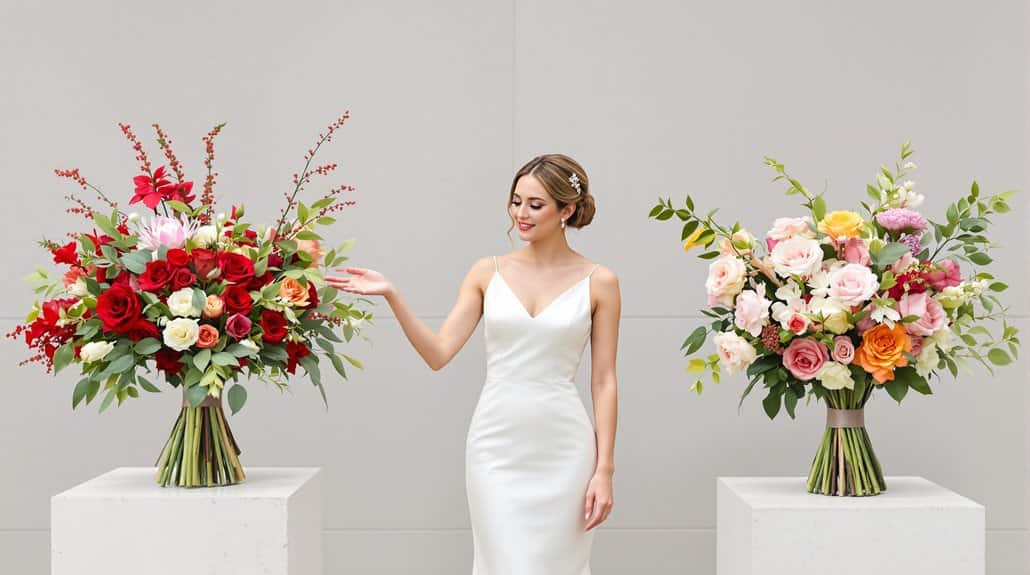
When we select roses without thought, we’re making choices with planetary consequences—consequences measured in hard numbers and ecological impact that extend far beyond the vase. Consider this: a dozen Kenyan roses generates 75 kg of CO2, while locally grown seasonal substitutes produce merely 1.4 kg—a staggering 53-fold difference. You’re essentially choosing between a bouquet with the carbon footprint of a small car trip versus a brief walk.
- Emissions gap: British snapdragons (0.114 kg CO2 per stem) versus Dutch roses (2.437 kg CO2)—a 21-fold difference
- Chemical intensity: Colombian roses receive approximately 200 kg of pesticides per crop cycle
- Transport burden: Imported bouquets create 10 times more emissions than British-grown alternatives
- Seasonal advantage: UK winter offerings like daffodils, tulips, and ranunculus slash carbon footprint by 90%
The numbers don’t lie, but they do illuminate. Alternatives to roses aren’t just different—they’re revolutionary choices. Meanwhile, the beauty industry demonstrates that elegance needn’t depend on environmentally costly defaults, as brands like Chanel have long shown that luxury and sophistication can be achieved through thoughtful curation rather than convention.
Cost and Availability Considerations
Although roses hold their status as the floral default, your wallet bears the burden of this unexamined tradition. You’re paying a premium—$90.50 national average for a dozen long-stems—for what amounts to botanical autopilot. The cost varies wildly, with Hawaiians shelling out $143 while Indianans pay just $72 for identical symbols of affection.
Consider your alternatives:
| Flower Type | Cost Comparison | Availability |
|---|---|---|
| Roses | $7-15 per stem | Year-round, premium markup |
| Seasonal Blooms | 30-60% less | Rotating, fresher options |
| Tropical Varieties | Similar to roses | Limited in northern regions |
| Mixed Bouquets | Better value per stem | Widespread, customizable |
| Local Wildflowers | 50-70% savings | Seasonal, sustainable |
The pricing phenomenon intensifies during Valentine’s Day, when wholesale costs triple and retailers apply markups exceeding $90 at high-end shops. You’re paying for tradition, not value—and yet, alternatives remain abundant, offering both uniqueness and cost efficiency. For those planning larger celebrations, venues like the Getty Center and Villa demonstrate how thoughtful floral choices can elevate special events without defaulting to conventional rose arrangements.
Breaking Free from Safe Choice

The safety of roses represents a form of floral cowardice you’ve likely never acknowledged. You’re defaulting, not deciding—settling for the familiar rather than exploring the architectural drama of anthuriums or the alien cascades of amaranthus. Breaking free from safe choice means recognizing that roses, while beautiful, constitute merely one voice in a *considerably* floral chorus you’ve been ignoring.
Consider these alternatives to roses that speak volumes about your aesthetic courage:
- Calla lilies ($95-125 seasonal) – stark, modern silhouettes that demand attention rather than passively request it
- Ranunculus – offering rose-like fullness at considerablylower cost with more nuanced color variations
- Garden roses – when in season, providing deeper texture and personality than their standardized cousins
- Non-floral options – wood flowers and greenery-focused designs that challenge the very premise of “wedding flowers”
Your bouquet isn’t just decoration—it’s declaration. Flowers instead roses aren’t merely substitutions but statements. Each bloom serves as a semiotic tool, revealing your aesthetic values and the emotional tone you’re willing to project beyond conventional expectations.
Conclusion
Breaking beyond roses demands both courage and vision in a culture that mistake familiarity for quality. You’re not just selecting flowers—you’re making a statement about imagination versus convention. The rose default persists not because roses reign supreme, but because decision fatigue leads us down paths of least resistance.
| Alternative | Emotional Impact | Longevity |
|---|---|---|
| Protea | Wild sophistication | 2-3 weeks |
| Ranunculus | Delicate intensity | 7-10 days |
| Monstera leaves | Modern minimalism | 3+ weeks |
When considering flowers instead roses, remember that tradition calcifies through repetition, not superiority. Alternatives to roses offer richer storytelling—expressing specificity rather than generic sentiment. The comparison of rose versus other blooms isn’t about rejection but expansion; it’s about precision of meaning. Just as haute couture beauty transforms conventional aesthetics into distinctive statements, your floral selections can elevate ordinary gestures into personalized expressions.
Your floral choices reflect your willingness to see beyond defaults. And yet, breaking patterns requires deliberate choice—the antithesis of the mindless rose purchase that populates Valentine’s displays nationwide.